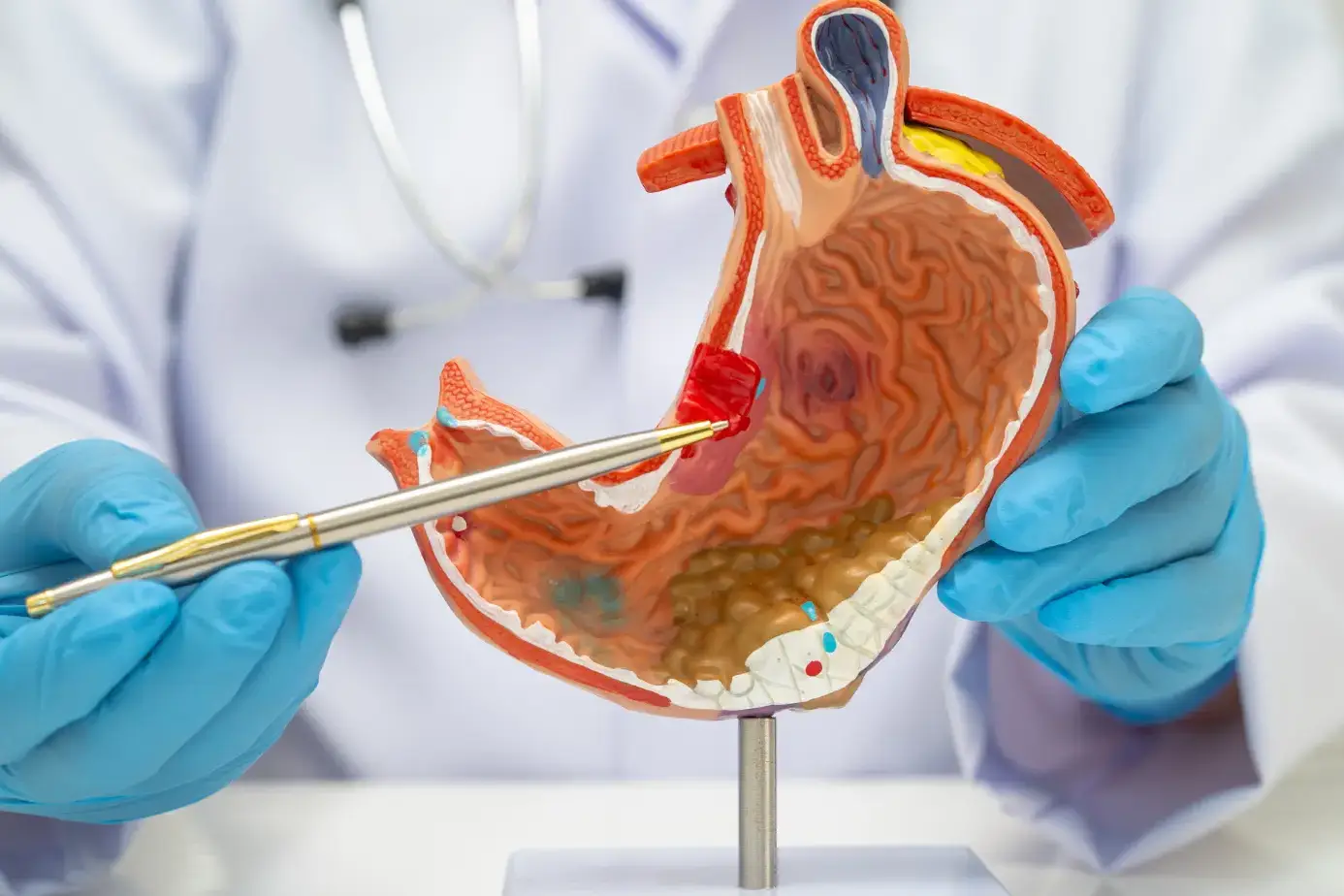
Acid from the stomach can irritate the food pipe and send pain to your upper or mid-back. That is the core link. When acid rises, nerves fire, muscles tense, and you feel a burn in front and an ache behind. Treat the reflux, fix posture, and the ache often eases.
Can GERD Cause Back Pain?

Yes. GERD can cause back pain because the esophagus and the upper back share nerve paths in the chest. When acid irritates the lining, your brain can read the signal as back pain. That is why GERD back pain can sit between the shoulder blades or across the mid back, often after meals or at night.
How Acid Reflux Can Radiate Pain to the Upper Back
The lower esophagus sits near nerves that also serve the chest wall and spine. When acid hits the lining, it triggers a burn that can spread as an ache in the back. This is classic acid reflux back pain.
You may feel heat in the chest, then a sharp spot behind the heart area, then soreness high in the back. All of this still points to GERD back pain rather than a pulled muscle.
Nerve Irritation From Esophageal Inflammation
Inflammation means swelling and chemical messengers that wake up nerves. Those nerves talk to the spinal cord at the same levels as the upper back. The result is referred pain. The more the lining stays sore, the steadier the ache. That is why treating reflux often calms GERD back pain.
How Poor Posture During Reflux Episodes Worsens Pain
Many people hunch when heartburn starts. Hunching increases belly pressure, which pushes more acid up. Shoulder and neck muscles then tighten, and the back complains. This loop feeds on itself and turns into GERD posture back pain. Breaking the loop starts with body position.
What Does GERD Back Pain Feel Like?
Sharp or Burning Pain Between Shoulder Blades
You may feel a hot strip or a quick stab midline between the blades. It often tracks with heartburn or a sour taste. When an antacid helps, that supports GERD back pain as the cause.
Dull Ache in the Mid-Back After Meals
A slow, heavy ache can rise 30 to 90 minutes after you eat. Large or fatty meals sit longer in the stomach and tend to trigger this pattern. That dull ache is a common symptom of GERD back pain and often pairs with burps or mild nausea.
Pain Worsening When Lying Down or Bending Over
Gravity keeps acid down when you sit or stand tall. Lying flat or bending at the waist lets acid travel up. If pain spikes in those positions, think GERD back pain, not a spine injury.
Reflux Pain That Mimics Musculoskeletal Issues
Reflux can fool you. It can feel like a pulled band across the back. The clue is timing. When food choices, late meals, or lying flat trigger it, and quick acid relief eases it, you are likely facing GERD back pain, not a strained muscle.
Common GERD Back Pain Symptoms

Chest and Upper Back Tightness
Acid can cause the esophagus to spasm. Muscles in the chest and back tense in response. This creates a belt of tightness. That belt is one of the core GERD back pain symptoms to note.
Acid Taste in Mouth or Frequent Heartburn
A sour taste, frequent burps, or a steady burn in the chest support a reflux source. When these travel with a backache, you are likely dealing with GERD back pain rather than a spine problem.
Backache Worsening After Eating
If aches climb after lunch or dinner and calm when you eat smaller meals, you are seeing typical GERD back pain symptoms. The pattern helps you and your clinician choose the right plan.
Posture-Related Discomfort Linked to Reflux Episodes
Slouching after meals raises pressure in the belly. More pressure means more reflux. More reflux means more muscle tension. This chain leads to GERD posture back pain that you can reduce with small posture fixes.
Why GERD Triggers Pain in the Back
Esophageal Nerves Share Pain Pathways With the Spine
The esophagus and the spine share segments in the chest cord. Signals can cross and feel like back pain. That explains why GERD back pain can show up far from the stomach.
Inflammation Spreading From the Chest to the Back Muscles
When acid irritates the esophagus, nearby muscles guard the area. Guarding means tension. Tension spreads to the mid back and neck. You feel soreness behind the chest burn. Again, this is GERD back pain, not a torn muscle fiber.
Repeated Acid Exposure Strains the Diaphragm and Posture
The diaphragm is the big breathing muscle that also supports the valve between the stomach and the esophagus. Reflux can bother this system. When it weakens, you may hunch to avoid the burn. Hunching strains the back and keeps GERD back pain alive.
How to Differentiate GERD Back Pain From Other Causes
Back Pain With Heartburn vs. Muscle Strain
Use a quick test. If food choices and lying flat change the pain, and antacids help, GERD back pain is likely. If lifts, twists, and coughs drive the pain, a strain is more likely. You can also note morning patterns. Reflux often hits at night and early morning if you ate late.
When Reflux Pain Mimics Cardiac Symptoms
Chest pain that spreads to the arm, jaw, or back can be heart-related. If you also feel short of breath, sweating, or feel faint, seek urgent care. After the heart is cleared, lingering mid-back ache tied to meals often tracks back to GERD back pain.
Key Signs That Point to Acid-Related Causes
Look for these clues together, not alone.
- Sour taste, hoarse voice, or cough at night
- Pain after spicy, mint, tomato, coffee, chocolate, or alcohol
- Relief with antacids or alginate
A cluster like this supports GERD back pain as the main issue.
GERD Back Pain After Eating
Why Eating Triggers Both Reflux and Back Pain
A full stomach raises pressure and can relax the valve at the top of the stomach. Acid moves up, the esophagus burns, and back muscles tense. The chain ends with reflux backache after eating and a sense of heat in the chest.
How Meal Size and Food Types Play a Role
Big meals stretch the stomach and delay emptying. Fatty foods linger longer. Spicy or acidic foods can hurt the lining. These raise the odds of acid reflux back pain with a matching backache. Smaller meals lower the spike in pressure and reduce the chance of pain.
The Connection Between Full Stomach Pressure and Posture
Feeling very full makes people slump. Slumping folds the belly and pushes acid higher. The back works harder to hold the fold and starts to ache. Fixing posture right after meals cuts GERD back pain and helps digestion.
Posture and GERD: The Hidden Connection
Slouching Increases Acid Reflux Episodes
Slouching crowds the belly and squeezes the stomach. That makes acid rise. The esophagus burns, and the back tightens. Over time, this creates a steady GERD posture back pain. A tall, neutral posture keeps pressure lower and helps you breathe better, which supports the valve.
Sitting Upright During Meals for Symptom Control
Simple setup, strong results.
- Hips back in the chair, feet flat
- Ribs stacked over hips, chin tucked a little
- Small bites, slow pace, set the fork down often
This form gives less reflux and less GERD back pain, and it also shortens flares of acid reflux back pain.
Correcting Spinal Alignment to Reduce Reflux Pain
Aim for neutral spine. Use a small roll behind the low back. Bring screens to eye level. Keep shoulders relaxed. This reduces strain on the mid-back and neck. Many people notice fewer evening flares of GERD back pain once they fix the alignment at the desk.
Ergonomic Adjustments for Daily Comfort
Tiny changes remove a lot of pressure.
- The keyboard is close to the edge of the desk
- Chair close to the desk, armrests low enough to relax shoulders
- Standing up for two minutes every hour
These moves lower muscle tension and reduce GERD back pain that grows throughout the workday.
Lifestyle and Home Remedies for GERD Back Pain
Sleep With Your Head Elevated to Reduce Acid Backflow
Use a wedge pillow or put blocks under the bed feet at the head end. A six to eight-inch lift uses gravity to keep acid down. That limits nighttime reflux and cuts morning GERD back pain. Many people also report fewer GERD back pain symptoms after they raise the bed.
Avoid Tight Clothing That Puts Pressure on Your Abdomen
Tight belts, shapewear, or snug waistbands press on the belly and force acid upward. Choose soft waistbands that you can slide two fingers under. Less pressure means less GERD back pain during a long day.
Eat Smaller Meals and Stay Upright After Eating
Switch from two giant meals to four or five small ones. Stop eating two to three hours before bed. Walk or sit tall after you eat for at least an hour. These steps cut reflux backache after eating and help keep GERD back pain from waking you at night.
Engage in Low-Impact Exercises to Improve Digestion
Right after meals, choose gentle options. A ten to twenty-minute walk helps stomach emptying. Later, use light core work that supports breathing, like pelvic tilts and dead bugs. Good breath control trains the diaphragm and reduces flares of GERD back pain without adding strain.
Medical Treatments for GERD-Related Back Pain
Some people can manage symptoms with meal changes and posture steps. Others need medical help. When the acid stays high for a long time, the lining becomes more irritated. When that irritation continues, GERD back pain can become a daily experience. Medical treatment helps calm the acid and settle the nerves linked to pain.
Proton Pump Inhibitors (PPIs) and H2 Blockers
PPIs lower acid production in the stomach. They are often the first line of treatment when GERD can cause back pain, and the pain is frequent. H2 blockers also lower acid, but work for shorter periods. Your doctor may suggest one or the other, depending on how often you have symptoms.
These medications give the esophagus time to heal. As swelling reduces, nerve irritation decreases. This often leads to less GERD back pain over a few weeks. Most people notice improvement when the acid triggers calm down.
Pain Relief Through Antacids and Acid Control
Antacids do not prevent acid from forming. They neutralize the acid that is already in the stomach. That is why they help when you need quick relief. If you get acid reflux back pain soon after meals, an antacid may ease the burn and the back tension linked to it.
Alginates are another option. These form a protective layer on top of the stomach contents, preventing acid from rising. This helps when lying down at night and may reduce GERD back pain symptoms that wake you from sleep.
Surgical Options for Chronic or Severe GERD Cases
If lifestyle changes and medicine do not help, doctors may check for a weak valve or a hiatal hernia. A hiatal hernia happens when part of the stomach pushes through the diaphragm opening. This can make reflux worse. Surgery can tighten the valve and improve how the stomach sits under the diaphragm.
People who have surgery often see a major drop in reflux episodes. When acid stays down, GERD back pain usually becomes far less frequent. Surgery is not for everyone, so it requires medical discussion and testing before deciding.
When to See a Doctor for GERD Back Pain
There are times when you should not wait or try to handle symptoms alone. While GERD back pain is common, some symptoms signal something more serious.
Persistent Pain Despite Reflux Medication
If you have followed your doctor’s medication plan for several weeks and pain persists, schedule another visit. Pain that continues may mean stronger acid control is needed or another condition is contributing. Lasting GERD back pain should always be checked rather than ignored.
Pain Radiating to Arms or Chest (Possible Cardiac Overlap)
Heart-related pain and reflux pain can feel similar. Pain spreading to the shoulder, jaw, or left arm can be a warning sign. If this happens, seek urgent care. Once the heart is cleared, your provider can then decide how to manage GERD back pain safely.
Difficulty Swallowing or Breathing After Meals
Trouble swallowing or feeling as if food gets stuck is not typical and needs medical attention. Trouble breathing after meals can also signal swelling or severe irritation. These symptoms require proper testing.
Unexplained Weight Loss or Severe Reflux Flare-Ups
Sudden weight loss without trying should always be evaluated. Frequent vomiting, black stools, or chest pain that wakes you from sleep need medical review. These are not usual GERD back pain symptoms and should not be ignored.
FAQs
Can GERD Cause Pain Between Shoulder Blades?
Yes. GERD can cause back pain that spreads to the area between the shoulder blades because the nerves of the esophagus and the upper back share the same pathways. When acid irritates the esophagus, the brain may misread the signal and send pain to the back instead of just the chest. This type of discomfort is a common form of GERD back pain.
Why Do I Get Back Pain After Eating Reflux Foods?
You get back pain after meals because certain foods relax the valve at the top of the stomach, allowing acid to rise. When acid rises and irritates the esophagus, the muscles in your back can tense and ache in response. This is often seen as a reflux backache after eating, especially after heavy or spicy meals. Controlling food triggers helps reduce the pain.
How Can I Relieve GERD Posture-Related Back Pain?
To relieve GERD posture back pain, focus on sitting tall during and after meals, avoid slouching, and keep your upper body aligned so your stomach has space to expand without pushing acid upward. You can also use a wedge pillow at night to keep the upper body raised, helping prevent acid from rising and easing back tension during sleep.
Can Acid Reflux Pain Feel Like Muscle Strain?
Yes, acid reflux back pain can feel similar to muscle strain because both conditions can create pressure and burning sensations in the mid or upper back. The difference is that reflux pain changes with meals and lying down, while muscle strain changes with movement. If antacids help, the cause is likely reflux rather than muscle injury.
Does Treating GERD Stop Back Pain Completely?
Treating reflux often reduces GERD back pain, but it may not vanish overnight. It improves as inflammation goes down and posture habits improve. Get major relief from combining medication, posture changes, smaller meals, and head-of-bed elevation.
About The Author

Medically reviewed by Dr. Nivedita Pandey, MD, DM (Gastroenterology)
Dr. Nivedita Pandey is a U.S.-trained gastroenterologist and hepatologist with extensive experience in diagnosing and treating liver diseases and gastrointestinal disorders. She specializes in liver enzyme abnormalities, fatty liver disease, hepatitis, cirrhosis, and digestive health.
All content is reviewed for medical accuracy and aligned with current clinical guidelines.