Can Constipation Really Cause Weight Gain?
Yes. Constipation can raise the number on the scale. That rise usually reflects stool, gas, and water held inside your gut. It does not mean new fat. If you want the direct fact, constipation can cause weight gain on the scale, but it is almost always temporary and not due to body fat.
It’s Temporary, Not Fat Gain
When your bowel moves slowly, stool sits longer. That stool adds physical mass. You will see pounds on the scale. The mass goes away after normal bowel motions. Real fat gain needs extra calories over days or weeks. Constipation does not make fat by itself.
Stool Retention Adds 1–4 Pounds of Scale Weight
A backed-up colon can hold one to four pounds of stool for many people. Some people may note more weight if they also hold water or gas. The key is that the weight clears once the stool leaves.
Gas and Water Retention Contribute to the “Heavier” Feeling
Gas expands the gut. Water retention from low fluids or salty meals adds volume. Both change how you look and feel. They also add scale weight. They are not the same as stored fat.
True Weight Gain Comes From Calorie Surplus, Not Constipation
Fat grows when you eat more calories than you burn. That process needs time. Constipation does not create a calorie surplus. It only changes how much mass is inside your body at a given moment.
Once Digestion Normalizes, Weight Returns to Baseline
Fix the cause, and you will drop the pounds on the scale. Often, weight returns within days once bowel habits improve.
Why Does Constipation Cause Weight Increase?
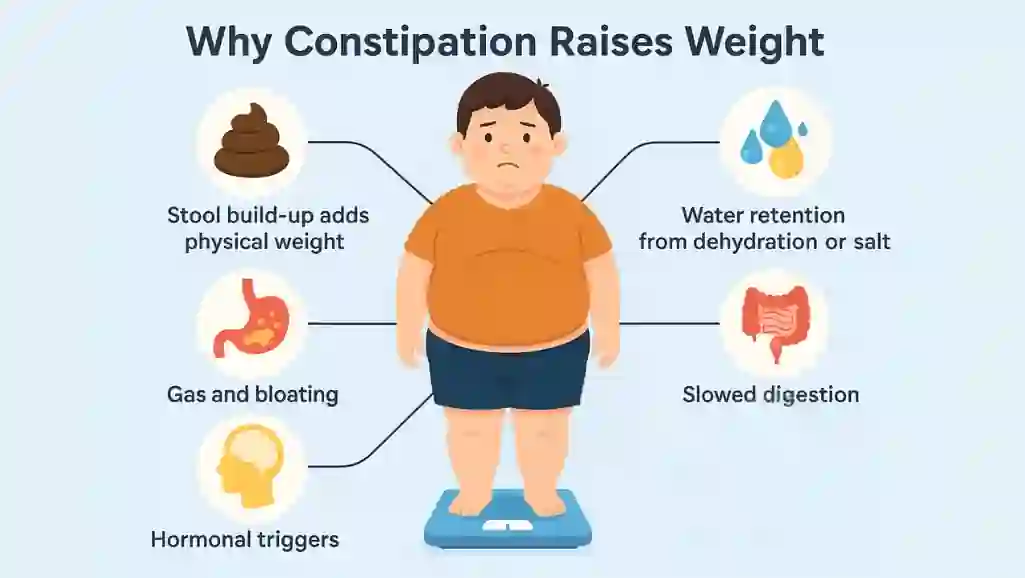
1. Stool Build-Up Adds Physical Weight
Stool is matter. It weighs something. If it stays inside, the scale shows that extra mass.
2. Water Retention From Dehydration or Salt Imbalance
Dehydration triggers your body to hold water. Eating salty food also makes you keep fluid. That fluid sits in tissues and the belly. It adds weight that vanishes when you hydrate properly.
3. Gas and Bloating From Fermented Food in the Gut
Carbs that do not fully digest feed gut bacteria. These bacteria make gas. That gas can make your belly swell and make you feel heavier.
4. Slowed Digestion and Reduced Bowel Movement Frequency
When your gut transit slows, stool stays longer. Fewer bowel movements mean more stool volume overall.
5. Hormonal Triggers
Stress hormones like cortisol slow digestion. Low activity and changed sleep also slow gut pace. This makes you more likely to hold stool and to feel heavier.
How Much Weight Gain Can Constipation Cause?
Most People Gain 1–5 Pounds of Temporary Weight
Expect one to five pounds for most people. The exact number depends on how much stool, gas, and water you hold.
Scale Changes Depend on Diet, Hydration, and Transit Time
A low-fiber day plus little water equals slower transit. Fast food and excess salt equal fluid retention. Both add temporary pounds.
Bloating May Appear as “Fat Gain” but Is Just Swelling
Swelling from gas or water pushes the abdomen outward. Clothing may feel tighter. That is not fat. It often resolves fast.
Scale Fluctuations Reflect Digestive Status, Not Body Fat
Daily scale swings track digestion, not fat stores. Weighing at different times of day shows this clearly.
Constipation Affects the Scale, Not Body Composition
Long-term changes in body fat require a consistent calorie surplus or lack of activity. Constipation only affects short-term mass inside your gut.
Constipation Weight vs. Fat Gain
Constipation Weight
The extra pounds you see from constipation come from stool, gas, and water trapped in your gut. When stool builds up, it adds real mass. Dehydration or salty food also make your body hold fluid. Gas from bacteria adds more pressure. Together they cause a “heavier” feeling. The weight is real but temporary. Once stool and gas pass, your scale and belly return to normal. That’s why constipation cause weight gain without adding fat.
Fat Gain
True fat gain happens only when you eat more calories than you burn. Extra calories are stored as body fat, which builds slowly over time. Constipation doesn’t add calories—it just traps waste inside. You might feel heavier or less active, but that isn’t fat growth. Fixing your digestion resets the scale quickly.
Temporary Water Weight Resolves With Normal Digestion
Water retention rises when you’re dehydrated or eat too much salt. Once you drink enough water and your bowels move, that extra water is released. Many people lose 1–4 pounds after normal bowel movements. This explains why temporary weight gain and constipation disappear fast once digestion normalizes.
Fat Gain Takes Time and Excess Calorie Intake
To gain one pound of fat, you must eat about 3,500 extra calories. That takes several days of overeating. Constipation doesn’t increase calorie storage; it only delays waste removal. A sudden 3-pound increase overnight is stool or water, not fat.
Measuring Waist Size Helps Distinguish Bloat From Fat
A tape measure helps you tell the difference. If your waist shrinks after a bowel movement, that was bloat, not fat. Real fat changes slowly over weeks. Measure your waist at the same time each day to track genuine progress and avoid panic over constipation cause weight gain .
Common Causes of Constipation and Temporary Weight Gain
Low-Fiber Diet (Under 25g/Day)
Too little fiber slows digestion. Fiber adds bulk and moves stool through the intestines. Less than 25 grams a day causes hard, dry stool that builds up and adds scale weight. Eat fruits, vegetables, beans, and grains daily.
Dehydration or Low Water Intake
Water keeps stool soft. When you drink too little, stool dries and movement slows. Your body also retains water to protect against dehydration, causing temporary swelling and weight gain.
Sedentary Lifestyle and Low Activity
Movement triggers bowel motion. Sitting for hours slows your gut. Even light walking or stretching helps the stool move. Aim for at least 20 minutes of daily activity.
Medications Like Iron, Opioids, or Antihistamines
Certain drugs slow bowel function or harden stool. Common culprits include iron pills, opioid painkillers, and some allergy or mood medicines. Ask your doctor about alternatives if constipation starts after medication.
Hormonal Imbalances — PMS, Thyroid Issues, Cortisol
Hormones affect gut speed. PMS can slow digestion. Low thyroid function reduces gut activity. High stress raises cortisol, which delays bowel movement. Treating these issues can restore balance and reduce weight gain from constipation .
Ignoring the Urge or Irregular Bathroom Habits
Holding a stool when you feel the urge trains your body to delay. Over time, this causes chronic constipation. Try to use the bathroom at the same time daily to build a natural rhythm.
Signs of Constipation-Related Weight Fluctuation
Fewer Than 3 Bowel Movements Per Week
Having fewer than three bowel movements a week means stool stays longer in your gut, adding weight and pressure.
Hard or Lumpy Stools and Abdominal Fullness
Hard, pellet-like stool means slow digestion. The buildup creates fullness and a tight feeling in your belly.
Bloated Belly or Midsection Tightness
Trapped stool and gas make your abdomen swell. This bloating can mimic belly fat but fades once the gut clears.
Feeling Heavy or Gassy After Meals
Feeling full or gassy after eating shows slow digestion. Gas buildup increases both bloating and scale readings.
Temporary Weight Drop After Relief
Losing a few pounds after a bowel movement means the earlier gain was stool, gas, or water, not fat.
How to Relieve Constipation and Reduce Temporary Weight Gain
1. Increase Fiber Gradually (25–30g Daily)
Add fiber slowly using fruits, vegetables, oats, and beans. Rapid fiber jumps cause gas, so they build up over a week or two.
2. Drink 8–10 Glasses of Water Each Day
Drink water regularly, not all at once. Hydration softens stool and helps prevent constipation cause weight gain from dehydration.
3. Exercise Regularly to Stimulate the Gut
A brisk 20–30 minute walk daily can speed digestion and relieve bloating.
4. Add Natural Laxatives — Prunes, Kiwi, Chia, or Flaxseed
These foods contain compounds that ease stool passage naturally. One to two servings a day helps regularity.
5. Avoid Processed or Dairy-Heavy Meals
Fast food, refined grains, and excess dairy slow the gut. Replace them with fiber-rich, whole foods.
6. Try Probiotics for Gut Motility
Probiotics can restore a healthy bacterial balance and improve bowel movements. Choose yogurt or supplements with live strains.
7. Manage Stress With Breathing or Yoga
Stress hormones slow digestion. Breathing exercises and yoga calm your body, improving gut speed and reducing bloating.
Myths vs. Facts: Constipation and Weight Gain
| Myth | Fact |
| Constipation leads to permanent fat. | Constipation adds temporary scale weight only. |
| Scale rise equals fat gain overnight. | Fat needs time and extra calories. |
| Laxatives solve long-term weight issues. | Laxatives relieve stool but do not burn fat. |
Does Constipation Make You Look Heavier?
Bloating Pushes the Abdomen Outward Temporarily
Constipation causes stool and gas buildup, which pushes your belly forward. The swollen look fades after relief.
Gas and Fluid Cause a “Puffy” Appearance
Gas inflates the intestines, and water retention adds puffiness. It’s a temporary “fat-like” appearance, not real fat.
Belly Flatness Returns Within 24–48 Hours Post-Relief
Most people notice their belly flattens within a day or two once bowel movements normalize. That’s how you know it’s not fat.
Visual Weight Is Often Digestive, Not Fat-Related
If your belly size changes quickly, it’s from stool, not stored fat. The constipation fat gain myth confuses temporary bloat with fat growth.
When to See a Doctor for Constipation or Weight Changes
Constipation Lasting Over 3 Weeks or Worsening
If constipation continues despite diet and water changes, see a doctor. Long-term constipation may signal an underlying issue.
Blood in Stool, Severe Pain, or Sudden Weight Changes
Red or black stool, sharp pain, or sudden weight loss are red flags. Get medical help immediately.
Symptoms of Hormonal or Metabolic Imbalance
If you notice fatigue, hair loss, or mood swings with constipation, test for thyroid or hormone issues.
Persistent Bloating With Nausea or Fatigue
Chronic bloating plus nausea or tiredness can point to digestive diseases. Early diagnosis helps.
No Relief Even After Dietary or Lifestyle Changes
If nothing works after several weeks, a doctor can check for structural or functional gut problems.
How to Prevent Constipation-Related Weight Gain
Stay Hydrated Daily
Drink water throughout the day, especially with meals. Proper hydration prevents hard stool and fluid retention.
Eat a Mix of Soluble and Insoluble Fiber
Soluble fiber (oats, apples) softens stool. Insoluble fiber (bran, veggies) adds bulk. You need both for smooth digestion.
Move Regularly — 20–30 Minutes of Activity
Consistent movement stimulates your intestines. Even light walking keeps digestion on track.
Limit Processed Foods, Alcohol, and Added Sugars
Processed foods lack fiber and slow digestion. Alcohol and sugar also increase dehydration, making constipation scale weight gain worse.
Eat on Schedule to Regulate Gut Rhythm
Eating at consistent times trains your gut to move regularly. Predictable meals equal predictable bowel habits.
FAQs
Can Constipation Add Pounds to the Scale?
Yes. Constipation causes weight gain on the scale because stool, gas, and fluid add mass inside your gut temporarily.
How Long Does Constipation Weight Gain Last?
Temporary weight from constipation usually lasts days to a week once your bowel returns to normal function and hydration improves.
Can Chronic Constipation Cause Long-Term Fat Gain?
Chronic constipation alone rarely creates fat. Changes in appetite or activity tied to constipation might slowly alter calories and body fat over months.
Why Does My Belly Look Bigger When I’m Constipated?
Your belly enlarges because stool, gas, and fluid press outward. That pressure makes your midsection look larger but not fatter.
How Do I Know If It’s Bloating or Fat?
If waist size drops quickly after a bowel movement, it is likely bloating. Fat does not decrease quickly after bowel changes.
What’s the Fastest Way to Relieve Constipation Bloat?
Drink water, walk for 20 minutes, and eat a prune or kiwi. A gentle, short-term laxative can help if nothing else works.
Can Hormones or Stress Make Constipation Worse?
Yes. Stress hormones slow gut movement. Hormone changes in menstruation and thyroid problems also affect bowel speed.
Does Drinking More Water Help Reduce Constipation Weight?
Yes. Proper hydration softens stool and reduces fluid retention from dehydration, which helps lower temporary scale weight.
Should I Use Fiber Supplements or Natural Sources?
Start with natural foods first. Use fiber supplements if needed. Increase fiber slowly and drink water to avoid more gas.
About The Author

Medically reviewed by Dr. Nivedita Pandey, MD, DM (Gastroenterology)
Dr. Nivedita Pandey is a U.S.-trained gastroenterologist and hepatologist with extensive experience in diagnosing and treating liver diseases and gastrointestinal disorders. She specializes in liver enzyme abnormalities, fatty liver disease, hepatitis, cirrhosis, and digestive health.
All content is reviewed for medical accuracy and aligned with current clinical guidelines.