

GERD cough treatment controls acid, protects your throat, and fixes daily habits that trigger cough. You get relief when you lower acid in the stomach, block acid from splashing up, and remove the things that push reflux. You can do this with the right medicines, smart meal timing, and sleep changes. Your goal is simple. Calm the reflux and the cough reflex settles down.
What Is A GERD Cough?
A GERD cough comes from stomach acid that moves up into your esophagus [food pipe] and reaches your throat or voice box [larynx]. Acid sparks nerves that set off a cough. The cough often lasts more than eight weeks. It feels dry. It may not come with mucus. You may not feel classic heartburn.
The reflux can still be there and still drive the cough. A precise GERD cough treatment plan targets the source so your cough eases and your throat heals.
How Acid Reflux Causes Chronic Coughing
When you swallow, a valve at the bottom of the esophagus should close. Doctors call it the lower esophageal sphincter or LES. If it relaxes at the wrong time, acid flows up. Acid irritates the lining of the esophagus and the voice box. Nerves become extra sensitive. You cough to clear the burn.
If this happens many days per week, your cough can turn chronic. You break this loop with GERD cough treatment that cuts acid, shields tissue, and reduces nerve sensitivity over time.
The Difference Between GERD Cough And Asthma Cough
Asthma cough often comes with wheeze, chest tightness, or shortness of breath. It may flare with exercise or pollen. A reflux cough tends to flare after meals or at night when you lie flat.
Asthma inhalers may not help a reflux cough. Reflux medicines often help. Some people have both problems. Your doctor can test your lungs and check for reflux signs. Then your GERD cough treatment can address both if needed.
When A Reflux Cough Becomes Chronic
A cough is chronic when it lasts more than eight weeks. Red flags include hoarseness, throat clearing, a sour taste in the mouth, or a cough that wakes you from sleep. If you see these patterns, you likely need structured GERD cough treatment instead of short-term cough syrups.
Common Symptoms Of Acid Reflux Cough
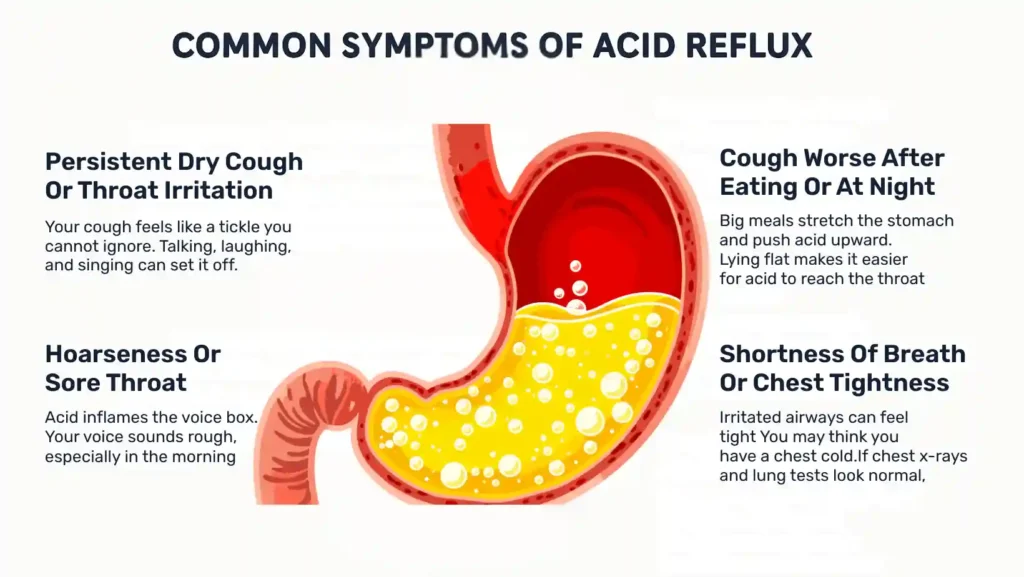
Persistent Dry Cough Or Throat Irritation
Your cough feels like a tickle you cannot ignore. Talking, laughing, and singing can set it off. You may clear your throat many times a day. Consistent GERD cough treatment reduces the tickle by reducing the acid triggers.
Hoarseness Or Sore Throat
Acid inflames the voice box. Your voice sounds rough, especially in the morning. You may feel soreness after long calls or meetings. Voice rest plus GERD cough treatment helps the lining recover.
Cough Worse After Eating Or At Night
Big meals stretch the stomach and push acid upward. Lying flat makes it easier for acid to reach the throat. If your cough flares after dinner or during sleep, move to earlier meals and change your sleep setup as part of GERD cough treatment.
Shortness Of Breath Or Chest Tightness
Irritated airways can feel tight. You may think you have a chest cold. If chest x-rays and lung tests look normal, reflux may be the cause. Targeted GERD cough treatment often eases this tight feeling.
Causes Of GERD Cough
Acid Reflux Reaching The Throat And Airways
When reflux reaches the throat, doctors call it laryngopharyngeal reflux or LPR. LPR can cause cough, hoarseness, postnasal drip, or a lump-in-the-throat feeling [globus]. LPR can occur without heartburn. You still benefit from GERD cough treatment that reduces both daytime and nighttime reflux.
Weak Lower Esophageal Sphincter
A weak or overly relaxed LES lets acid move up. Certain foods and drinks relax this muscle. Some medicines can do the same. You protect the LES with food changes, meal size control, and timing. These steps sit at the core of GERD cough treatment and give the valve a chance to work better.
Eating Large Meals Or Lying Down After Food
Large, late meals are common triggers. So are naps right after lunch. Both increase the chance of reflux. You lower the risk by eating on smaller plates and keeping a gap before bed. Add this to your GERD cough treatment today for quick gains.
Obesity, Smoking, Or Pregnancy-Related Reflux
Extra belly pressure pushes stomach contents upward. Smoking weakens the LES and slows healing. Pregnancy shifts pressure and hormones. Weight care, smoke-free living, and posture changes reduce reflux burden and improve GERD cough treatment results.
How Doctors Diagnose GERD-Related Cough
Medical History And Symptom Review
Your clinician asks when your cough began, what triggers it, and what relieves it. They check for heartburn, sour taste, hoarseness, or trouble swallowing. They listen to your lungs and look at your throat. A clear story often guides the first steps of GERD cough treatment.
Upper Endoscopy and pH Monitoring
An upper endoscopy lets the doctor view the esophagus and stomach. They look for swelling, ulcers, or a narrowing [stricture]. Ambulatory pH testing tracks acid exposure over 24 to 96 hours.
If acid spikes match cough events, reflux is likely the driver. These tests help decide how strong your GERD cough treatment should be and how long to continue it.
Response To Reflux Medications As a Diagnosis Indicator
Sometimes your clinician starts therapy first. If your cough improves after several weeks on therapy, reflux is a likely cause. This response helps confirm the plan and shapes the next phase of GERD cough treatment.
Treatment For GERD Cough
Proton Pump Inhibitors For Acid Control
Proton pump inhibitors, or PPIs, reduce stomach acid production. Less acid means less burn, less swelling, and fewer cough triggers. You usually take a PPI 30 to 60 minutes before breakfast. Some people need a second dose before dinner for a limited time. Your clinician will set the dose and duration.
PPIs are often the backbone of GERD cough treatment for moderate or severe symptoms. You should not stop them suddenly without guidance. When your cough improves, your clinician can step you down.
H2 Blockers And Antacids For Mild Reflux
H2 blockers lower acid but not as strongly as PPIs. They help in mild cases or as a night add-on when night reflux stands out. Antacids neutralize acid already in the stomach. They help with quick relief after a meal. These medicines support GERD cough treatment when symptoms are lighter or less frequent.
Prescription Medications For Chronic Cases
Some people need an add-on. Prokinetics help the stomach empty faster, which lowers reflux episodes. Alginates form a gentle raft on top of stomach contents. This raft can block acid from rising after meals. Bile acid binders may help when bile reflux plays a role. Your clinician may mix these options to build a complete GERD cough treatment when the cough persists despite the basics.
Lifestyle And Dietary Modifications
Medicines work best when you change daily habits. These changes often give you the biggest long-term payoff. Tie them to routines so they stick. Your GERD cough treatment should include the steps below.
- Eat smaller meals and chew well. Stop when you feel satisfied.
- Keep a two to three-hour gap between dinner and bedtime.
- Raise the head of the bed by six to eight inches using blocks or a wedge.
- Sleep on your left side to keep acid lower than the esophagus.
- Limit foods that relax the LES, such as peppermint, chocolate, and high-fat meals.
- Track your triggers in a simple log so you can spot patterns.
- If you smoke, make a quit plan and use support tools.
- If you carry extra weight, aim for slow, steady loss through balanced meals and daily movement.
These habits make your GERD cough treatment more effective and reduce relapses when medicines taper.
GERD Cough Home Remedies
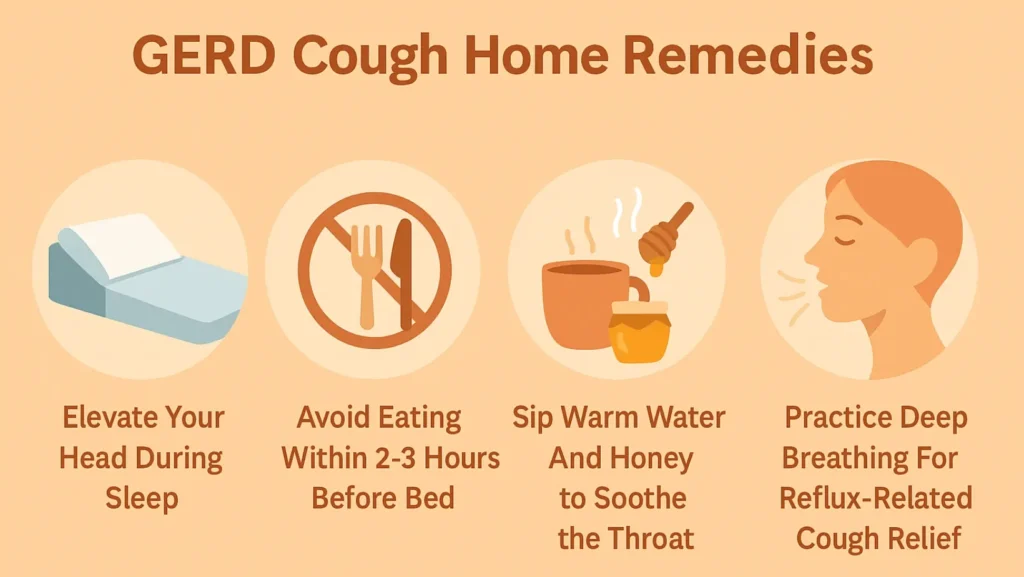
Elevate Your Head During Sleep
Use a wedge pillow or bed risers under the front legs. Stacking soft pillows under your head does not help much because your upper body still lies flat. A proper incline uses gravity to keep acid down. This simple change strengthens your nighttime GERD cough treatment.
Avoid Eating Within 2–3 Hours Before Bed
Late snacks push reflux at night. Close the kitchen after dinner. If you need something, choose a small, low-fat option earlier in the evening. Strong nighttime control is a key part of GERD cough treatment.
Sip Warm Water And Honey To Soothe The Throat
Warm water can relax throat muscles. Honey can coat irritated tissue. This gives short-term comfort while your main plan works. It does not replace medicines. It supports your GERD cough treatment during flare days.
Practice Deep Breathing For Reflux-Related Cough Relief
Belly breathing trains your diaphragm [main breathing muscle]. A stronger, relaxed diaphragm supports the LES. Try this twice daily.
- Sit upright with one hand on your chest and one on your belly.
- Inhale through your nose for four counts and feel your belly rise.
- Exhale through pursed lips for six counts.
- Repeat for five minutes.
This adds a safe non-drug tool to your GERD cough treatment and can reduce cough fits.
Dietary Changes To Reduce Acid Reflux Cough
Avoid Spicy, Fatty, And Acidic Foods
Spicy foods can sting inflamed tissue. High-fat meals slow stomach emptying and raise pressure. Citrus and tomato sauces can irritate if they come back up. Many people notice fewer symptoms after trimming these. This shift supports GERD cough treatment without adding pills.
Choose Smaller, Balanced Meals
Large plates stretch the stomach and push on the LES. Smaller, balanced meals lower pressure and reduce reflux. Build plates with lean protein, whole grains, and nonacidic vegetables. This simple pattern helps your GERD cough treatment work day after day.
Limit Caffeine, Chocolate, And Alcohol
These can relax the LES or irritate the lining in some people. You do not need to cut them forever if they are not triggers for you. Test changes for two to four weeks and track symptoms. Keep what helps. This data-informed method strengthens your GERD cough treatment and keeps your plan personal.
Include Alkaline, Fiber-Rich Foods For Digestion
Oats, bananas, melons, broccoli, beans, and leafy greens support digestion and fullness. Fiber helps your stomach empty at a steady pace. Alkaline choices are gentler if reflux occurs. This steady base diet improves the odds that your GERD cough treatment holds even during busy weeks.
GERD Cough Therapy And Lifestyle Tips
Maintain A Healthy Body Weight
Extra belly pressure can push acid upward. Even a small weight change can help. If you reduce five to ten percent of your body weight, reflux can improve. You can do this with steady meal planning, daily walking, and spacing meals. This strengthens your GERD cough treatment and lowers cough triggers.
Stop Smoking And Reduce Alcohol Intake
Smoking weakens the LES valve. It makes the tissue inside the throat more irritated. Alcohol can also relax the LES and increase reflux events. If you smoke, speak with your doctor about nicotine patches or support programs. When you reduce smoking and alcohol, your cough often improves faster. This supports your GERD cough therapy and makes the other steps work better.
Sleep On Your Left Side To Reduce Reflux
Your stomach is located on the left side of your body. When you lie on your left side, gravity helps keep acid lower. This reduces nighttime reflux. Try placing a pillow behind your back to stay on your left side. This habit works well with your GERD cough treatment plan and prevents night coughing.
Manage Stress With Simple Breathing Or Gentle Movement
Stress can increase muscle tension, breathing rate, and stomach acid. You do not need complex routines. You can try:
- Light stretching
- Short walks
- Slow breathing for five minutes
- Listening to calming sounds
These steps calm your body and support your GERD cough therapy over time.
When To See A Doctor For Reflux Cough
Cough Lasting More Than 3 Weeks
If your cough continues beyond three weeks and does not improve with basic changes, you need medical review. A doctor can confirm the cause and build the correct GERD cough treatment for your symptoms.
Trouble Swallowing Or Chest Discomfort
If you feel food getting stuck or experience pain when swallowing, do not wait. These signs need quick medical attention. Severe or sudden chest discomfort should be checked right away. Safe guidance helps shape your treatment for acid reflux cough responsibly.
Cough Disrupting Sleep Or Daily Activities
If your cough keeps you awake or stops you from speaking or working normally, you should see a doctor. A strong night cough often means acid is reaching high into the throat. A more advanced GERD cough therapy approach may be needed.
No Improvement Despite Home Treatment
If you have already raised your bed, changed meals, and adjusted sleep but still cough, you need medical help. Your doctor may change your medicines or adjust the dosage. This keeps your GERD cough treatment effective.
Long-Term Management And Prevention
Importance Of Following Medical Treatment
Do not stop medicines too soon. Tissue inside the throat needs time to heal. If you stop early, symptoms can return. Always follow your clinician’s guide for stepping down. This steady routine is how to treat GERD cough in the long run.
Regular Follow-Ups For Chronic GERD Patients
If your reflux has lasted for years, plan regular visits with your doctor. They may adjust medication schedules, check healing, and watch for complications. Good follow-ups keep your acid reflux cough medications safe and effective.
Preventing Acid Reflux Triggers Over Time
Triggers can change as you age or change your diet. Pay attention to:
- Meal size
- Timing before sleep
- Spices and fat levels
- Coffee and alcohol intake
Small shifts in these areas can prevent flare-ups. This protects your throat and keeps your GERD cough treatment stable long-term.
FAQs
What’s The Best Treatment For Acid Reflux Cough?
The best treatment for acid reflux cough combines medicine and daily habits. PPIs lower acid while meal changes, sleep changes, and weight support prevent flare-ups.
How Do You Stop Coughing From GERD Naturally?
You can stop coughing by raising the head of your bed, eating smaller meals, and sleeping on your left side. These reflux cough home remedies reduce acid reaching your throat.
Can GERD Cough Be Cured Permanently?
Some people control symptoms long-term with steady habits and medicine when needed. The key is understanding how to treat GERD cough and staying consistent with your plan and follow-ups.
Do Cough Drops Or Syrups Help GERD-Related Coughs?
Cough drops can soothe the throat but do not fix reflux. Some drops have mint, which may relax the LES. Your main relief comes from acid reflux cough medications and lifestyle steps.
What Medications Are Used For Reflux Cough?
PPIs, H2 blockers, alginates, and prokinetics are common acid reflux cough medications. Your doctor chooses based on how severe your symptoms are and how your body responds.
About The Author

Medically reviewed by Dr. Nivedita Pandey, MD, DM (Gastroenterology)
Dr. Nivedita Pandey is a U.S.-trained gastroenterologist and hepatologist with extensive experience in diagnosing and treating liver diseases and gastrointestinal disorders. She specializes in liver enzyme abnormalities, fatty liver disease, hepatitis, cirrhosis, and digestive health.
All content is reviewed for medical accuracy and aligned with current clinical guidelines.


