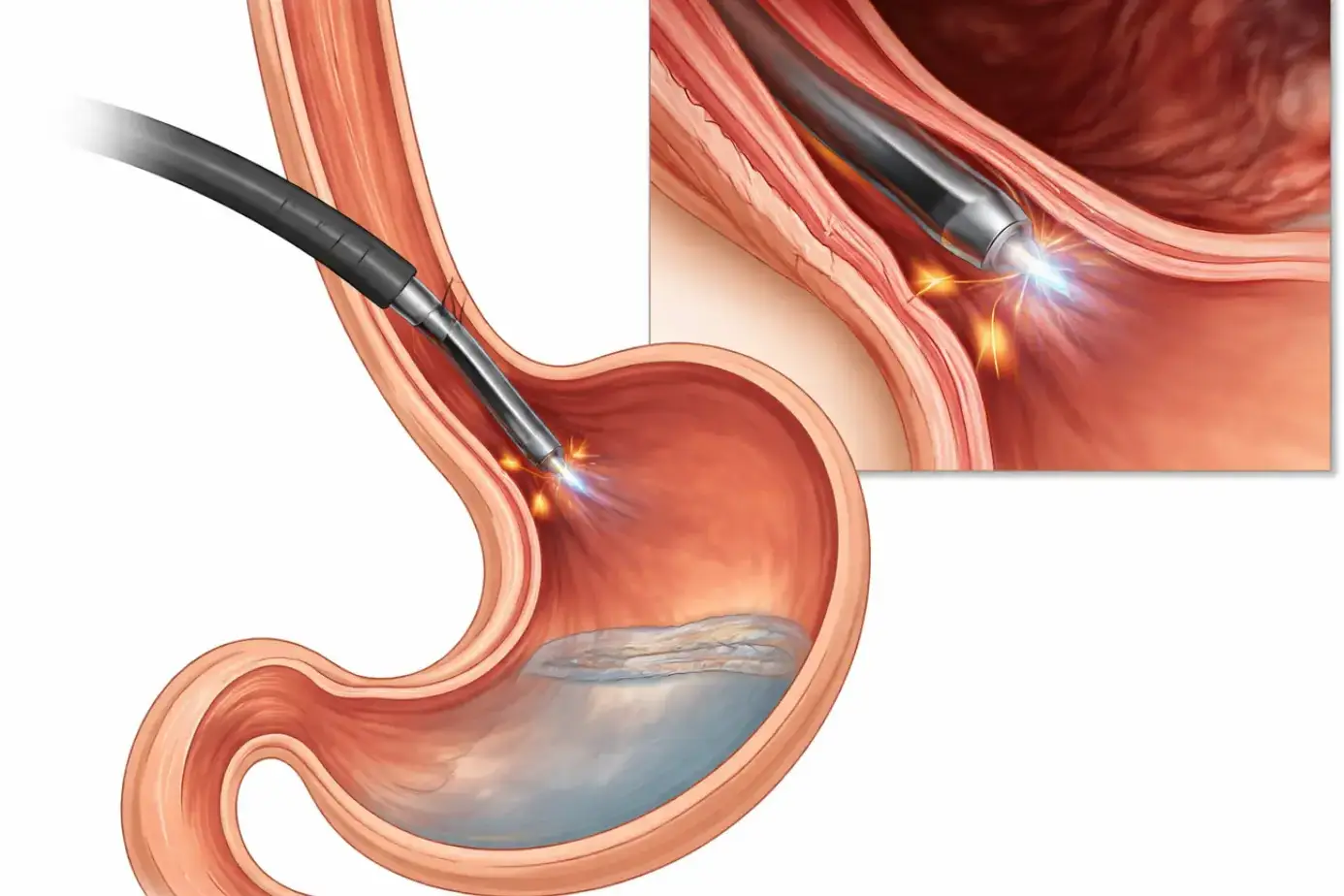
Your morning routine for gut health can shape the way your digestion feels for the rest of the day. If you start with the right habits, your gut works better, feels lighter, and stays comfortable.
Dr. Nivedita Pandey, a respected gastroenterologist, believes that the first 60 minutes after waking up are the most important for digestion. These small but consistent actions can boost your energy, balance your gut bacteria, and help prevent common stomach issues.
Below are the 5 key steps she recommends for anyone looking to strengthen digestion and improve gut health naturally.
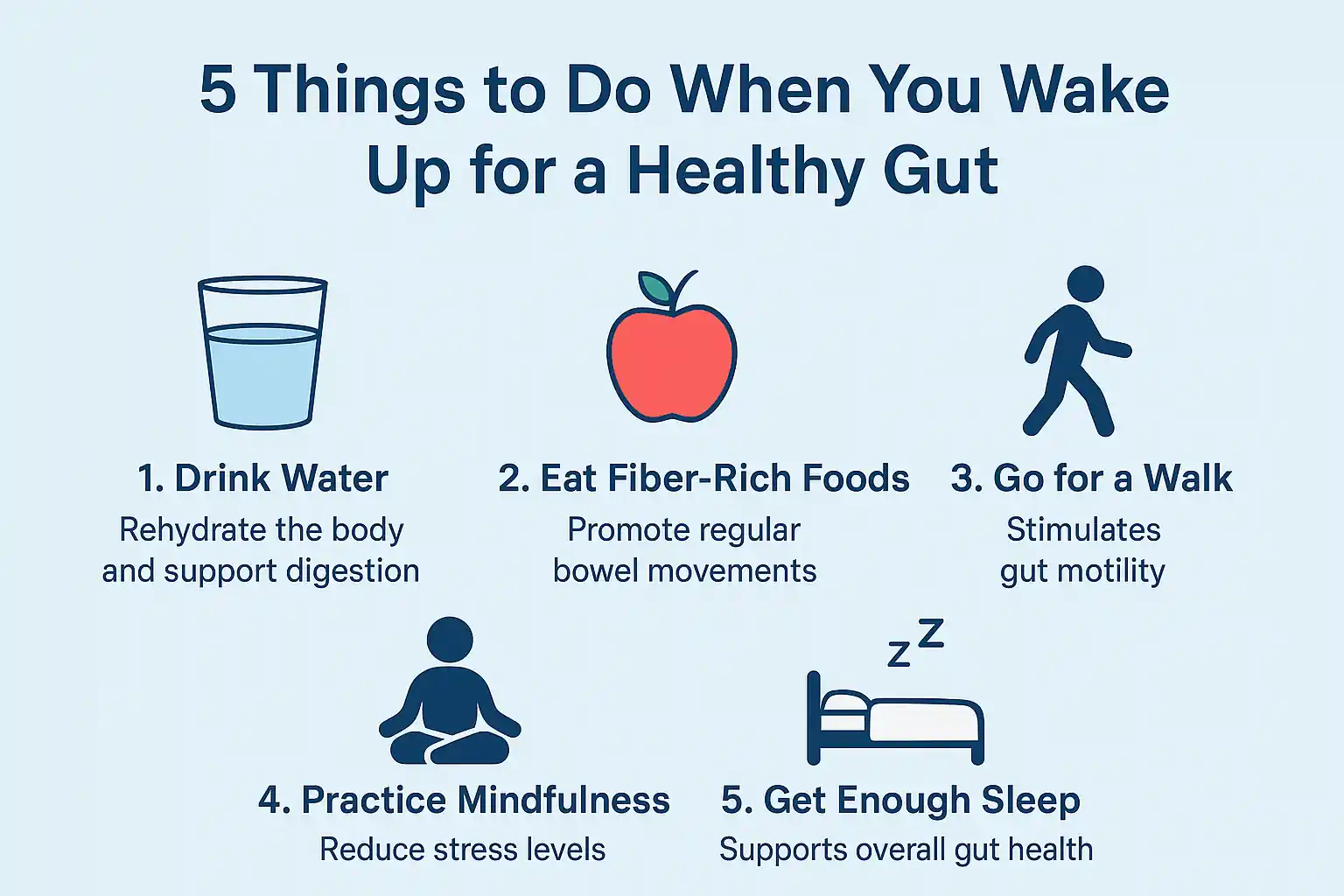
5 Things to Do When You Wake Up for a Healthy Gut
 o
o
 o
o
1. Eat a Breakfast Rich in Fiber and Protein
Skipping breakfast or grabbing a sugary pastry may feel quick, but your gut pays the price.
A well-balanced breakfast that includes both protein and fiber promotes a healthy digestive system and prolongs feelings of fullness.
Fiber feeds the “good” bacteria in your gut, helping maintain gut microbiome balance. Protein supports steady blood sugar, which in turn keeps digestion smooth.
Great breakfast options include:
- Oatmeal topped with berries and a spoon of peanut butter
- Whole-grain toast with avocado and eggs
- Yogurt with nuts and fruit
These foods are part of healthy gut habits that can help you avoid energy crashes, bloating, and constipation.
If you’re short on time, even a quick smoothie with spinach, banana, Greek yogurt, and flaxseeds works. Just avoid starting your day with only coffee and sugar.
2. Drink a Glass of Water
Hydration after waking up is one of the simplest but most powerful habits for digestion.
Your body endures hours without fluids when you sleep. Drinking a glass of water first thing in the morning helps your gut “wake up” and supports the movement of waste through your system.
Some people go a step further and drink stomach cleansing drinks like warm lemon water. This may help stimulate the digestive tract and prepare your body for food.
This is also one of the easiest ways to improve gut health naturally, no supplements needed. Just plain water can help prevent constipation and support a healthy metabolism start for the day.
Avoid ice-cold water first thing. Water that is warm or at room temperature is gentler on your digestive system.
3. Get Moving
Exercise in the morning isn’t just good for your waistline, it’s a key part of a morning digestive routine.
Food passes more easily through the digestive tract when intestinal contractions are stimulated by physical exercise.
You don’t need to run a marathon before breakfast. A 15-minute walk, gentle yoga, or light stretching can be enough to get your gut working.
Regular morning movement can also help with gas, bloating, and irregular bowel habits. Over time, this becomes one of the natural gut detox habits your body depends on.
Additionally, studies suggest that exercising in the morning may increase the variety of bacteria in your stomach, which is good for the balance of your gut microbiome as a whole.
4. Add Spice to Your Morning Coffee
Your cup of coffee offers benefits beyond just waking you up. Adding certain spices can make it better for your gut.
Cinnamon, ginger, and turmeric are examples of anti-inflammatory morning foods. These can reduce gut irritation, support digestion, and even help balance blood sugar.
Try herbal teas for digestion, such as chamomile or peppermint, if you’re sensitive to caffeine. Both can lessen bloating and calm the muscles involved in digestion.
Keep in mind that consuming coffee on an empty stomach may lead to acid reflux or irritation for some individuals. Pair it with a balanced breakfast to protect your stomach lining and support healthy gut habits.
5. Take a Moment for Mindfulness
Stress can significantly impact your gut health more than you realize. A few minutes of deep breathing, meditation, or gratitude journaling in the morning can help keep your digestion calm and steady.
When you’re stressed, your body diverts energy away from digestion. That can lead to bloating, cramping, or irregular bowel movements.
A calm start to the day is one of the easiest ways to improve gut health naturally. Even five minutes of quiet before looking at your phone can make a difference.
Mindfulness also helps set a positive tone for your day, making it easier to stick to your daily ritual gut health goals.
Other Tips for Supporting Gut Health
A strong morning routine for gut health is just the beginning. Supporting your digestion throughout the day ensures that your gut stays balanced, efficient, and comfortable.
- Eat a rainbow of plants daily: Different fibers feed different bacteria, supporting gut microbiome balance.
- Reduce processed foods: These can negatively affect beneficial bacteria and provoke inflammation.
- Stay hydrated all day: Water keeps digestion smooth and prevents constipation.
- Avoid heavy late-night meals: Eating too close to bedtime can cause indigestion and poor sleep.
- Incorporate fermented foods into your diet regularly: Yogurt, kefir, kimchi, and sauerkraut introduce beneficial bacteria to your gut.
- Chew food slowly: Proper chewing helps your stomach work more efficiently.
- Manage your stress on a daily basis: Chronic stress can disrupt digestion; short breaks, breathing exercises, or light activities can be beneficial.
By combining these daily practices with your morning habits, you give your gut the best chance to function well for years to come.
The Bottom Line
Your gut health depends heavily on how you start your day.
Choosing the right foods, staying hydrated, moving your body, adding beneficial spices, and managing stress form a powerful daily ritual gut health strategy.
These habits don’t require expensive supplements or strict diets, just consistency. When you stick to a routine that’s built around healthy gut habits, you’ll not only improve gut health naturally, but also boost your overall well-being.
Frequently Asked Questions
How to start morning for good gut health?
Begin with water, eat a fiber- and protein-rich breakfast, move your body, add gut-friendly spices to drinks, and take a few minutes to relax before starting your day.
How to clean your gut every morning?
Drink warm water or lemon water, move your body gently, and eat a high-fiber breakfast. These steps promote natural cleansing without harsh detoxes or unnecessary supplements.
What is the best thing to have in the morning for gut health?
A balanced breakfast with fiber, protein, and healthy fats, such as oatmeal with seeds and fruit or eggs with vegetables supports long-term digestive balance and energy.
Why is my gut so bad in the morning?
Morning discomfort may result from dehydration, late-night eating, stress, or poor sleep. Adjusting your morning routine for gut health can reduce bloating, irregularity, and sluggish digestion.
Is drinking water in the morning good for gut health?
Yes. Hydration after waking up helps stimulate bowel activity, prevents constipation, and supports overall digestive function, making it a vital step for maintaining a healthy gut.
Does skipping breakfast harm gut health?
Often yes. Skipping breakfast may slow metabolism, reduce healthy bacterial activity, and cause unstable blood sugar; all of which can negatively impact digestion and gut comfort.
How does a morning routine affect digestion throughout the day?
A healthy morning start improves nutrient absorption, bowel regularity, and energy stability, allowing your digestive system to function efficiently for the rest of the day.
Does exercising in the morning improve gut health?
Yes. Light morning exercise helps move food through the digestive tract, reduces bloating, and encourages a healthy bacterial environment in the intestines.
About The Author

Medically reviewed by Dr. Nivedita Pandey, MD, DM (Gastroenterology)
Dr. Nivedita Pandey is a U.S.-trained gastroenterologist and hepatologist with extensive experience in diagnosing and treating liver diseases and gastrointestinal disorders. She specializes in liver enzyme abnormalities, fatty liver disease, hepatitis, cirrhosis, and digestive health.
All content is reviewed for medical accuracy and aligned with current clinical guidelines.