What is intermittent fasting?
Intermittent fasting is an eating pattern where you cycle between eating and fasting. You decide specific intermittent fasting hours when you eat and when you don’t.
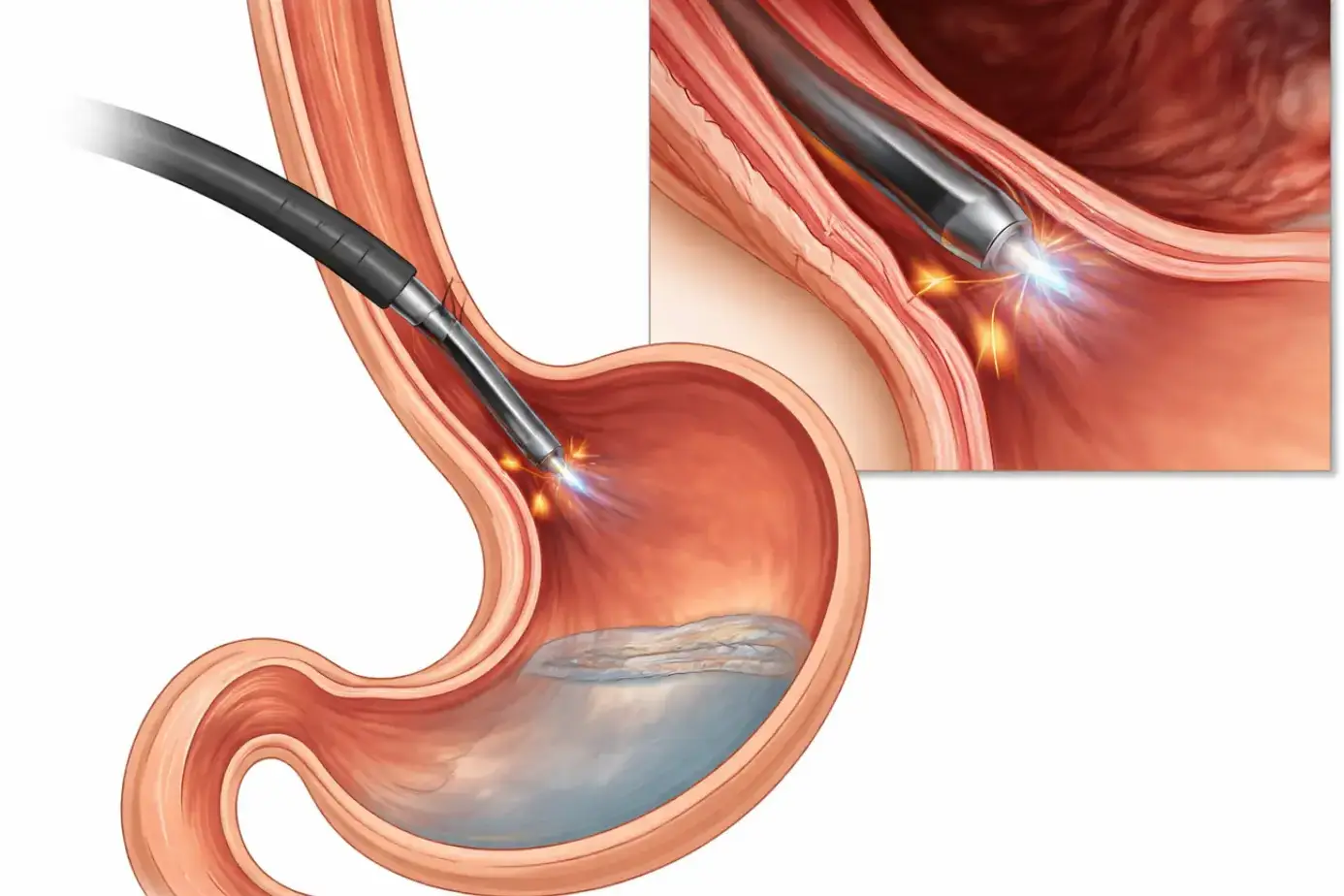
Unlike strict diets, it doesn’t tell you exactly what foods to eat but focuses on when you eat them. During the fasting phase, your insulin levels drop, and your body starts using stored fat for fuel. This change in energy source supports better metabolism, helps with weight management, and may improve blood sugar regulation.
People have been practicing fasting for centuries; for cultural, religious, and health purposes. Today, science supports it as a sustainable approach to healthier living when paired with a balanced intermittent fasting diet.
How does intermittent fasting work?
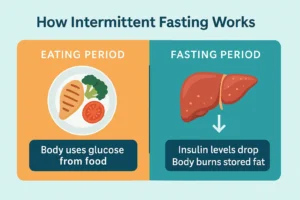
When you eat, your body breaks down food into glucose for energy. If you eat constantly, your body uses glucose right away and stores the rest as fat.
When you fast, your insulin levels drop, and your body begins using stored fat for energy instead of glucose. Over time, this switch can help with blood sugar regulation and fat loss.
Many experts believe this is why intermittent fasting benefits often include weight loss, improved energy, and better digestion.
Intermittent fasting plans
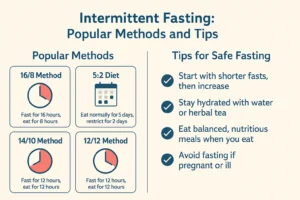
Finding the right intermittent fasting schedule is key to long-term success. You don’t have to jump into long fasts; choose a plan that fits your lifestyle and slowly adjust your intermittent fasting times.
Here are some popular fasting methods:
- 16/8 Method: Fast for 16 hours and eat within an 8-hour eating window. For example, eat from 12 PM to 8 PM.
- 5:2 diet: Eat normally for five days and reduce calories (about 500–600) on two non-consecutive days.
- 14/10 Method: Fast for 14 hours and eat in a 10-hour window. This is a gentler way for beginners to learn how to intermittently fast.
- 12/12 Method: Fast for 12 hours and eat for 12 hours. Easy to follow and great for starting out.
- Time-restricted eating: Choose any set hours for eating, often 4–10 hours long, depending on your intermittent fasting diet plan.
The best approach is to start with shorter fasts and gradually extend your fasting period as your body adapts.
What can I eat while intermittent fasting?
During the fasting window, you should avoid calories. Water, black coffee, and plain tea are fine since they don’t break your fast.
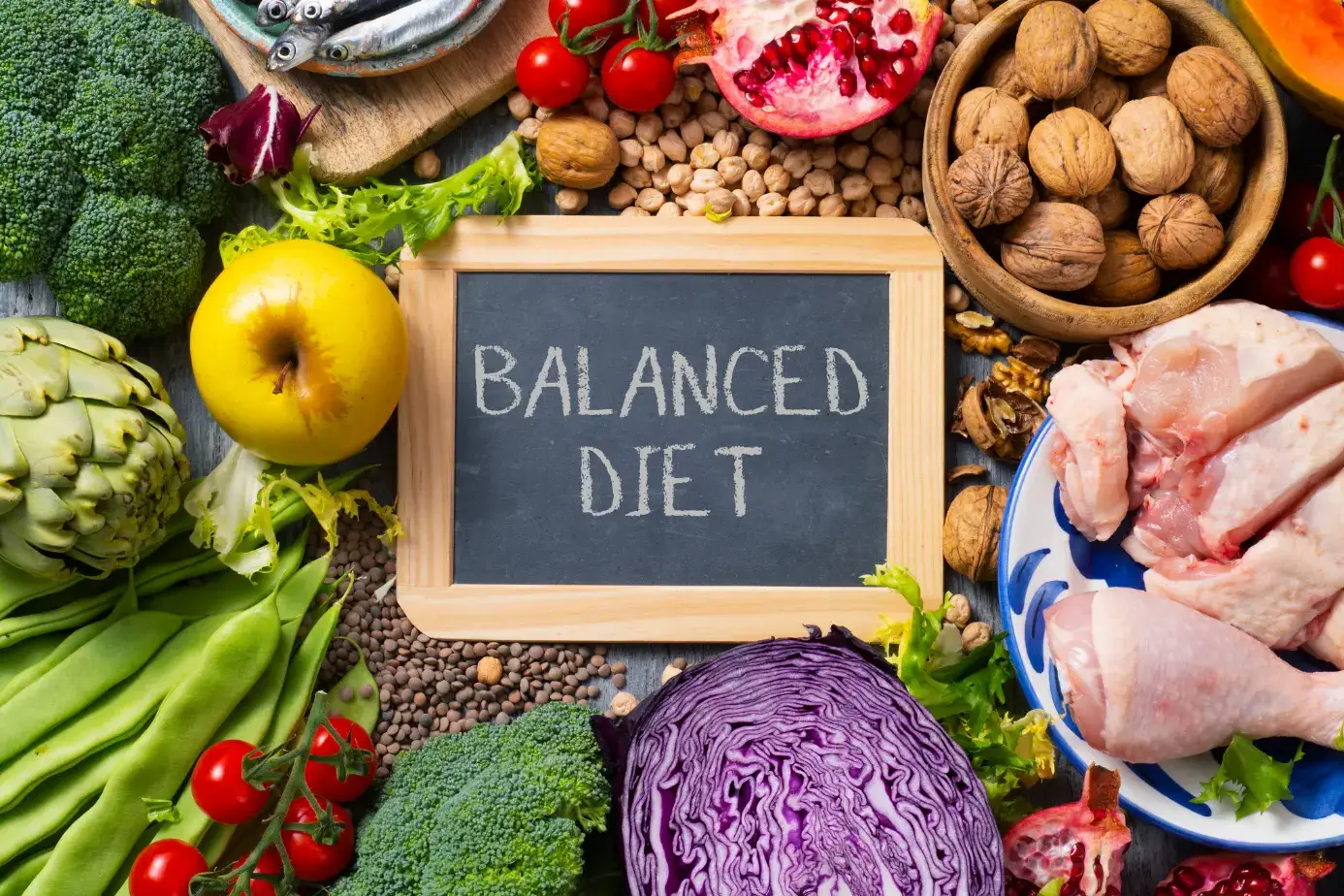
During your eating window, you can follow any intermittent fasting diet, but healthier choices will give better results. A good intermittent fasting diet plan often includes:
- Lean proteins like chicken, fish, eggs, or tofu
- Vegetables and fruits for vitamins and fiber
- Whole grains like oats, quinoa, or brown rice
- Healthy fats like nuts, seeds, and olive oil
Pairing fasting with a healthy intermittent fasting diet plan ensures your body gets enough vitamins, minerals, and energy to function well.
Intermittent Fasting Benefits
People try fasting for different reasons, but the most common intermittent fasting benefits include:
- Weight loss: By reducing your eating hours, you may naturally eat fewer calories and burn more fat.
- Better metabolism: Fasting periods may help the body use energy more efficiently.
- Blood sugar regulation: It may lower insulin resistance, which is good for preventing or managing type 2 diabetes.
- Improved digestion: Fewer meals give your digestive system a break.
- Brain health: Some studies suggest fasting may support brain function and reduce the risk of certain diseases.
Is intermittent fasting safe?
For most healthy adults, intermittent fasting can be safe when done correctly. But it’s not for everyone.
You should avoid intermittent fasting or speak with your doctor if you:
- Are pregnant or breastfeeding
- Have a history of eating disorders
- Have certain chronic illnesses
- Need to take medications with food
For women, it’s especially important to pay attention to energy levels and hormonal changes. Some may benefit from shorter fasting hours or more flexible eating windows.
If you have diabetes, you must check with your doctor before starting, as fasting can affect blood sugar and medication needs.
Conclusion
Intermittent fasting is a tool. When done right, it can help with weight control, energy, and long-term health. The key is to choose an intermittent fasting schedule you can follow, pair it with healthy foods, and give your body time to adjust.
Your first few weeks may be challenging, but many people find it becomes second nature. Whether you start with a 12/12 method or jump into a 16/8 schedule, the important thing is consistency.
Frequently asked questions
What is intermittent fasting?
It’s an eating method that alternates between fasting and eating for set hours, focusing on timing rather than food type, to improve health and manage weight.
Does intermittent fasting work?
Yes. It promotes fat-burning, balances insulin, supports digestion, and helps with long-term weight control when combined with healthy food choices and consistent intermittent fasting hours.
How to intermittent fast?
Pick a fasting schedule, such as 16/8, avoid calories during fasting, and eat nutritious meals during eating windows for sustainable results and lasting intermittent fasting benefits.
Is intermittent fasting healthy?
For most adults, yes. It may improve metabolism, aid weight loss, and support heart health. However, medical guidance is important for those with chronic illnesses or special conditions.
How long to fast for intermittent fasting?
Beginners often start with 12 hours of fasting, then extend to 14 or 16 hours. Longer fasts should be introduced gradually to allow your body to adapt.
What does intermittent fasting do?
It lowers insulin levels, encourages fat use for energy, supports blood sugar control, and may improve digestion and mental clarity when followed consistently.
What to eat during intermittent fasting?
Focus on lean proteins, vegetables, whole grains, and healthy fats during eating windows. Avoid processed foods for better energy and sustained intermittent fasting benefits.
Can you drink water during intermittent fasting?
Yes. Plain water, black coffee, and unsweetened tea are allowed during fasting hours as they contain no calories and won’t break your fast.
Does intermittent fasting burn fat?
Yes. By extending the time between meals, your body taps into stored fat for energy, which supports gradual, steady fat loss over time.
Can you drink coffee during intermittent fasting?
Yes, but only black coffee without sugar or cream. Adding milk or sweeteners will break your fast and reduce fat-burning benefits.
Is intermittent fasting healthy for women?
Yes, though some may prefer shorter fasting hours to avoid hormonal disruptions. Listening to your body and adjusting the schedule is important.
Is intermittent fasting good for diabetics?
It can help with blood sugar control, but must be done under medical supervision to avoid dangerous drops in glucose levels during fasting hours.
How long does it take for intermittent fasting to work?
Results vary, but many people notice changes like better energy and slight weight loss within two to four weeks of consistent fasting and healthy eating.
About The Author

Medically reviewed by Dr. Nivedita Pandey, MD, DM (Gastroenterology)
Dr. Nivedita Pandey is a U.S.-trained gastroenterologist and hepatologist with extensive experience in diagnosing and treating liver diseases and gastrointestinal disorders. She specializes in liver enzyme abnormalities, fatty liver disease, hepatitis, cirrhosis, and digestive health.
All content is reviewed for medical accuracy and aligned with current clinical guidelines.