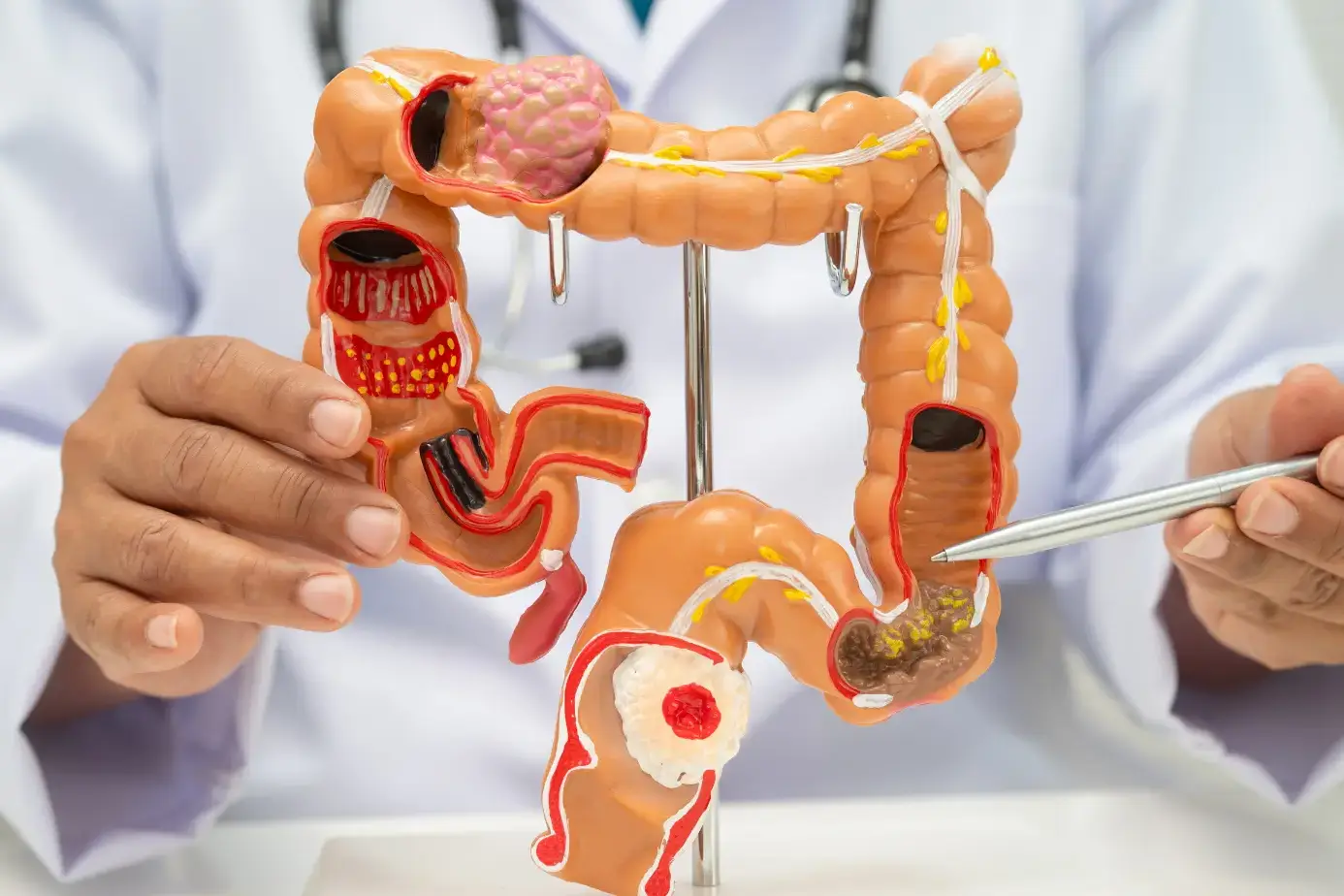
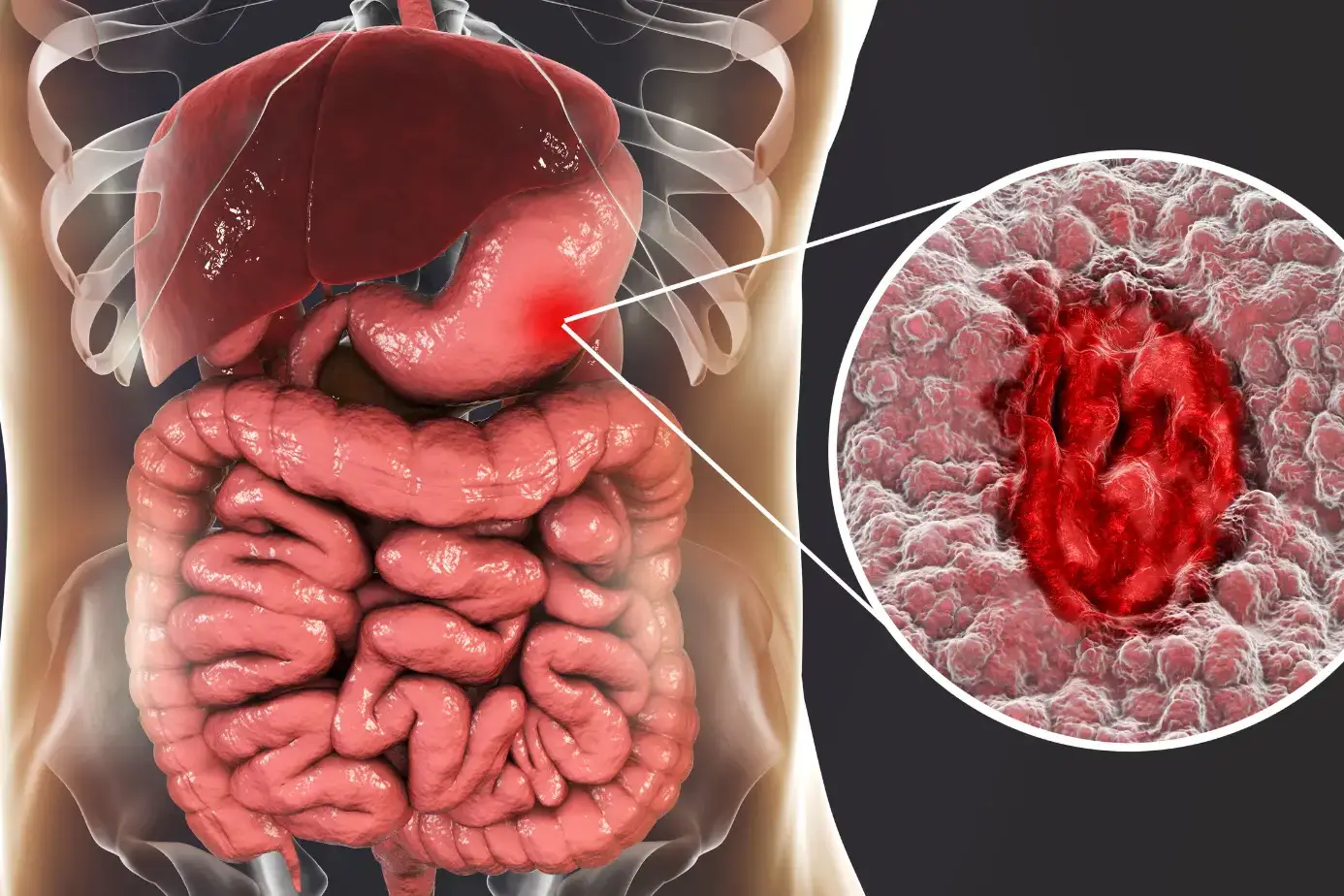
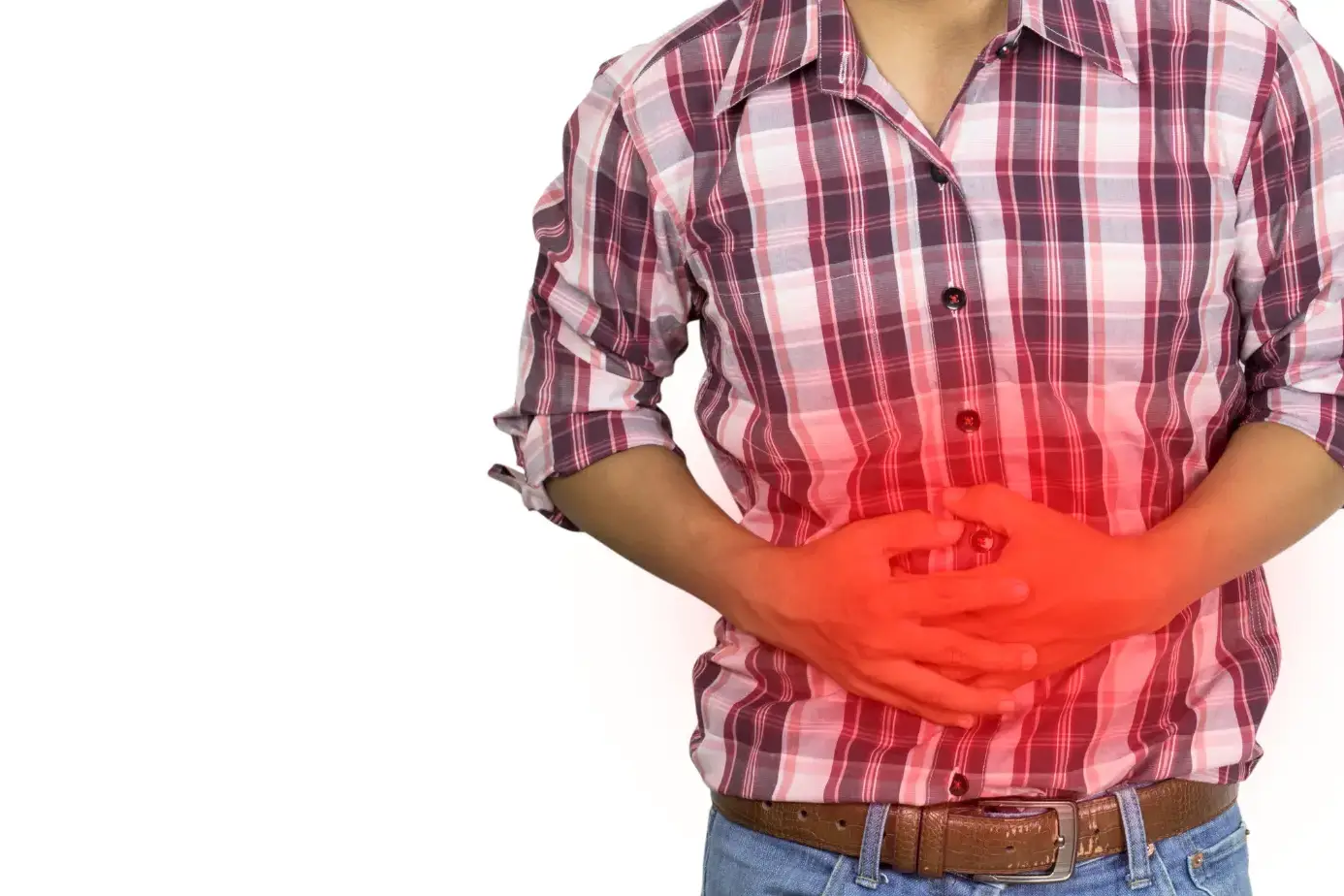
Yes, constipation can cause fever . But you must treat it like a sign. Constipation causes fever only when it leads to complications like inflammation, impaction, or infection. Constipation by itself doesn’t raise body temperature, but trapped stool can irritate your gut and allow bacteria to multiply. That irritation triggers your immune system, which sometimes produces fever.
So, when constipation and fever appear together, it’s often your body’s way of warning that something deeper is wrong.
What Causes Fever During Constipation?
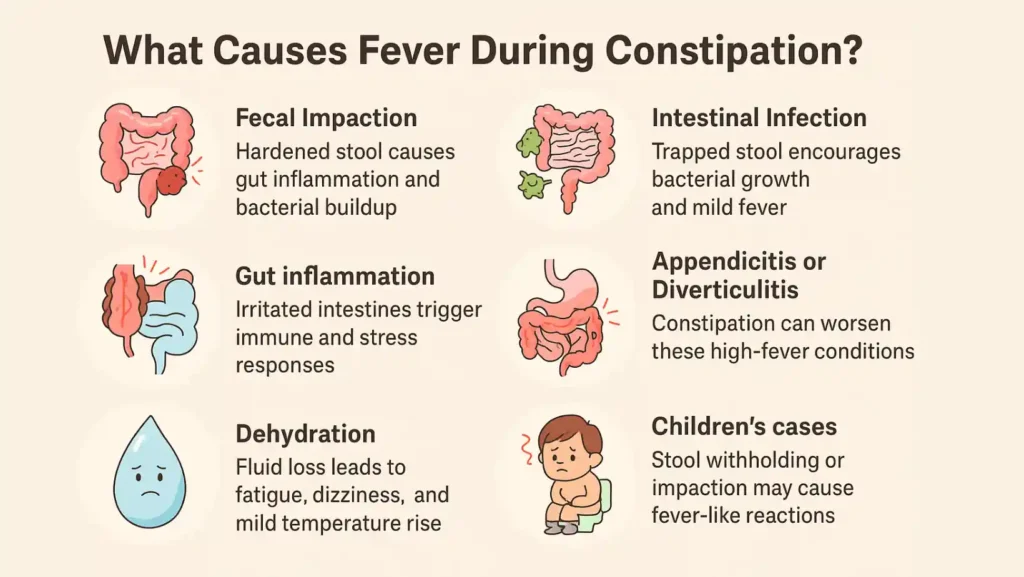
When stool sits in your colon too long, things change. The colon can get irritated. Bacteria can grow. Your immune system can react. Those events can cause a low fever. Here are the main reasons.
1. Fecal Impaction — Hardened Stool Causes Gut Inflammation And Bacterial Buildup
Fecal impaction happens when stool becomes very hard and blocks the rectum. You feel full, bloated, and unable to pass stool. The hard stool rubs the gut lining. That rubbing causes inflammation. Bacteria near the stuck stool can multiply. That bacterial growth can cause a mild fever. If you feel constant pressure and low fever, think impaction.
2. Intestinal Infection — Trapped Stool Encourages Bacterial Growth And Mild Fever
Stool that stays put changes the normal balance of gut bacteria. Harmful bacteria can grow and cause infection. The infection makes your body raise its temperature. You may get chills, bad-smelling stool, and cramping. In these cases, the fever comes from the infection. Treating the infection lowers the fever.
3. Gut Inflammation — Irritated Intestines Trigger Immune And Stress Responses
Longstanding constipation can make the colon sore. That soreness makes the immune system act. The immune system may release chemicals that raise body temperature. You might get only a low-grade fever. You will also have belly pain and thinner stools when they pass.
4. Appendicitis Or Diverticulitis — Constipation Can Worsen These High-Fever Conditions
Constipation can hide or worsen serious belly problems. Appendicitis starts as mild pain and often becomes sharp pain on the right side. Diverticulitis is an infection of small pouches in the colon. Both conditions cause fever. If your pain moves or if it gets much worse, do not wait. These problems need medical care.
5. Dehydration — Fluid Loss Leads To Fatigue, Dizziness, And Mild Temperature Rise
When you do not drink enough water, the body struggles to cool itself. Dehydration makes stools hard and raises the chance of constipation. It also makes your temperature climb slightly. Drinking fluids often fixes both problems quickly.
6. Children’s Cases — Stool Withholding Or Impaction May Cause Fever-Like Reactions
Children can hold a stool to avoid pain. That habit leads to large, hard stools. It can press on nearby organs and cause low-grade fever. Young children with fever and constipation need faster checks. Babies can get sick quickly.
Symptoms Showing Fever And Constipation Are Linked

You must watch for clear signals that link fever and constipation. If you see several of these signs, act fast.
- Abdominal pain, bloating, or tenderness. Pain that gets worse is serious.
- Fewer than three bowel movements each week. This is true constipation.
- Low-grade fever from 99 to 101 degrees Fahrenheit, that is 37.2 to 38.3 Celsius.
- Nausea, loss of appetite, or tiring easily. These come with impaction or infection.
- Pain or straining when you pass stool. This shows the stool is hard.
- Chills, sweating, or foul-smelling stool. These point to infection and need attention.
If you have a fever plus these signs, do not assume it is simple constipation. Fever often means infection or serious inflammation.
Serious Conditions That Combine Constipation And Fever
Some illnesses are dangerous and show both constipation and fever. Know them and act fast if you suspect one.
Appendicitis — Sharp Right-Side Pain, Nausea, And Fever
Appendicitis often begins with pain near the belly button. The pain moves to the right lower belly. You might feel sick or vomit. Fever follows. This is a medical emergency. Seek care now.
Diverticulitis — Inflamed Colon Pouches Common In Adults With Chronic Constipation
Diverticula are small pockets in the colon. They can get inflamed or infected. People with long-term stool strain have a higher risk. Symptoms include lower left belly pain, fever, and a change in bowel habits. Doctors treat it with antibiotics or surgery in severe cases.
Fecal Impaction — Severe Blockage Leading To Infection And Low-Grade Fever
If stool plugs the rectum, you feel full and may not pass gas. Manual removal or enemas may be needed. Infection can happen around the blocked stool and cause fever. Do not ignore hard stools that refuse to pass.
Bowel Obstruction — Vomiting, Swelling, And High Fever
A full blockage of the small or large bowel causes severe pain, vomiting, and belly swelling. Fever can appear if the bowel becomes damaged or infected. This is an emergency. It usually needs surgery.
GI Infections — Bacterial Or Viral Illnesses Causing Both Constipation And Fever
Gastrointestinal (GI) infections like salmonella or certain viral illnesses can cause alternating constipation and fever. The infection irritates the intestines, slowing their movement. You may feel bloated, weak, and feverish. Doctors diagnose these infections with stool tests and treat them based on the specific germ involved.
When To See A Doctor
You must seek medical help for certain signs. Do not delay.
- A fever above 101 degrees Fahrenheit that lasts more than 24 hours.
- No bowel movement for five to seven days or pain that gets worse.
- Blood or mucus in stool.
- Repeated vomiting, dehydration, or mental confusion.
- Infants, the elderly, or people with chronic illness who show both symptoms.
For children, call earlier. A baby younger than three months with rectal temperature over 100.4 degrees needs urgent care. Children can worsen fast.
How To Treat Constipation When Fever Is Present
Treat the cause, not just the symptom. Use safe moves first.
1. Hydrate Well — Water Cools The Body And Softens Stool
Start with fluids. Water is best, but you can also drink diluted fruit juice or clear broth. Hydration helps loosen stool and supports the body’s cooling system. Adults should aim for at least 2–2.5 liters per day unless told otherwise by a doctor.
2. Avoid Unsupervised Laxatives
Overusing laxatives can make things worse, especially if you have an impaction or an obstruction. Some laxatives draw water into the colon, which can worsen dehydration. Always check with a healthcare provider before taking one, particularly if you have a fever, severe pain, or nausea.
3. Apply Warm Compresses — Ease Abdominal Cramps Naturally
A warm compress or heating pad placed on the abdomen can help relax muscles and relieve cramps caused by constipation. It won’t cure the fever, but it offers comfort while you work on fixing the root cause.
4. Eat Light, Fiber-Rich Foods — Soups, Fruits, and Cooked Vegetables
Eat soft, easy-to-digest foods like oatmeal, vegetable soup, or mashed fruits. These provide both fiber and hydration. Avoid fried foods, cheese, and processed snacks until your bowels normalize. Fiber adds bulk to stool, while fluids soften it; both are key to recovery.
5. Track Temperature and Bowel Frequency
Keep a simple log. Note when you pass stool, how it feels (hard, soft, etc.), and record your temperature twice daily. A rising fever or worsening pain signals infection or blockage. This helps doctors make better decisions during your visit.
6. Seek Medical Help — Enemas or Stool Softeners May Be Prescribed
If home methods don’t work or your fever climbs, seek medical attention. Doctors may prescribe stool softeners, enemas, or other treatments to remove the blockage. If infection is suspected, antibiotics might be needed. Never try to manually remove stool at home, as it can injure the rectum and cause infection.
Treating Constipation-Related Fever In Children
Treat children with care and caution.
- Encourage water, soups, and hydrating fruits. Keep fluids regular.
- Limit dairy and processed snacks that can harden stool.
- Give warm baths to ease cramps and calm the child.
- Call a pediatrician if the fever exceeds 100.4 degrees or no bowel movement for over three days.
- Never give adult laxatives to children without guidance.
Preventing Constipation-Fever Complications
Good daily habits stop most problems.
- Eat fiber each day from fruit, vegetables, and whole grains.
- Drink two to two and a half liters of water each day unless your doctor advises otherwise.
- Stay active and do not delay using the toilet when you feel the urge.
- Keep a routine for meals and toilet time. Stress and irregular habits slow the bowels.
- Use probiotics to support healthy gut bacteria if your doctor agrees.
Fever From Constipation: Myth Or Medical Reality?
| Claim | Explanation | Verdict |
| Constipation always causes fever | Regular constipation rarely raises body temperature. Fever usually appears only if infection or inflammation develops. | Myth |
| Fecal impaction can cause fever | Hardened stool irritates the gut and traps bacteria, triggering inflammation and mild fever. | Reality |
| Dehydration from constipation can cause fever | Low fluids make stool hard and reduce body cooling, leading to a slight temperature rise. | Reality |
| Any fever with constipation is an emergency | Mild fever can improve with fluids, but high fever, pain, or vomiting need urgent care. | Depends |
| Children get fever only from constipation | Stool withholding may cause low fever, but a strong or lasting fever often means infection. | Partly true |
| Constipation infection fever is harmless | Fever with infection shows bacterial growth. It can become serious if untreated. | Myth |
| Fever from constipation myth is false | The myth is half true. Simple constipation doesn’t cause fever, but complications can. | Half Myth / Half Reality |
| Chronic constipation fever warning signs can be ignored | Ongoing constipation with fever can point to diverticulitis or impaction. It should never be ignored. | Myth |
| Constipation plus fever symptoms always mean infection | They can also result from dehydration or inflammation, but infection must be ruled out first. | Depends |
FAQs
Can constipation cause a low-grade fever in adults?
Yes. Constipation can cause fever when complications like impaction, infection, or severe dehydration occur. Watch for persistent low fever, pain, and foul stool, and seek care if symptoms worsen.
What does constipation with fever mean in children?
When constipation with fever appears, it may signal impaction or infection. Young children need faster doctor checks. A baby with a high fever must be seen immediately by a pediatrician.
When should I visit urgent care for constipation and fever?
Go to urgent care if your fever stays above 101 degrees, your pain worsens, you vomit, or you cannot drink fluids. These signs may mean infection or blockage needing urgent attention.
How can I tell if it’s constipation or infection?
Look for chills, very bad-smelling stool, or high fever. Those signs suggest infection. If you only have hard stools without fever, treat at home and watch closely.
Can dehydration from constipation cause mild fever?
Yes. Dehydration makes your body less able to cool down. It can cause low fever and hard stools. Drink fluids, and seek care if symptoms do not improve.
What’s the safest way to relieve constipation when you have a fever?
Hydrate, eat soft fiber, and avoid strong laxatives until a doctor clears you. If pain or fever gets worse, seek immediate medical help for proper treatment and tests.
Can chronic constipation lead to repeated fevers?
Chronic constipation can cause repeated problems such as impaction or diverticulitis. Those problems may produce low fevers. Treat long-term constipation to reduce repeated fever.
Should I use probiotics during constipation with fever?
Probiotics may help gut balance, but do not replace medical care for infection. Ask a doctor before use, especially if you are ill or have a weak immune system.
How do doctors treat fecal impaction-related fever?
Doctors may use enemas, manual removal, stool softeners, or antibiotics if an infection exists. Severe cases need hospital care. Follow the clinician’s instructions strictly to avoid complications.
About The Author

Medically reviewed by Dr. Nivedita Pandey, MD, DM (Gastroenterology)
Dr. Nivedita Pandey is a U.S.-trained gastroenterologist and hepatologist with extensive experience in diagnosing and treating liver diseases and gastrointestinal disorders. She specializes in liver enzyme abnormalities, fatty liver disease, hepatitis, cirrhosis, and digestive health.
All content is reviewed for medical accuracy and aligned with current clinical guidelines.