Detox trends are marketed as fast ways to flush toxins, lose weight, and reset the body, but the science behind most of them is thin. The human body already runs a sophisticated detox system through the liver, kidneys, and gut, and no juice cleanse or herbal tea meaningfully improves on that.
In the U.S., the detox and cleanse supplement market was valued at $52 billion in 2023, per Grand View Research, yet no commercial detox product has FDA approval or peer-reviewed evidence confirming it removes specific toxins.
This article covers the most popular detox methods, what the body actually does without them, where these trends cause real harm, and what evidence-based alternatives produce lasting health results.
Popular Detox Methods for Health
Popular detox methods for health fall into three broad categories: calorie-restricted liquid protocols, fasting schedules, and herbal supplements. Each works through a different mechanism, and each carries different risk profiles.
Juice Cleanse Detox Plan
A juice cleanse detox plan typically replaces all meals with cold-pressed fruit and vegetable juices for 1 to 7 days. Calorie intake drops to 800-1,200 calories daily on most protocols. Short-term weight loss of 2-4 pounds occurs, but this is primarily water weight and glycogen depletion, not fat loss.
Intermittent Fasting Detox Methods
Intermittent fasting detox methods restrict eating to specific time windows, the most common being 16:8 (16 hours fasting, 8 hours eating). Unlike juice cleanses, intermittent fasting has peer-reviewed evidence behind it.
A 2020 review in New England Journal of Medicine confirmed metabolic improvements in insulin sensitivity, triglycerides, and blood pressure after 8-12 weeks of consistent 16:8 fasting. The “detox” framing is marketing, but the metabolic outcomes are real.
Herbal Detox Teas and Supplements
Most herbal detox products contain senna, cascara, or dandelion root. Senna is an FDA-approved laxative for constipation. It does not remove metabolic toxins. A 2017 review in the Journal of Human Nutrition and Dietetics analyzed 15 commercial detox products and found zero clinical evidence supporting toxin removal claims for any of them.
Juice Cleanse Detox Plan
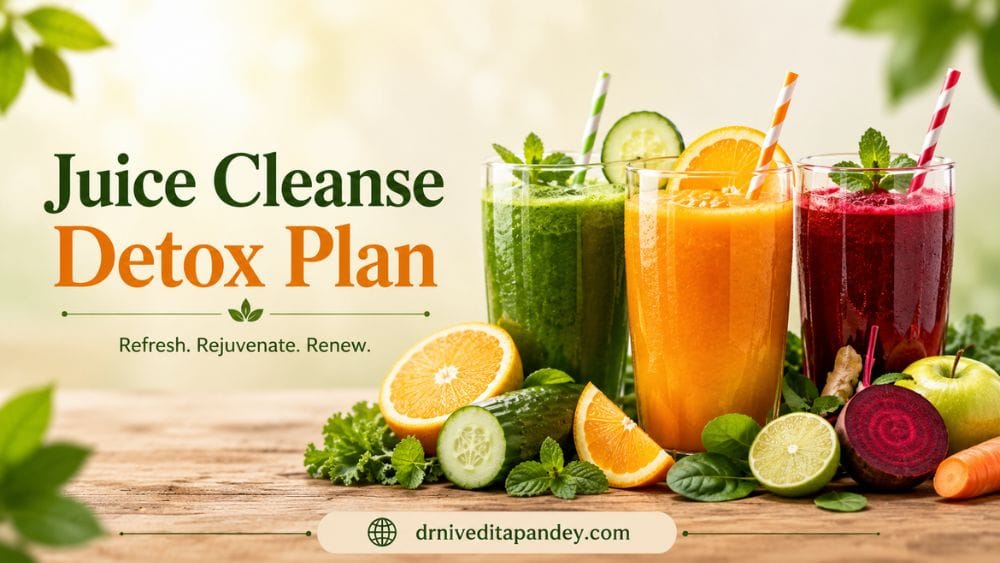
A juice cleanse detox plan strips out fiber, protein, and fat entirely. The short-term results look appealing on a scale, but the physiology tells a different story.
Short-Term Weight Loss Effects
The 2-4 pounds lost in the first 3 days of a juice cleanse comes from two sources: water lost with glycogen (each gram of glycogen holds 3 grams of water), and reduced food volume in the digestive tract. Fat loss requires a calorie deficit sustained over weeks, not days. The weight returns within 48-72 hours of resuming normal eating.
Lack of Protein and Nutrients
Most juice cleanses deliver under 10 grams of protein daily. The recommended daily intake for adults is 0.8 grams per kilogram of body weight, meaning a 150-pound adult needs roughly 55 grams. Below adequate protein intake for more than 3 days, the body breaks down muscle tissue for amino acids. This raises cortisol and reduces basal metabolic rate.
Temporary Results vs Long-Term Health
Juice cleanses produce no lasting health benefit beyond the caloric restriction period. A 2015 study in PLOS ONE confirmed that participants who completed a 3-day juice cleanse showed no significant reduction in inflammatory markers, liver enzymes, or blood lipids compared to a control group eating normally.
How the Body Naturally Detoxifies
The body does not need detox trends to remove waste. It runs a continuous, multi-organ filtration system around the clock, and that system is far more sophisticated than any commercial product.
Liver Function
The liver processes 1.5 liters of blood per minute. It uses two phases (Phase I and Phase II detoxification) to convert fat-soluble toxins, including alcohol, medications, and environmental chemicals, into water-soluble compounds the kidneys can filter out. This happens automatically.
Specific nutrients that support Phase II liver detoxification include sulfur-rich foods such as broccoli, garlic, and eggs, which provide the cysteine and glutathione precursors the liver needs.
Kidney Filtration
The kidneys filter 180 liters of blood daily and produce 1-2 liters of urine. They actively excrete urea, creatinine, uric acid, and drug metabolites. The kidneys do this without any cleanse product. What they do need is adequate water intake, roughly 2-3 liters daily, to maintain filtration pressure.
Role of Hydration and Nutrition
Adequate hydration, dietary fiber from whole foods, and consistent micronutrient intake are the only proven external inputs that support the body’s natural detox processes. Fiber binds bile acids and toxins in the gut for excretion. Magnesium, zinc, and B vitamins support liver enzyme activity. No supplement replicates these mechanisms more effectively than whole food sources.
Dehydration and Detox Side Effects
Dehydration and detox side effects appear within the first 24-48 hours of most cleanse protocols. The irony is significant: products marketed as health improvements frequently produce measurable physiological harm.
Low Energy and Fatigue
Caloric restriction below 1,000 calories triggers a drop in blood glucose. The brain consumes 120 grams of glucose daily and has no alternative fuel for the first 12-24 hours of restriction. Fatigue, difficulty concentrating, and headaches follow directly.
Electrolyte Imbalance
Juice cleanses and laxative-based herbal products cause rapid fluid loss. Sodium, potassium, and magnesium leave the body with this fluid. Hypokalemia (low potassium) from aggressive cleansing produces muscle cramps, irregular heartbeat, and weakness. The FDA issued warnings in 2017 about potassium depletion risks from popular detox tea products containing senna.
Digestive Problems
Laxative-containing detox products speed transit time through the colon. This prevents normal water reabsorption and disrupts the gut microbiome. A 2021 study in Gut Microbes found that even 5-day disruptions to gut microbiome composition from laxative use required 3-4 weeks of recovery through normal eating.
When Detox Diets May Be Harmful
Nutrient Deficiencies
Multi-day juice cleanses consistently fall short on iron, calcium, vitamin B12, and zinc. A 7-day cleanse without protein creates measurable muscle catabolism in adults over 40, where muscle protein synthesis is already declining.
Blood Sugar Fluctuations
High-fructose juices, such as apple and grape-based cleanses, spike blood glucose rapidly. People with insulin resistance or prediabetes experience pronounced glucose spikes and crashes across a day of juice-only eating, worsening the metabolic pattern they often hope to improve.
Impact on Metabolism
Repeated short-term caloric restriction from cycling through detox trends multiple times yearly suppresses thyroid hormone T3 output. T3 governs metabolic rate. A 2016 study in Metabolism found that very low-calorie protocols lasting 5 or more days reduced resting metabolic rate by 10-15%, an effect that persisted for several weeks post-cleanse.
What Actually Improves Health Instead of Detoxing
The research is consistent. No detox trends outperform these three inputs for long-term health outcomes.
Balanced Nutrition
Whole foods provide the fiber, micronutrients, and phytocompounds the liver and kidneys need. Specifically, cruciferous vegetables (broccoli, Brussels sprouts, cabbage) activate Nrf2 pathway enzymes that upregulate the body’s endogenous antioxidant production. This is evidence-based liver support, not marketing.
Regular Exercise
Thirty minutes of moderate aerobic exercise daily reduces circulating inflammatory cytokines, improves lymphatic drainage, and increases sweat-based excretion of trace heavy metals including arsenic and cadmium, per a 2011 study in Archives of Environmental Contamination and Toxicology. Exercise does measurably what cleanses claim to do.
Adequate Hydration
Two to three liters of water daily optimizes kidney filtration rate and reduces kidney stone formation risk by 50%, per the National Kidney Foundation. No detox water additive, lemon or otherwise, changes this equation meaningfully.
When to Avoid Detox Diets Completely
Pregnancy
Caloric restriction during pregnancy restricts fetal glucose and nutrient supply. Herbal supplements marketed for detox trends, such as senna, licorice root, and pennyroyal carry documented uterotonic risks and are contraindicated throughout pregnancy.
Chronic Illnesses
People with type 1 or type 2 diabetes face serious blood sugar instability on juice-only protocols. Those with chronic kidney disease cannot tolerate the high potassium in raw green juices; elevated potassium worsens kidney function in this population. Anyone on warfarin faces dangerous INR fluctuations from high-vitamin-K green juices.
Underweight Individuals
A BMI below 18.5 indicates insufficient fat stores and often inadequate muscle mass. Any caloric restriction at this point accelerates muscle catabolism and risks cardiac muscle involvement in severe cases. Detox protocols for detox for gut health claims are inappropriate for underweight individuals without clinical supervision.
FAQs
What are detox trends?
Detox trends are commercial diet protocols claiming to remove toxins through juice cleanses, herbal products, or fasting. No peer-reviewed study confirms any commercial detox product removes specific metabolic toxins. The body’s liver and kidneys perform this function continuously without external products.
Are intermittent fasting detox methods effective?
Yes, but only for metabolic health, not toxin removal. Intermittent fasting detox methods such as 16:8 fasting improve insulin sensitivity and triglycerides after 8-12 weeks, per a 2020 NEJM review. The detox label is marketing. The metabolic outcomes from fasting windows are clinically supported.
What is detox for gut health?
Detox for gut health marketed products mostly contain laxatives or probiotics. Laxatives disrupt gut microbiome balance within 5 days and require 3-4 weeks of recovery. Genuine gut health improvement comes from 25-38 grams of daily dietary fiber, not cleanses.
What are dehydration and detox side effects?
Dehydration and detox side effects include low potassium, muscle cramps, irregular heartbeat, fatigue, and disrupted gut bacteria. These appear within 24-48 hours of cleansing. The FDA issued specific warnings in 2017 about potassium depletion from senna-based detox teas.
Do detox diets actually remove toxins?
No. The liver removes toxins in two enzymatic phases, processing 1.5 liters of blood per minute. The kidneys filter 180 liters daily. No detox trend product has demonstrated the ability to accelerate or improve either process in healthy adults.
Are detox diets safe?
Short-term juice cleanses under 3 days are low-risk for healthy adults. Beyond 3 days, protein deficiency, electrolyte imbalance, and metabolic rate suppression become measurable concerns. Detox trends containing senna, pennyroyal, or licorice root carry documented organ risks and should be avoided entirely.
What are better alternatives to detox diets?
Cruciferous vegetables activate liver detox enzymes via the Nrf2 pathway. Thirty minutes of daily aerobic exercise increases heavy metal excretion through sweat. Two to three liters of daily water optimizes kidney filtration. These three habits produce real detox outcomes without the side effects of commercial detox trends.
When should detox diets be avoided?
Detox diets should be avoided during pregnancy (uterotonic herb risk), in anyone with type 1 or 2 diabetes (blood sugar instability), chronic kidney disease (potassium overload risk), warfarin use (vitamin K interference), or BMI below 18.5 (muscle catabolism risk).
About The Author

Medically reviewed by Dr. Nivedita Pandey, MD, DM (Gastroenterology)
Dr. Nivedita Pandey is a U.S.-trained gastroenterologist and hepatologist with extensive experience in diagnosing and treating liver diseases and gastrointestinal disorders. She specializes in liver enzyme abnormalities, fatty liver disease, hepatitis, cirrhosis, and digestive health.
All content is reviewed for medical accuracy and aligned with current clinical guidelines.