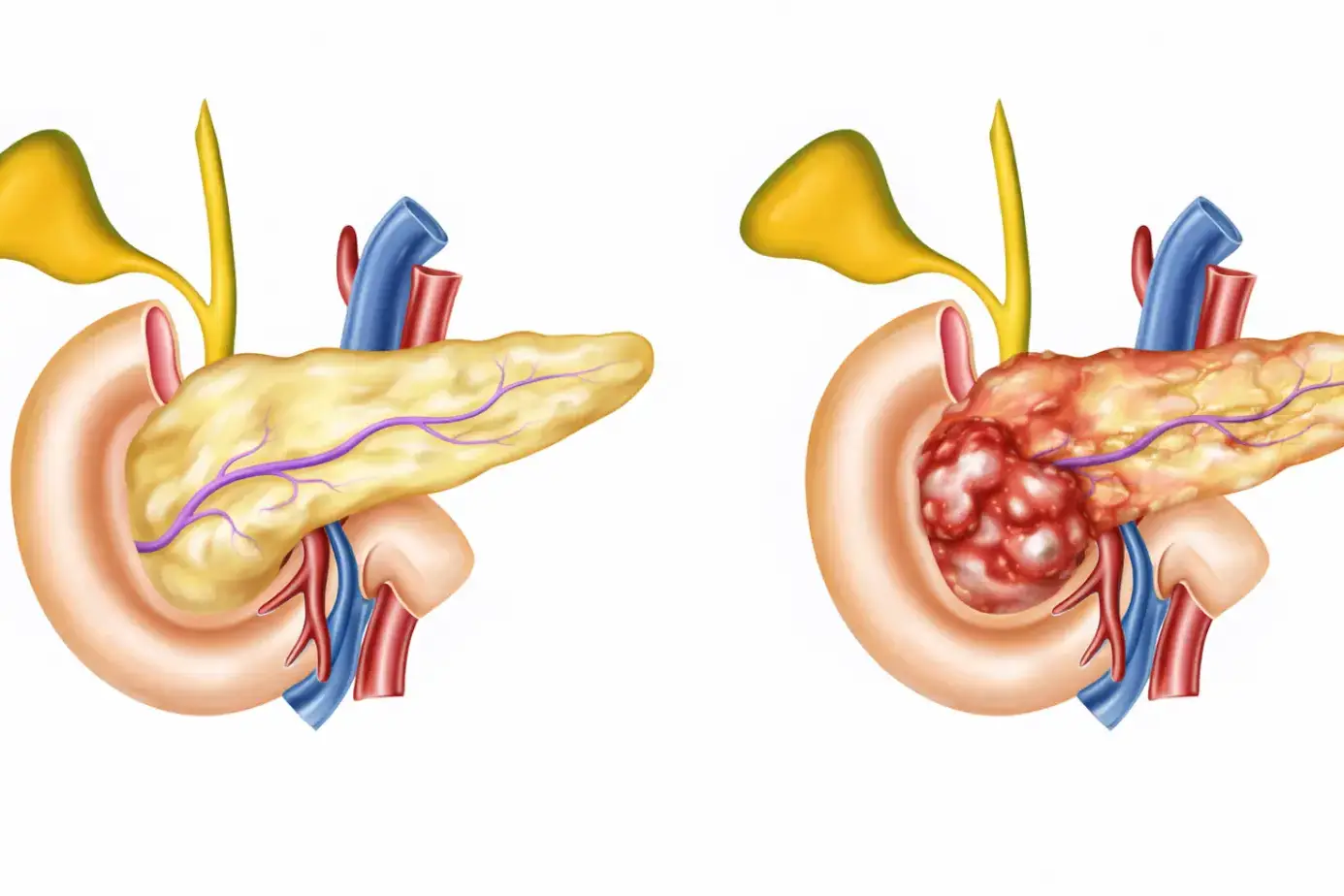
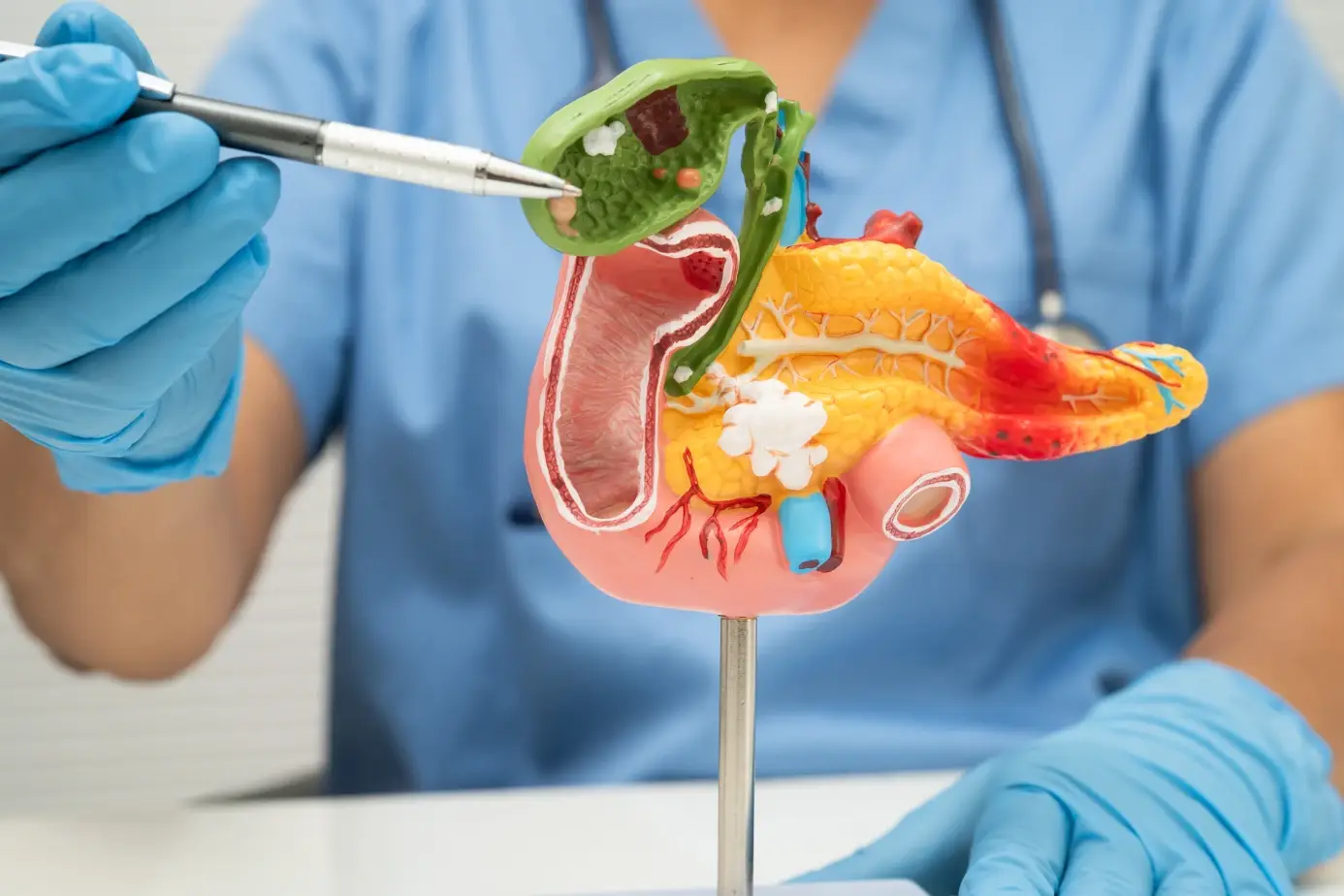
Most natural remedies for gallstones manage symptoms or slow stone formation. None of them dissolve existing gallstones. You should not rely on home remedies while ignoring a blocked bile duct end up in emergency surgery, sometimes after a serious infection.
For small, asymptomatic cholesterol stones, lifestyle changes reduce the risk of attacks. For stones causing pain, blockage, or fever, no herb or cleanse replaces medical treatment.
Home Remedies for Gallbladder Stones
Home remedies for gallbladder stones do not remove stones. What they do is reduce the frequency and severity of attacks by changing how the gallbladder works and how much stress it faces during digestion.
What actually helps:
- Hydration: Drinking 6 to 8 glasses of water daily keeps bile more fluid. Concentrated bile is one reason cholesterol crystallizes into stones. Proper hydration slows that process.
- Small, frequent meals: Large meals trigger the gallbladder to contract hard and fast. Smaller meals spaced 3 to 4 hours apart reduce the force of contractions, lowering the chance of a stone getting pushed into the duct.
- Reducing fatty food intake: Fat is the main trigger for gallbladder contraction. Cutting saturated fat, particularly from fried food, red meat, and full-fat dairy, reduces how often and how hard the gallbladder squeezes.
- Gradual weight management: Losing weight too fast, specifically more than 1.5 kg per week, raises cholesterol in bile and increases stone formation. Slow, steady weight loss at 0.5 to 1 kg per week is safer for gallbladder health.
Herbal Remedies for Gallstones
The clinical evidence behind herbal remedies for gallstones is limited. That does not mean they are useless, but they support liver and digestive function; they do not dissolve or flush stones.
Milk thistle (Silybum marianum): The active compound, silymarin, protects liver cells from damage and reduces liver inflammation. Milk thistle does not break down existing stones. Studies support its liver-protective effects, but no clinical trial has shown it removes gallstones.
Turmeric (Curcuma longa): Curcumin in turmeric reduces bile duct inflammation and stimulates bile flow. In small studies, curcumin at 20 mg doses increased gallbladder emptying by up to 40%. Better gallbladder emptying means bile sits less, which reduces stone formation risk.
Dandelion root (Taraxacum officinale): Dandelion stimulates bile production and improves fat digestion. It works as a mild digestive aid. No human trial has shown dandelion root dissolves gallstones or reverses existing disease.
Liver and Gallbladder Detox for Gallstones
The liver and gallbladder detox for gallstones, often called a “gallbladder cleanse” or “liver flush,” typically involves drinking large amounts of olive oil mixed with lemon or grapefruit juice over one or two days. But it does not flushes stones out of the gallbladder.
The large amount of olive oil triggers a strong gallbladder contraction. This can force a small stone into the bile duct, causing a blockage that requires emergency treatment. The green blobs that people report passing in their stool after a cleanse are not gallstones. They are soap-like compounds formed from the olive oil reacting with digestive acids in the intestine. Researchers confirmed this in a 2005 study published in the Lancet, where the passed “stones” dissolved instantly in water, exactly as saponified fat would.
Risks of the liver and gallbladder detox for gallstones:
- Forcing a stone into the bile duct causes choledocholithiasis (a blocked bile duct)
- A blocked duct can progress to cholangitis, a serious bacterial infection
- Severe vomiting and diarrhea from drinking large amounts of oil
- Delayed medical treatment while the patient believes the cleanse is working
Gastroenterology guidelines from the American College of Gastroenterology do not recommend any form of gallbladder cleanse. It is one of the most widely shared health myths online.
Diet Plan for Gallstones Natural Management
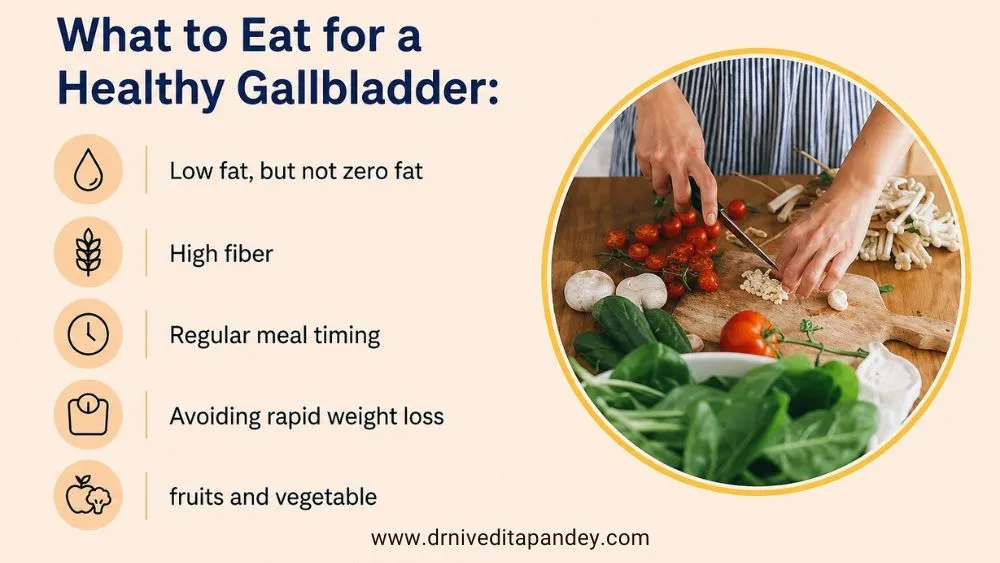
A diet plan for gallstones natural management reduces attack frequency and slows new stone formation. It does not eliminate stones already present.
What a gallstone-safe diet looks like:
- Low fat, but not zero fat: Extremely low-fat diets reduce gallbladder emptying, allowing bile to sit and concentrate. This increases stone formation risk. Aim for moderate fat: 30 to 40 grams per day from healthy sources like olive oil and nuts.
- High fiber: Fiber binds bile acids in the gut and removes them through stool. This reduces the amount of bile acid recycled back to the liver, which lowers the cholesterol concentration in bile. Oats, legumes, and vegetables are the best sources.
- Regular meal timing: Skipping meals for long periods causes bile to pool in the gallbladder. Eating at consistent intervals keeps bile flowing.
- Avoiding rapid weight loss: Crash diets cause the liver to release excess cholesterol into bile within days. If weight loss is needed, gradual reduction through a consistent caloric deficit is safer.
The diet plan for gallstones natural management is most effective before symptoms develop. Once stones are actively causing attacks, dietary changes reduce discomfort but do not fix the underlying problem.
Can Gallstones Be Treated Without Surgery?
No, gallstones can not be treated without surgery.
When non-surgical management works:
- Silent gallstones with no symptoms: watchful waiting is the standard medical approach. Around 80% of silent stones never cause problems.
- Small cholesterol stones in patients who cannot have surgery: oral bile acid therapy using ursodeoxycholic acid (UDCA) dissolves small cholesterol stones in 30 to 50% of patients after 6 to 24 months of treatment. The stones return in 50% of cases within 5 years after stopping the medication.
- Mild biliary colic with infrequent attacks: dietary management and pain control keep symptoms tolerable while the patient decides on surgery.
When surgery is the only appropriate option:
- Acute cholecystitis (infected gallbladder)
- Choledocholithiasis (stone stuck in the bile duct)
- Gallstone pancreatitis
- Recurrent attacks happening more than twice a year
- Gallbladder polyps larger than 1 cm found alongside stones
For symptomatic gallstones, the evidence consistently shows that laparoscopic cholecystectomy has a lower complication rate than repeated medical management over time.
What Natural Remedies May Help With Symptoms
Gallstone treatment natural remedies for symptom relief focus on reducing bloating, easing digestion, and managing mild discomfort between attacks. They do not address the stone itself.
Symptom relief approaches that have evidence behind them:
- Peppermint tea: Menthol in peppermint relaxes the smooth muscle of the bile duct and reduces spasm. It provides short-term relief from cramping and bloating. It does not move or dissolve stones.
- Heat application: A warm compress on the upper right abdomen reduces muscle tension around the gallbladder during mild colic. It does not treat the cause but reduces discomfort within 15 to 20 minutes.
- Magnesium-rich foods: Magnesium deficiency correlates with increased gallstone risk in observational studies. Foods like almonds, spinach, and pumpkin seeds support bile duct muscle relaxation and healthy gallbladder emptying.
Risks of Relying Only on Natural Remedies
Gallstones do not stay stable. A stone that sits quietly for years can shift, block a duct, and cause a life-threatening infection within 24 hours. Natural remedies have no ability to prevent that shift or reverse it once it happens.
Specific risks of avoiding medical treatment:
- Acute cholecystitis: The gallbladder wall becomes infected when a stone blocks its opening. Fever, severe right-sided pain, and a rigid abdomen follow. Requires IV antibiotics and emergency surgery. Mortality risk increases with each 12-hour delay.
- Choledocholithiasis: A stone in the common bile duct blocks bile flow from both the liver and gallbladder. Jaundice develops within hours. Without endoscopic stone removal (ERCP), the infection spreads to the liver.
- Gallstone pancreatitis: A stone at the ampulla of Vater triggers acute pancreatitis. Severe cases carry a 15 to 25% mortality rate. No herbal remedy affects this outcome.
- Gallbladder cancer: Chronic gallstone inflammation increases gallbladder cancer risk. Patients who delay cholecystectomy for years have higher rates of gallbladder wall changes that precede cancer.
When Medical Treatment Is Necessary
Gallstone treatment natural remedies stop being appropriate when any of these appear:
- Pain lasting more than 5 hours without easing
- Fever above 38.5°C with upper right abdominal pain
- Yellowing of skin or eyes
- Dark urine or pale stools
- Persistent vomiting
- Two or more gallstone attacks within six months
These are not situations where diet adjustment or herbal tea will help. Each of these signs points to a complication that needs imaging, antibiotics, or surgery. Waiting compounds the damage.
FAQs: Gallstone Treatment Natural Remedies
Can natural remedies dissolve gallstones?
No. No natural remedy has clinical evidence of dissolving gallstones. Ursodeoxycholic acid, a prescription medication, dissolves small cholesterol stones in 30 to 50% of patients over 6 to 24 months. Olive oil, lemon juice, and herbal teas have no comparable effect.
Are home remedies safe for gallstones?
Yes, for silent or mildly symptomatic stones, dietary changes and hydration are safe. They become unsafe when used to avoid treatment during active symptoms like fever, jaundice, or pain lasting more than 5 hours. Delaying care in those cases risks cholecystitis and bile duct infection.
Can diet help manage gallstones?
Yes. A low-saturated-fat, high-fiber diet with consistent meal timing reduces gallbladder attack frequency. It does not shrink or remove stones already present. Patients with symptomatic gallstones who change diet still need medical evaluation, because dietary changes do not prevent duct blockage.
Is gallbladder cleanse effective?
No. The green pellets passed after an olive oil cleanse are saponified fat, not gallstones. This was confirmed in a Lancet-published study. The cleanse carries real risks: forcing a stone into the bile duct and triggering a blockage that needs emergency ERCP or surgery.
When is surgery needed?
Surgery is needed when attacks recur more than twice a year, when cholecystitis develops, when a stone blocks the bile duct, or when gallstone pancreatitis occurs. Laparoscopic cholecystectomy takes 30 to 60 minutes and has a complication rate under 1% in elective cases.
Do herbs cure gallstones?
No. Milk thistle, turmeric, and dandelion support liver and digestive function but do not remove gallstones. No herb has passed a controlled clinical trial showing stone dissolution or elimination. Using gallstone treatment natural remedies as support alongside medical care is reasonable; using them as a replacement is not.
Can gallstones go away naturally?
Rarely. Very small cholesterol microlithiasis (tiny particles, not formed stones) sometimes clears on its own. Formed gallstones, particularly those visible on ultrasound above 5 mm, do not dissolve without medical intervention. Silent stones that never cause symptoms do not require treatment, but they do not disappear.
Should I delay treatment for natural remedies?
No. If you have confirmed gallstones with recurring symptoms, delaying treatment increases the risk of acute cholecystitis, bile duct blockage, and pancreatitis chronic. Natural remedies support comfort management while awaiting evaluation. They are not a reason to postpone seeing a gastroenterologist or surgeon.
About The Author

Medically reviewed by Dr. Nivedita Pandey, MD, DM (Gastroenterology)
Dr. Nivedita Pandey is a U.S.-trained gastroenterologist and hepatologist with extensive experience in diagnosing and treating liver diseases and gastrointestinal disorders. She specializes in liver enzyme abnormalities, fatty liver disease, hepatitis, cirrhosis, and digestive health.
All content is reviewed for medical accuracy and aligned with current clinical guidelines.