MASLD liver disease means fat builds inside your liver because of metabolic problems, not alcohol use. It signals risk linked to weight gain, insulin issues, and blood sugar imbalance. What MASLD liver disease is when your liver stores extra fat and your metabolism drives it. You may live with MASLD liver disease without knowing it. It often appears on scans done for other reasons.
Featured Snippet Block
- MASLD liver disease stands for metabolic dysfunction-associated steatotic liver disease. It replaces the old term NAFLD
- It means fat collects in liver cells due to metabolic risk factors, not alcohol intake.
- Obesity, insulin resistance, and diabetes commonly trigger it.
- Early stages are often reversible with metabolic health improvements
What Is MASLD?
MASLD stands for Metabolic Dysfunction–Associated Steatotic Liver Disease.
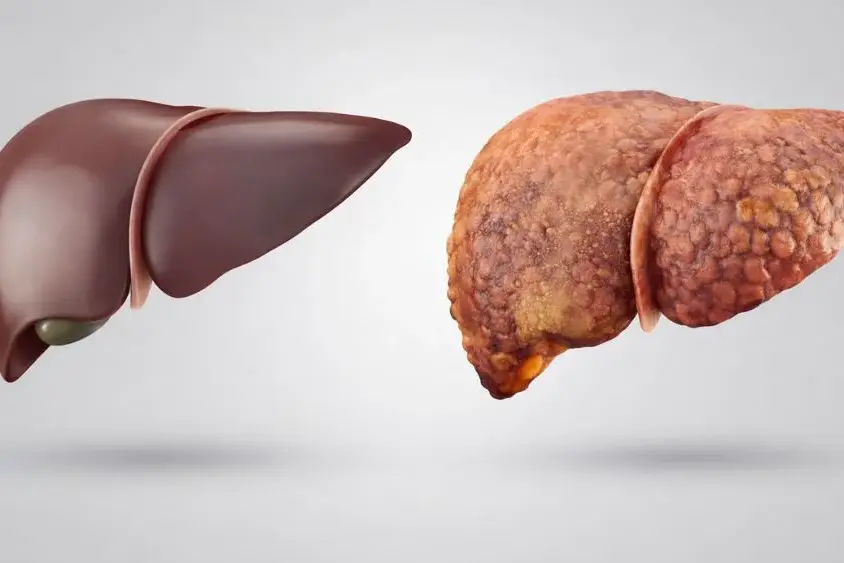
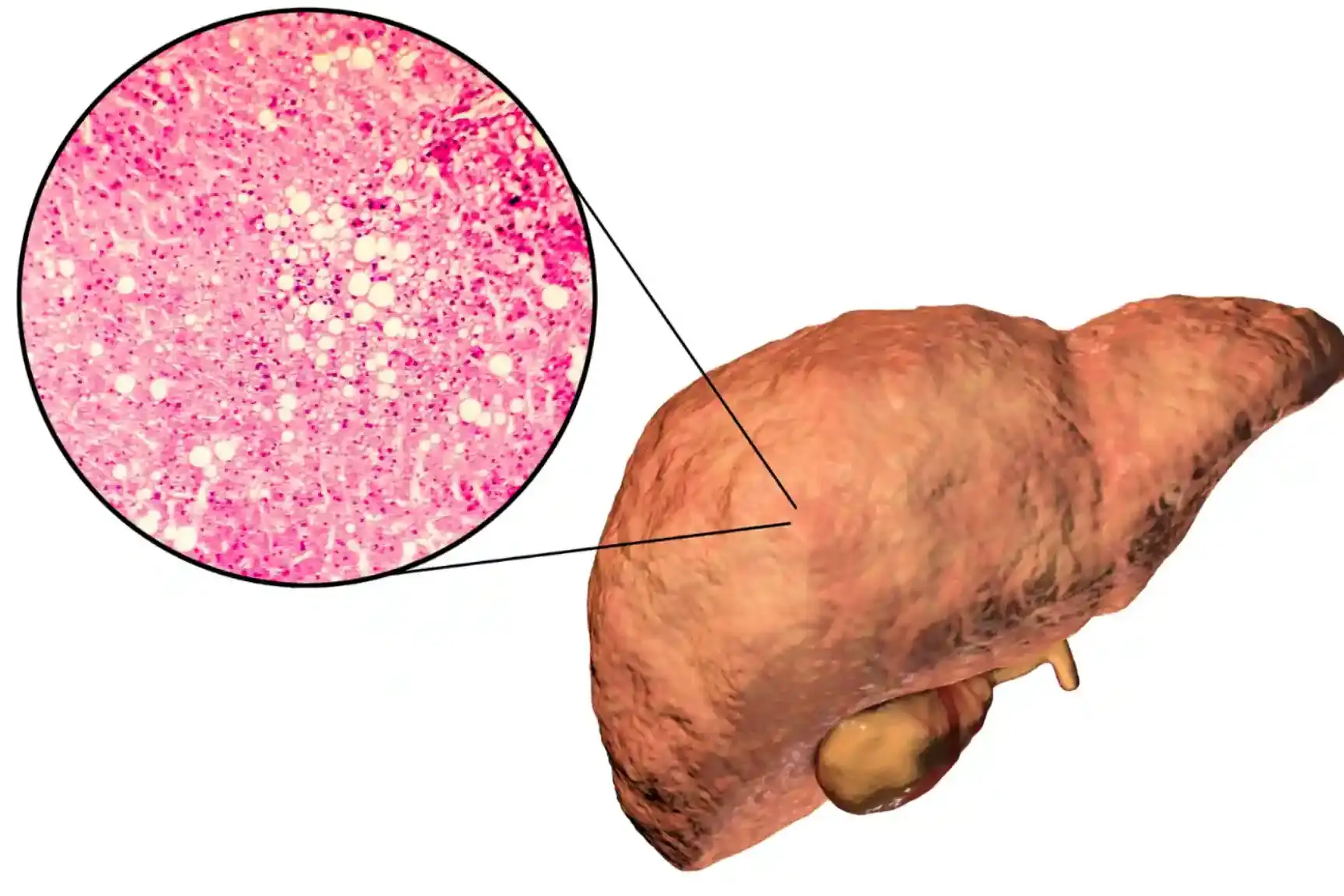
- “Steatotic” simply means fatty. Your liver has more fat stored in its cells than it should, typically more than 5% of the liver’s weight.
- “Metabolic dysfunction” points to problems with how your body handles energy, sugar, and fat storage.
The term MASLD officially replaced NAFLD (Non-Alcoholic Fatty Liver Disease) in 2023. Because the term “non-alcoholic” tells you what wasn’t causing the problem, but says nothing about what was.
To diagnose MASLD, doctors need two key findings. First, imaging tests must show fat accumulation in your liver. Second, you must have at least one cardiometabolic risk factor; things like obesity, high blood pressure, abnormal cholesterol, high blood sugar, or insulin resistance.
Both must appear together.
Causes Of MASLD
Understanding the causes of MASLD means looking at mechanisms, not advice lists. Fat storage occurs because signaling pathways change. These changes arise from metabolic, hormonal, or genetic factors.
Metabolic Causes
These represent the largest share of causes of MASLD.
Obesity
Abdominal obesity is the strongest predictor of MASLD. When you carry excess weight around your midsection, they release inflammatory molecules called cytokines and hormones that interfere with insulin signaling throughout your body.
Your liver becomes resistant to insulin’s effects. Normally, insulin tells your liver to stop making glucose and store energy appropriately. When insulin resistance develops, your liver ignores these signals. It keeps producing glucose even when your blood sugar is already high. It also starts converting excess glucose into fat through a process called de novo lipogenesis.
Type 2 Diabetes
High blood sugar means your liver has excess glucose to convert into fat. The resulting fatty liver worsens insulin resistance, which drives blood sugar even higher. Over 70% of people with type 2 diabetes have some degree of MASLD fatty liver.
Insulin Resistance
Insulin resistance can exist long before diabetes develops. Your pancreas compensates by pumping out more insulin to overcome the resistance. These chronically elevated insulin levels actively promote fat storage in the liver. You might have normal fasting blood sugar but still be developing MASLD due to underlying insulin resistance.
Metabolic Syndrome
A waist circumference over 40 inches in men or 35 inches in women, triglycerides above 150 mg/dL, HDL cholesterol below 40 mg/dL in men or 50 mg/dL in women, blood pressure over 130/85, and fasting glucose over 100 mg/dL. Having three or more of these dramatically increases your MASLD risk.
Hormonal And Medical Factors
Some endocrine states shift metabolic regulation.
Polycystic Ovary Syndrome
The hormonal imbalances in PCOS, particularly elevated androgens and insulin resistance, create metabolic conditions that favor MASLD liver disease development. 40-70% of women with PCOS have fatty liver.
Hypothyroidism
A sluggish thyroid means your body burns calories more slowly and processes fats less efficiently. This metabolic slowdown can contribute to weight gain and altered fat metabolism, both of which increase MASLD risk.
Sleep Disorders
Sleep apnea disrupts your oxygen supply during sleep. These repeated oxygen drops trigger inflammatory responses and metabolic stress. Your body releases stress hormones that worsen insulin resistance. People with untreated sleep apnea show higher rates of MASLD and faster disease progression.
Corticosteroids, some cancer chemotherapy drugs, tamoxifen, methotrexate, and older antiretroviral medications for HIV can all contribute to MASLD fatty liver development. If you’re taking these medications long-term, your doctor should monitor your liver health.
Genetic Susceptibility
The PNPLA3 gene variant (specifically the I148M variant) is the strongest genetic risk factor discovered so far. If you inherit this variant, your liver handles fat storage and breakdown differently. You can develop significant MASLD even with a normal BMI and relatively healthy metabolic markers.
Hispanic populations show the highest MASLD rates, followed by non-Hispanic whites, then Asian populations. African Americans actually have lower rates despite higher obesity prevalence, suggesting protective genetic factors.
The TM6SF2 gene variant also affects how your liver exports fat. People with certain variants accumulate more liver fat but paradoxically have lower cardiovascular disease risk because less fat circulates in their bloodstream.
MASLD Symptoms
MASLD symptoms often stay absent for years. Your liver doesn’t have pain-sensing nerves inside the organ itself. You can have substantial fat accumulation, even early inflammation, and feel absolutely nothing. You discover MASLD liver disease accidentally, during routine blood work that shows elevated liver enzymes, or imaging done for completely unrelated reasons.
You may have vague fatigue or a dull, aching sensation in the upper right abdomen where the liver sits. But these MASLD symptoms are neither specific nor reliable. Elevated liver enzymes (ALT and AST) suggest liver cell damage. Many people with confirmed MASLD have completely normal liver enzyme levels. Normal blood work doesn’t rule out the disease.
MASLD Fatty Liver: How Severe Can It Get?
MASLD fatty liver describes a disease spectrum rather than one state. Severity ranges from harmless fat storage to tissue scarring.
Simple Steatosis
Simple steatosis represents the mildest form. Your liver has accumulated excess fat (more than 5% of liver weight), but there’s minimal inflammation and no scarring. You may remain at this stage indefinitely without progression, and MASLD stays stable for years or even decades. But in roughly 20-30% of people with MASLD liver disease, the condition progresses to MASH
MASH Stage
MASH triggers a cascade of liver damage. Inflammation causes liver cells to die. Your body responds by forming scar tissue, a process called fibrosis.
Fibrosis To Cirrhosis
Early fibrosis (stage 1-2) means minimal scarring around liver cells and blood vessels. Advanced fibrosis (stage 3) shows scar tissue connecting different areas of the liver. Stage 4 fibrosis is cirrhosis, where scar tissue has replaced so much normal liver that the organ’s structure fundamentally changes.
Cirrhosis from MASLD liver disease carries serious risks. Your liver can’t perform its hundreds of essential jobs properly. You might develop complications like fluid accumulation in the abdomen, bleeding problems, confusion from toxin buildup, or liver failure. Cirrhosis also significantly increases liver cancer risk.
How MASLD Is Diagnosed
Diagnosis relies on layered evaluation rather than one result. You receive assessment based on risk profile, imaging findings, and laboratory interpretation. That combined view clarifies what is MASLD liver disease in real clinical settings.
Imaging Methods
Ultrasound is usually the first imaging test. A fatty liver appears brighter (more echogenic) on ultrasound compared to the kidneys. It’s widely available and inexpensive, but ultrasound can miss mild fat accumulation and can’t reliably distinguish simple steatosis from MASH or quantify fibrosis.
FibroScan (vibration-controlled transient elastography) provides more detailed information. This device measures liver stiffness, which correlates with fibrosis; stiffer livers have more scarring. It also calculates a CAP (Controlled Attenuation Parameter) score that estimates fat content. The test takes about 10 minutes, doesn’t hurt, and gives immediate results. It’s become increasingly popular for MASLD monitoring.
MRI-based techniques like MRI-PDFF (proton density fat fraction) give the most accurate fat quantification. MR elastography can assess fibrosis with excellent accuracy. However, these tests are expensive and not always covered by insurance, so doctors typically reserve them for situations where precise measurement matters.
Blood Tests And Limits
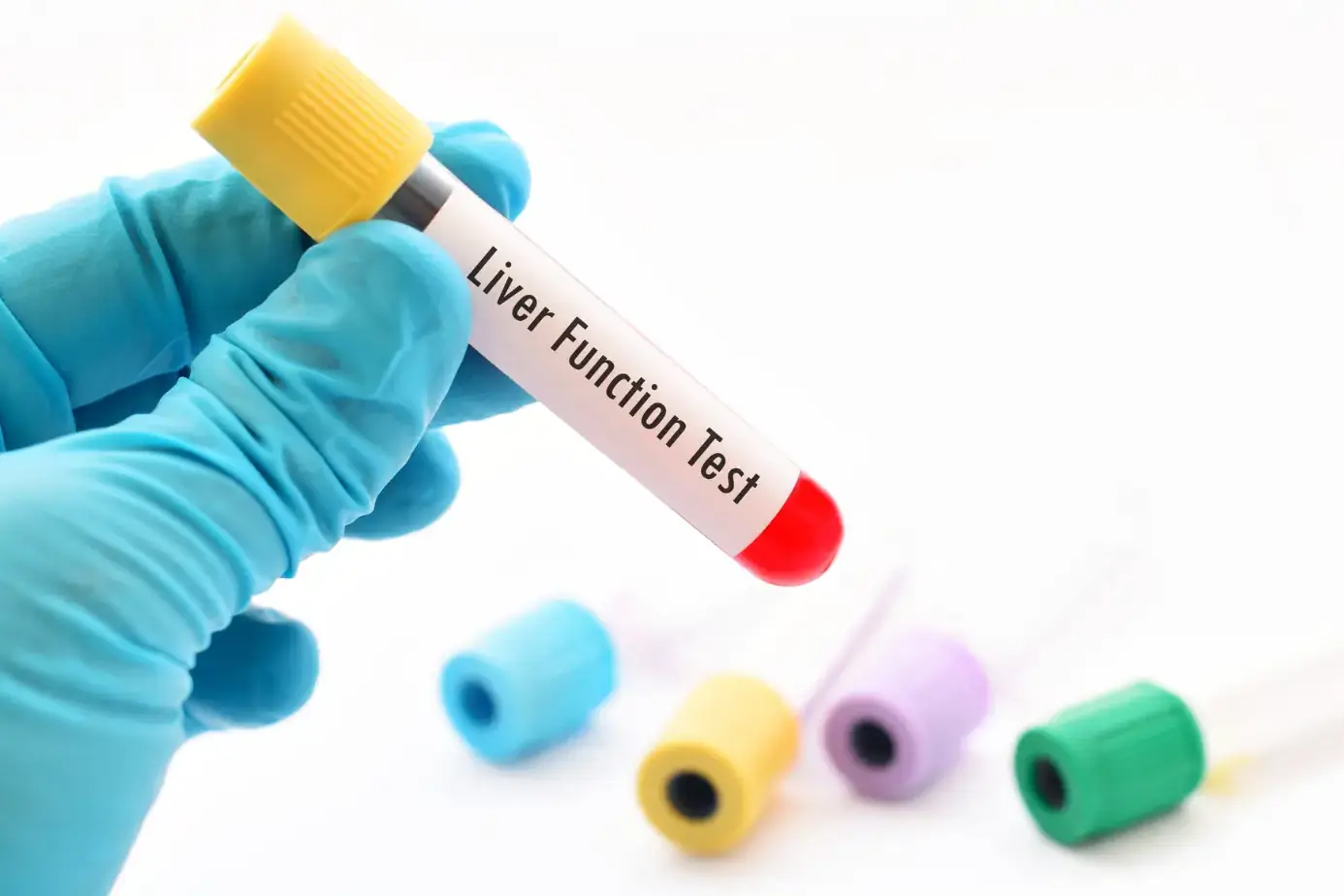
Enzyme levels may rise with inflammation. Normal results do not exclude disease. Lipid panels and glucose markers help assess metabolic context. These markers support evaluation of MASLD liver disease but never define it alone.
Pattern-Based Diagnosis
Clinicians combine metabolic indicators with imaging evidence. They also rule out alcohol and viral causes. This structured approach ensures accurate identification of MASLD liver disease and clarifies MASLD liver disease beyond simple lab interpretation.
MASLD Treatment
MASLD treatment fundamentally targets the metabolic dysfunction driving liver fat accumulation. There’s currently no FDA-approved medication specifically for MASLD, though several are in late-stage trials.
Addressing Metabolic Dysfunction
Doctors aim to improve insulin response and lipid balance. Blood sugar control changes liver fat flux. These adjustments form a foundation of MASLD treatment planning.
Weight Reduction Thresholds
Moderate body mass reduction lowers liver fat volume. Losing 7-10% of your body weight typically reduces liver fat substantially. At this threshold, inflammation often improves and liver enzyme levels normalize. Losing more than 10% of body weight can even reverse fibrosis in some cases.
Managing Diabetes And Insulin Resistance
Better blood sugar control reduces the substrate your liver converts into fat. Metformin helps with insulin resistance. GLP-1 receptor agonists like semaglutide and liraglutide not only improve diabetes control but also promote weight loss and have shown specific benefits for liver fat reduction in research studies.
Monitoring Progression
Your doctor should monitor disease progression with repeat imaging or blood tests every 1-2 years for simple steatosis, more frequently if you have MASH or fibrosis.
Is MASLD Reversible?
Simple steatosis (just fat accumulation without inflammation or scarring) is highly reversible. Weight loss, improved insulin sensitivity, and better metabolic control can eliminate liver fat completely.
Early MASH with inflammation but minimal fibrosis can also resolve. If you achieve significant weight loss through lifestyle changes or bariatric surgery, inflammation can disappear entirely.
Once fibrosis (scar tissue) forms, it’s stubborn. Mild fibrosis (stage 1-2) might partially reverse with aggressive metabolic intervention (weight loss of 10% or more, diabetes control, exercise).
Advanced fibrosis (stage 3) and cirrhosis (stage 4) rarely reverse completely. The scar tissue is too established. However, even at these stages, metabolic improvements can prevent further progression and reduce complication risks. You’re managing the condition rather than curing it.
FAQs – What Is MASLD Liver Disease?
What does MASLD stand for?
It stands for metabolic dysfunction associated steatotic liver disease. MASLD liver disease means excess liver fat with metabolic risk presence such as insulin resistance, not alcohol injury, guiding modern screening classification standards.
Is MASLD the same as NAFLD?
Yes. MASLD liver disease replaced NAFLD terminology. Both describe fatty liver unrelated to alcohol. The new name reflects metabolic drivers and improves diagnosis consistency when clinicians explain what MASLD liver disease is.
Is alcohol involved in MASLD?
No. MASLD liver disease classification requires metabolic causes as primary drivers. Alcohol related injury falls under separate categories. Intake history still gets assessed when confirming MASLD liver disease.
Can lean people have MASLD?
Yes. Genetic lipid processing variants and hidden insulin resistance cause MASLD liver disease in lean individuals. Visceral fat around organs, not body weight alone, explains risk when defining MASLD liver disease.
Does MASLD cause symptoms early?
No. Early MASLD liver disease rarely produces discomfort. Routine blood tests or imaging detect most cases. Absence of fatigue or pain does not exclude disease when evaluating the MASLD liver disease risk.
Can MASLD progress to cirrhosis?
Yes. Persistent inflammation and fibrosis may lead MASLD liver disease toward cirrhosis over years. Monitoring liver stiffness and metabolic status reduces progression probability when managing MASLD liver disease.
Is MASLD reversible?
Yes, early MASLD liver disease with fat accumulation only often improves after metabolic correction. Established fibrosis limits reversal capacity. Timing of intervention shapes outcome when addressing MASLD liver disease.
Does MASLD require medication?
No. MASLD liver disease management sometimes uses medication when diabetes or lipid imbalance exists. Lifestyle and metabolic correction remain central. Clinicians decide treatment path after evaluating MASLD liver disease severity.
About The Author

Medically reviewed by Dr. Nivedita Pandey, MD, DM (Gastroenterology)
Dr. Nivedita Pandey is a U.S.-trained gastroenterologist and hepatologist with extensive experience in diagnosing and treating liver diseases and gastrointestinal disorders. She specializes in liver enzyme abnormalities, fatty liver disease, hepatitis, cirrhosis, and digestive health.
All content is reviewed for medical accuracy and aligned with current clinical guidelines.