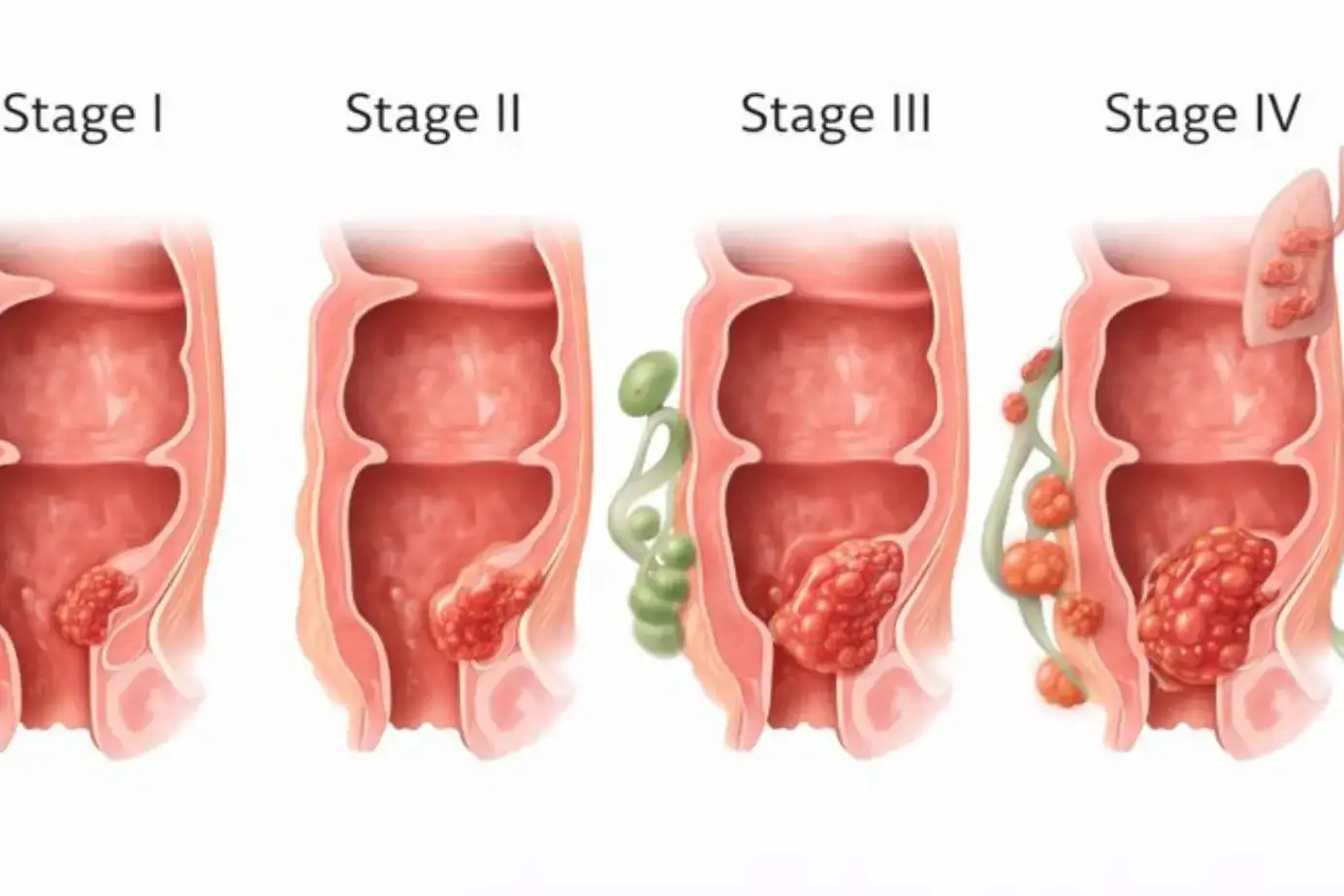
An anal fissure is a small tear in the anal lining that causes sharp pain during bowel movements, while a hemorrhoid is swollen veinous tissue that can bleed, itch, or form a lump.
These two conditions feel similar at first, but the pain pattern, the location of symptoms, and the type of bleeding help you tell them apart. You need the correct diagnosis because each problem responds to different treatments.
Knowing the signs early helps you control pain, stop bleeding, prevent chronic issues, and avoid unnecessary procedures.
Difference Between Anal Fissure And Hemorrhoid

A tear in the anal lining is an anal fissure . Bulging blood vessels are a hemorrhoid . The pain pattern differs a lot. A fissure hurts with bowel movements. A hemorrhoid often itches or feels like a lump. Both can bleed bright red blood. If you see bright red blood, note the pain type and the location. This helps your doctor decide.
Hemorrhoids Or Fissure? Which Is More Painful?
If you feel a sudden, knife-like pain when you poop, you likely have an anal fissure . Fissures cause severe, short bursts of pain. Hemorrhoid pain is usually dull. Only a clot in an external hemorrhoid makes sharp, severe pain. Track how the pain starts and stops. That tells you which condition you have.
Type Of Pain: Sharp Fissure Pain Vs Dull Hemorrhoid Pain
A tear causes sharp, stabbing pain during stool passage. Pain may continue after the bowel movement. Hemorrhoid pain feels heavy or sore. It gets worse when you sit. If pain spikes exactly while you pass stool, think anal fissure . If pain is steady or linked to a lump, think hemorrhoid .
Bleeding Patterns That Help Differentiate
Both conditions can give bright red blood. With a fissure, bleeding is usually a few drops on the paper or stool. With a hemorrhoid, blood may drip into the bowl or coat the stool. Look at when bleeding happens. Combine that with pain type and visible lumps. This gives a clear clue.
Location Differences Of Pain And Lesions
Most anal fissure tears sit on the midline, often toward the back. hemorrhoid lumps sit at the anal cushions. Internal hemorrhoids are inside the canal. External hemorrhoids lie at the skin edge. Check the exact spot of pain or lump. Location helps confirm which condition you have.
Fissure Vs Hemorrhoid Symptoms Overview
Pain, Bleeding, Itching, And Discomfort Patterns
A fissure brings burning and sharp pain during bowel movements. Bleeding is bright red and limited. Hemorrhoids bring itch, mucus, and lumps. Pain may be mild unless thrombosed. Both cause wetness and irritation when inflamed. Note which symptom hits first and strongest.
Tearing Sensation During Bowel Movements (Fissure)
You may feel a cut or tear when passing stool with an anal fissure . The feeling is sudden and sharp. Stool may be streaked with blood. Afterward, the anal muscle may spasm. Spasm keeps the fissure open and delays healing. Simple care often stops the cycle.
Swelling Or Lumps Around The Anus (Hemorrhoid)
If you can feel a soft or firm lump near the anus, it is likely a hemorrhoid . A thrombosed external hemorrhoid becomes hard and purple. Internal hemorrhoids may push out when you strain. A prolapsed hemorrhoid may need a procedure. Do not ignore persistent lumps.
Chronic Irritation And Mucus Discharge
Long-term irritation causes wetness and mucus. Hemorrhoids more often produce mucus. Chronic fissures may form a skin tag that traps stool. If you spot persistent discharge, see a clinician. Tests may rule out other causes of rectal mucus and bleeding.
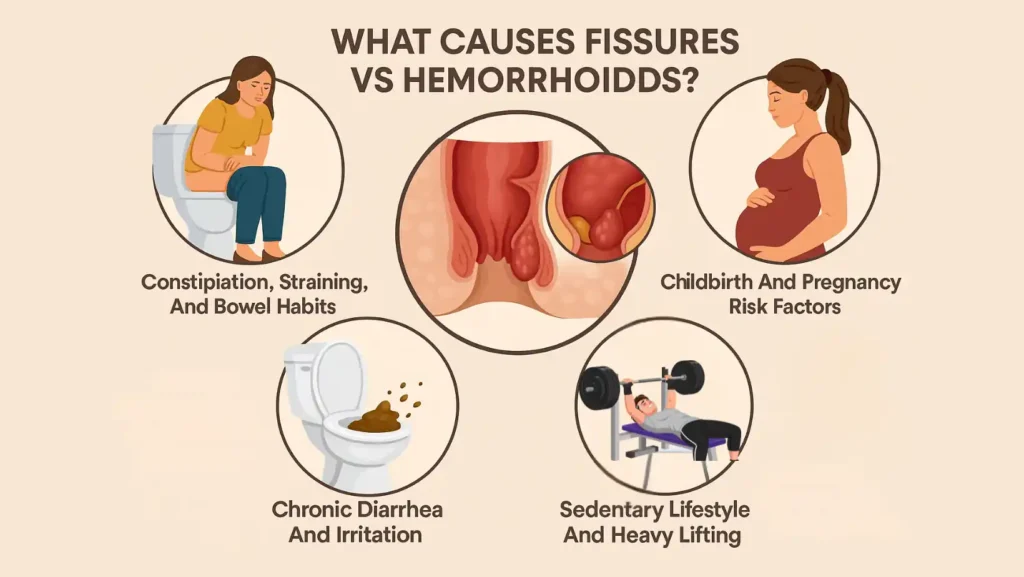
What Causes Fissures Vs Hemorrhoids?
Constipation, Straining, And Bowel Habits
Hard stools and straining cause both problems. When you push hard, the anal lining can tear. The same pushing raises vein pressure and causes hemorrhoid bulges. Fix the stool texture to stop both issues. Fiber and water help you avoid straining.
Trauma, Inflammation, And Pressure Differences
A single large, hard stool can tear the lining and make an anal fissure . Chronic pressure on the veins makes hemorrhoids swell. Repeated diarrhea or rough wiping can inflame the area. Reduce irritation and avoid direct trauma to heal faster.
Childbirth And Pregnancy Risk Factors
Pregnancy puts extra pressure on your pelvic veins. Childbirth can strain and tear tissue. You can get hemorrhoid swelling or an anal fissure during or after delivery. Use stool softeners and gentle perineal care after birth. Seek help if pain or bleeding persists.
Chronic Diarrhea And Irritation
Frequent loose stools irritate the anal lining. This irritation can cause or worsen both anal fissure and hemorrhoid symptoms. Treat the diarrhea and protect the area with gentle cleaning. Reducing episodes helps the tissue heal.
Sedentary Lifestyle And Heavy Lifting
Sitting for long increases pressure on the pelvic veins. Heavy lifting without breath technique also raises pressure. Both behaviors raise your risk for hemorrhoid formation. Moving more and lifting safely lowers that risk.
Anal Fissure Vs Hemorrhoid Diagnosis
Physical Exam Findings And Pain Response
Your clinician will inspect the skin and anal margin. A visible tear points to an anal fissure . A swollen lump points to a hemorrhoid . Touching a fissure often triggers intense pain. This pain response helps your clinician decide the cause. Simple exams solve many cases.
Identifying Acute Vs Chronic Fissures
If pain lasts under six weeks, it is an acute fissure. If it lasts longer, it is chronic. Chronic fissures show scar edges or skin tags. Chronic cases need stronger therapy to heal. Note how long your pain lasts before seeking advanced care.
When Anoscopy Is Avoided Due To Severe Pain
Anoscopy means looking inside with a small tube. If pain from a fissure is severe, the clinician may delay anoscopy. A visual exam and history often give enough information. Gentle care or examination under anesthesia can be safer when pain is intense.
How Hemorrhoids Are Diagnosed
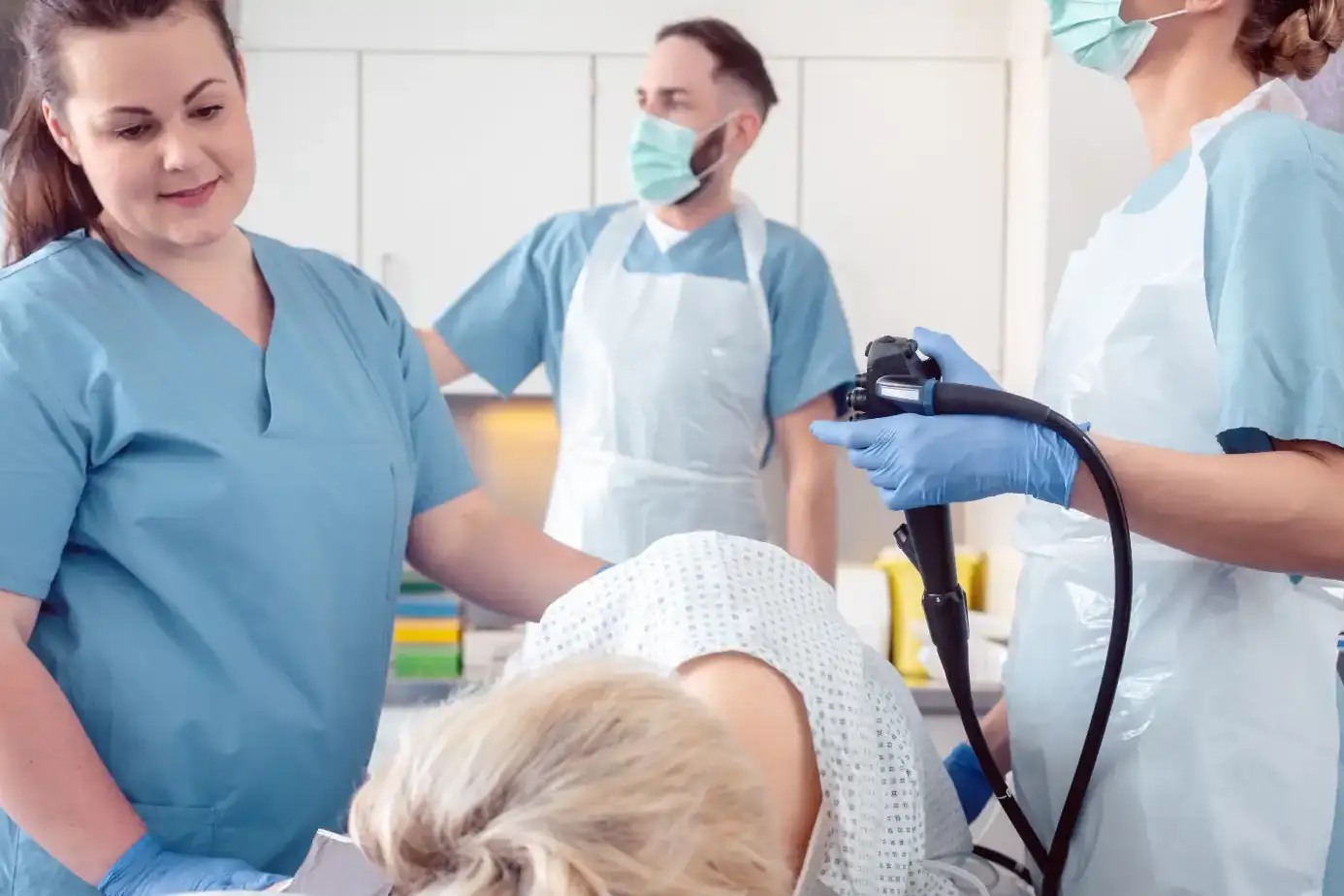
You will get a clear exam to confirm a hemorrhoid . Your doctor inspects the anal area first. They may do a digital rectal exam. This checks for lumps, tone, and internal bleeding. If needed, your doctor uses anoscopy to look inside the anal canal.
Colonoscopy is reserved for heavy bleeding or if other diseases are suspected. Thrombosed external hemorrhoids are visible as tender, bluish lumps. Grading of internal hemorrhoids helps choose treatment.
Internal Versus External Hemorrhoid Evaluation
Internal hemorrhoid tissue lies above the dentate line. External hemorrhoids lie below. Internal ones may prolapse. External ones are easier to see and feel. Your doctor will note bleeding patterns, pain, and the presence of lumps to separate types.
When Imaging Or Anoscopy Is Required
Anoscopy is a quick office test. Use it when bleeding or prolapse occurs. If bleeding is heavy or if you have risk factors for other conditions, your doctor may recommend a colonoscopy. Imaging is not routine for simple hemorrhoid care.
Differentiating Thrombosed Hemorrhoids
A thrombosed external hemorrhoid looks swollen and blue. Pain is sudden and severe. If you present early, your doctor may remove the clot under local anesthesia. If late, conservative care until the clot reabsorbs works.
Digital Rectal Exam Findings
A digital exam checks sphincter strength and finds internal lumps. It helps rule out other causes of pain. It is quick and informative. Expect mild discomfort during the exam.
Identifying Prolapsed Or Grade 4 Hemorrhoids
Prolapsed hemorrhoids that cannot be reduced are grade 4. These often need procedural or surgical care rather than simple home measures. Your doctor will discuss options based on grade and symptoms.
Anal Fissure Vs Hemorrhoid Treatment Approaches
You start with conservative care for both an anal fissure and a hemorrhoid . Most cases improve with simple steps.
Conservative Care: Sitz Baths, Fiber, Medications
Sitz baths relax the sphincter and ease pain. Increase fiber and fluids to soften stool. Use stool softeners if needed. Topical pain gels help short term. These measures help both anal fissure and hemorrhoid symptoms.
When Surgery Or Procedures Are Needed
If conservative care fails, procedures may be needed. For internal hemorrhoids , rubber band ligation is common. For chronic anal fissure , lateral internal sphincterotomy (LIS) is a standard surgical option. Choice depends on severity and patient health.
Topical Treatments: Nitroglycerin, Nifedipine, Steroids
For anal fissures, topical nitroglycerin and topical calcium channel blockers like nifedipine relax the sphincter muscle and help healing. For hemorrhoid symptoms, short-course topical steroids reduce itch and swelling. Use medicines as directed.
Rubber Band Ligation Versus Lateral Sphincterotomy
Rubber band ligation suits internal hemorrhoids that bleed or prolapse. It is office-based and effective. Lateral internal sphincterotomy treats chronic anal fissure by lowering sphincter pressure. Both are effective when matched to the correct problem.
Pain Severity and Healing Time
Which Condition Causes Sharper Pain
A tear causes sharp pain with stool. That points to an anal fissure . Hemorrhoid pain is duller unless thrombosed. Note how pain begins and ends to guide care.
Typical Healing Timelines For Both Conditions
Acute anal fissure often heals in days to weeks with proper care. Chronic fissures can take months or require LIS. Hemorrhoid symptoms often ease in days to weeks. Rubber band ligation healing takes about two weeks. Timelines vary with habits and treatment.
When Pain Indicates Chronic Fissure Formation
If pain lasts over six weeks despite care, suspect a chronic fissure. Chronic fissures show scar tissue and may form a sentinel tag. These often need medical procedures.
Thrombosed Hemorrhoid Pain Duration
Thrombosed hemorrhoid pain peaks early and eases over one to two weeks. Early drainage of the clot can speed pain relief. If pain is severe, get prompt care.
Factors That Delay Healing: Diet, Habits, Infection
Low fiber, ongoing straining, smoking, and poor hygiene delay healing. Infection or inflammatory disease can also slow recovery. Fix stool softness and reduce strain.
When Symptoms Overlap Or Occur Together
Fissure And Hemorrhoid Coexistence
You can have both a hemorrhoid and an anal fissure at once. Hard stool and straining cause both. Treat stool softness first. Then treat the more painful problem directly.
Managing Dual Conditions Effectively
Use fiber, sitz baths, and topical agents together. If one problem fails conservative care, treat it while continuing care for the other. This combined approach shortens symptoms.
Why Constipation Triggers Both Conditions
Constipation causes hard stools and straining. Tears form more easily. Veins bulge under pressure. Treat constipation to prevent both anal fissure and hemorrhoid problems.
Distinguishing Overlapping Symptoms Over Time
Track which symptom appears first and how it changes. Sharp pain during stool suggests an anal fissure . A lump or constant ache suggests a hemorrhoid . If unclear, ask a clinician for an exam.
When Both Require Simultaneous Treatment
If bleeding is heavy or pain is severe, treat both conditions. For example, banding a prolapsed hemorrhoid and using topical therapy for a fissure can occur in the same plan. Coordination makes care efficient.
When to Seek Medical Help
Red Flag Symptoms Needing Urgent Care
Seek urgent help for heavy bleeding, fainting, fever, or spreading redness. Rapidly worsening pain or fever may mean infection or other urgent problems. These signs require immediate evaluation.
Persistent Bleeding Or Severe Pain Indicators
If bleeding or severe pain continues after one week of home care, see a clinician. Persistent symptoms need an exam and possible procedures. Do not delay with ongoing blood loss or pain.
When Fissures Become Chronic Or Non-Healing
Fissures that last longer than six weeks are chronic. Chronic fissures often need prescription therapy or surgery. Discuss options with your doctor.
Signs Of Strangulated Or Infected Hemorrhoids
A strangulated or infected hemorrhoid is intensely painful and swollen. It may have a fever. These require urgent treatment. Go to emergency care if you see these signs.
Symptoms That May Indicate Other Conditions
Unintended weight loss, changes in bowel habits, and large-volume bleeding need full evaluation. Your clinician may order a colonoscopy to rule out other diseases.
Prevention Strategies
Bowel Habit Regulation And Dietary Fiber
Add fiber slowly to reach 25 to 35 grams daily. Eat fruits, vegetables, and whole grains. Use a fiber supplement if needed. Fiber softens stool and lowers strain. This prevents both anal fissure and hemorrhoid formation.
Reducing Strain And Maintaining Anal Hygiene
Go when you feel the urge. Avoid long the toilet for too long. Wipe gently or use water. Keep the area clean and dry. These habits reduce irritation and prevent recurrence.
Hydration And Stool-Softening Strategies
Drink water throughout the day. Use stool softeners short-term when needed. Soft stool lowers tearing risk and reduces venous pressure.
Posture And Toilet Habits To Prevent Injury
A small footstool raises knees and eases stool passage. Avoid straining. These small changes reduce the risk of both problems.
Lifestyle Changes For Long-Term Anorectal Health
Exercise regularly. Avoid heavy lifting without breath control. Maintain a healthy weight. These habits lower your risk of hemorrhoid formation long-term.
FAQ
How can I tell if I have a fissure or a hemorrhoid?
If pain is sharp with stool, it is likely an anal fissure . If you feel a lump or itch, it is likely a hemorrhoid . See a clinician if unsure.
Do fissures and hemorrhoids feel similar?
They both can bleed and hurt. A fissure gives sharp, cutting pain during stool. A hemorrhoid gives an ache, an itch, or a lump. Note the pain timing to tell them apart.
Can hemorrhoids turn into fissures or vice versa?
One does not change into the other directly. Shared causes like hard stools and strain create both. You can get both at the same time. Treat stool softness first.
How long does each condition take to heal?
Acute anal fissure often heals within weeks with care. Chronic fissures may need months or surgery. Hemorrhoid symptoms typically ease in days to weeks with treatment.
Are fissures more likely to bleed than hemorrhoids?
Both bleed. Fissures usually give small streaks on the stool or paper. Hemorrhoid bleeding may drip into the bowl. The bleeding pattern alone is not definitive.
Do fissures require surgery more often than hemorrhoids?
Chronic fissures often need lateral internal sphincterotomy when medical care fails. Many hemorrhoids respond to office procedures instead of major surgery. Treatment depends on severity.
Can both conditions happen at the same time?
Yes. Hard stools and straining cause both conditions. Treat stool softness and local care. Then address the problem that causes the most pain.
Are home treatments effective for both conditions?
Yes. Fiber, water, sitz baths, and topical agents help most cases. See a doctor if symptoms persist or worsen after one week of care.
When should I see a doctor for anal pain?
See a doctor for heavy bleeding, fever, severe pain, or symptoms that last beyond one week despite home care. Early care prevents complications.
Can lifestyle changes prevent fissures and hemorrhoids?
Yes. Good diet, hydration, exercise, and proper toilet habits reduce risk dramatically. These changes cut recurrence risk for both problems.
Can chronic constipation cause both conditions?
Yes. Chronic constipation and straining are the main shared cause. Soften stool to prevent anal fissure and hemorrhoid formation.
Are fissures common after childbirth?
Yes. Childbirth can cause both fissures and hemorrhoid swelling. Gentle perineal care and stool softeners after birth help recovery.
About The Author

Medically reviewed by Dr. Nivedita Pandey, MD, DM (Gastroenterology)
Dr. Nivedita Pandey is a U.S.-trained gastroenterologist and hepatologist with extensive experience in diagnosing and treating liver diseases and gastrointestinal disorders. She specializes in liver enzyme abnormalities, fatty liver disease, hepatitis, cirrhosis, and digestive health.
All content is reviewed for medical accuracy and aligned with current clinical guidelines.