Screen time and digestion are more connected than most people realize. We often think digestion is all about what we eat, but how we eat matters just as much. And meals are no longer peaceful pauses in our day. Instead, phones, TVs, and laptops often join us at the table.
In today’s world, screens are part of nearly every activity. But when screen time and digestion meet, things don’t work as smoothly as you might think. Let’s look at why.
Understanding Screen Time
Screen time is the total number of hours we spend looking at devices like smartphones, tablets, TVs, or laptops. For many, this time stretches across the whole day; from morning alarms to bedtime scrolling.
Research shows the average person spends over 6 hours daily in front of screens. This isn’t just about entertainment or work. Many of us also eat meals while glued to our phones, TVs, or computers. That’s where the trouble begins.
What Happens During Healthy Digestion
Your digestive system is like a well-planned team. Here’s how it works when nothing distracts it:
- Mastication disintegrates food and combines it with saliva. This is the first and crucial step in digestion.
- Saliva carries enzymes that start breaking down carbohydrates before the food even leaves your mouth.
- Your brain signals your stomach to get ready, releasing gastric juices.
- The stomach mixes food into a liquid form, which subsequently enters the small intestine for nutrient absorption.
When you give your body full attention during eating, this process works efficiently. But when eating while scrolling, you interrupt several steps.
The Impact of Screen Time on Digestion
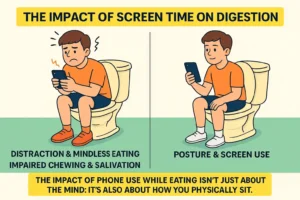
Distraction & Mindless Eating
One of the biggest issues is distracted eating and digestion. When you’re absorbed in a video or post, you stop paying attention to your food. This often leads to mindless eating; consuming more than you need without realizing it. Your brain takes longer to register that you’re full, which can lead to overeating.
Impaired Chewing & Salivation
Scrolling or watching while eating often shortens chewing time. This means less saliva mixes with food, and digestion starts at a disadvantage. Chewing and screen distractions also make larger food particles reach the stomach, making digestion slower and more uncomfortable.
Hormonal Disruption
When you multitask with your phone during meals, your stress hormones may rise. Elevated cortisol can slow digestion. Over time, this pattern can affect the brain-gut connection, leading to bloating, discomfort, or even digestion problems from screen time.
Posture & Screen Use
Most people lean forward or hunch over their devices. Compressing the stomach and intestines causes problems with posture and digestion, such as slower gastric emptying or acid reflux.
So the impact of phone use while eating isn’t just about the mind; it’s also about how you physically sit.
Psychological & Behavioral Effects
Your brain plays a major role in digestion. Being mentally present while eating improves how your body processes food. When screens grab your attention, you lose mental focus and digestion suffers.
Eating with distractions also creates a habit loop. Your brain begins to link eating with entertainment, which can make it harder to enjoy screen-free meals. Over time, this turns into screen addiction and health issues that go beyond digestion, including weight gain, poor nutrient absorption, and changes in mood.
For children, this habit forms early. Kids who grow up eating while scrolling may face long-term challenges with healthy eating habits and self-control around food.
Tips for Healthy Eating in the Digital Age

Breaking the habit of eating while scrolling isn’t about perfection. It’s about making small, consistent changes that protect digestion. Here’s how:
- Practice mindful eating: Focus on your meal’s taste, texture, and smell. This helps reconnect your brain to your body’s hunger and fullness signals.
- Limit mobile phone use while eating: Set your device aside during meals. Even short breaks from screens improve the effects of screen time on digestion.
- Create screen-free meals: Encourage family or friends to keep devices away from the table. Shared meals improve connection and digestion.
- Eat upright: Good posture prevents posture and digestion issues and supports better nutrient absorption.
- Reduce the speed of chewing: Allow your digestive enzymes sufficient time to function.
- Manage stress and gut health: Deep breathing before meals helps calm the nervous system for better digestion.
- Break old digital habits and digestion patterns: Choose one meal a day to eat without a device and build from there.
Conclusion
Your stomach doesn’t care about your notifications, but it does care about your attention. Your body suffers when screen time and digestion conflict. The effects of screen time on digestion can sneak up slowly; from overeating and bloating to posture problems and nutrient loss.
Next time you’re tempted to scroll mid-bite, try giving your meal your full attention. Your body, mind, and digestive system will express gratitude.
Frequently Asked Questions
Does using a phone while eating affect digestion?
Yes. The impact of phone use while eating slows chewing, disrupts hormonal signals, and makes it harder for your stomach to process food properly.
Does watching TV while eating affect digestion?
Yes. Screens distract your brain, leading to overeating and slowing digestion, especially when paired with poor posture or high-fat meals.
Does screen time affect eating?
Screen usage can lead to long-term weight and digestive issues, promote mindless eating, and delay fullness cues.
Why shouldn’t you scroll through your phone while eating?
Because eating while scrolling prevents proper chewing, reduces saliva, and weakens the brain-gut connection, which impacts digestion and nutrient absorption.
What is “mindless eating” and why is it bad?
It’s eating without awareness, often caused by eating with distractions. It leads to overeating, weight gain, and digestive strain.
Can poor posture while using devices affect digestion?
Yes. Posture and digestion issues occur when hunched positions compress your digestive organs, slowing food movement and causing discomfort.
Does screen time before or after meals affect digestion too?
Yes. Excessive digital habits and digestion disruption can raise stress levels, making digestion less effective even outside mealtimes.
Is this only a concern for adults, or does it affect children too?
It affects both. Screen addiction and health problems in children often start early and influence lifelong eating patterns.
About The Author

Medically reviewed by Dr. Nivedita Pandey, MD, DM (Gastroenterology)
Dr. Nivedita Pandey is a U.S.-trained gastroenterologist and hepatologist with extensive experience in diagnosing and treating liver diseases and gastrointestinal disorders. She specializes in liver enzyme abnormalities, fatty liver disease, hepatitis, cirrhosis, and digestive health.
All content is reviewed for medical accuracy and aligned with current clinical guidelines.