nonalcoholic-fatty-liver-disease Your liver weighs about three pounds and handles over 500 different jobs in your body. Nonalcoholic fatty liver disease accumulates fat inside your liver cells, reducing the liver’s function gradually.
The condition affects one in four adults globally. That’s roughly 2 billion people walking around with fatty livers right now. Your body shows no symptoms of NAFLD until doctors find it by accident during routine ultrasounds or blood tests ordered for something else entirely.
Key Takeaways
- Nonalcoholic fatty liver disease (NAFLD) develops when fat accumulates in the liver without alcohol being the cause
- Affects roughly 25% of adults worldwide, linked to obesity, diabetes, and insulin resistance
- Ranges from simple fat storage to severe inflammation and scarring
- Early stages are reversible through weight loss and lifestyle changes
- Advanced stages can lead to permanent liver damage
What Is Nonalcoholic Fatty Liver Disease (NAFLD)?
Nonalcoholic fatty liver disease means your liver contains more than 5% fat by weight. A fatty liver looks yellowish, swollen, and greasy, and its texture changes completely.
The “nonalcoholic” label separates this from alcohol-related liver damage. You can develop nonalcoholic fatty liver disease without drinking alcohol your entire life. NAFLD is renamed to MASLD (metabolic dysfunction-associated steatotic liver disease).
Nonalcoholic fatty liver disease stems from metabolic dysfunction. Within NAFLD, you may have simple fat buildup with zero inflammation or develop hepatitis (liver inflammation) without drinking alcohol.
Stages of NAFLD
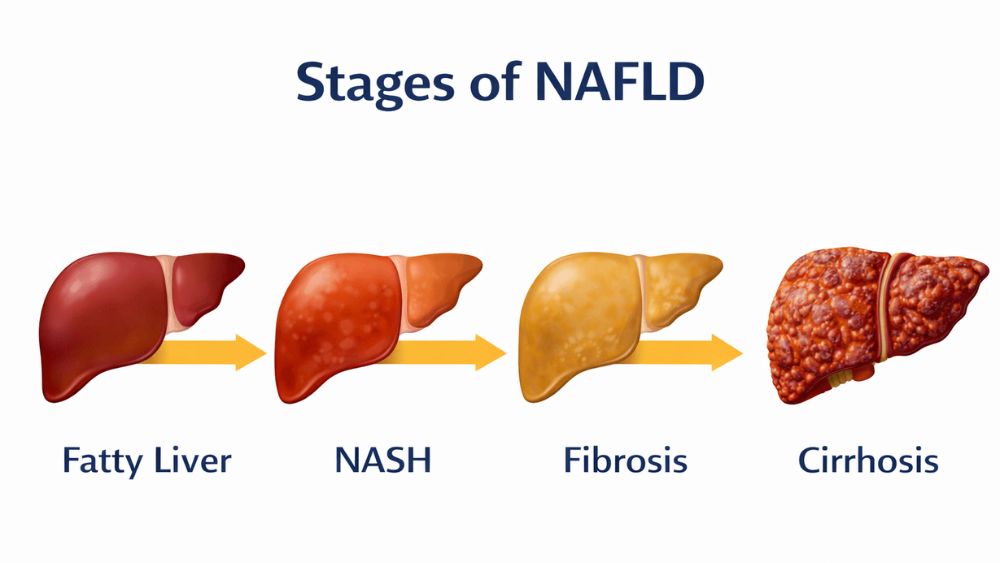
Nonalcoholic fatty liver disease progresses through stages, each riskier than the one before. Understanding these stages of NAFLD helps you know what’s reversible and what’s permanent.
Simple Steatosis (Fatty Liver)
Your liver cells fill with fat droplets, but there’s no inflammation or scarring yet. An ultrasound shows a bright, puffy liver. Blood tests often come back normal. Liver enzymes (ALT and AST) might show normal in the healthy range.
This stage affects about 80% of people with nonalcoholic fatty liver disease . Your liver still works fine despite carrying extra fat.
Simple steatosis reverses completely. Lose 7-10% of your body weight, and that fat disappears within months.
| A 200-pound person dropping 15 pounds can clear their liver fat entirely. 30 minutes of brisk walking five days a week reduces liver fat even without weight loss. |
NASH/MASH Stage
The newer term is MASH. The stages of NAFLD progress because your immune system starts attacking fat-filled liver cells.
Roughly 20% of simple steatosis cases progress to NASH. NASH doesn’t always progress. You can stay in this stage for decades without worsening. Others slide into fibrosis within five years.
The difference often comes down to how aggressively you address insulin resistance and obesity. Genetics plays a role. Certain bacterial strains produce compounds that trigger liver inflammation.
Fibrosis and Cirrhosis
Chronic inflammation triggers scarring. Your liver tries healing itself by laying down collagen fibers. Early fibrosis (stages F1-F2) can still reverse with serious lifestyle changes. Lose 10% or more of your body weight, and those scars might fade.
But let fibrosis advance to F3-F4, and you’ve got cirrhosis. The stages of NAFLD peak here with permanent structural damage. Your liver becomes lumpy, hard, and shrunken. Scar tissue blocks blood flow through the organ. Healthy cells die off and can’t regenerate.
Cirrhosis brings real complications. Portal hypertension (high pressure in liver blood vessels) causes fluid buildup in your belly. Varices (enlarged veins in your esophagus) can rupture and bleed. Hepatic encephalopathy (brain fog from toxin buildup) makes thinking difficult. Liver cancer risk jumps significantly.
Once you reach cirrhosis, you can’t undo advanced scarring, but you can prevent further harm and watch for cancer development through regular ultrasounds and blood tests.
Causes of Non-Alcoholic Fatty Liver Disease
Nonalcoholic fatty liver disease has multiple factors pile on simultaneously, overwhelming your liver’s ability to process fat normally.
Metabolic Causes
When your muscle and fat cells stop responding to insulin properly, your pancreas compensates by pumping out more, which makes your liver produce fat and store it.
The causes of non-alcoholic fatty liver disease often start with prediabetes or type 2 diabetes. About 70% of diabetics have some degree of liver fat.
Obesity, especially belly fat, triggers NAFLD. Visceral fat (fat around your organs) produces inflammatory compounds that promote fat storage in your liver.
Metabolic syndrome includes high blood pressure, elevated blood sugar, excess abdominal fat, and abnormal cholesterol. Having three or more of these quintuples your NAFLD risk. The syndrome affects 35% of American adults and keeps climbing.
Lifestyle & Environmental Factors
Sitting wrecks your metabolism faster than most people realize. Muscle cells become insulin-resistant when they’re not contracting regularly. Office workers sitting 8-10 hours daily show higher NAFLD rates than people with active jobs.
Eating more calories than you burn forces your liver into fat production mode. It doesn’t matter if those calories come from “healthy” foods or junk. Your liver converts excess energy into fat regardless of the source.
Causes of non-alcoholic fatty liver disease include poor sleep. Getting less than six hours makes you crave calorie-dense foods and eat 300-500 extra calories daily without realizing it.
Certain medications, such as corticosteroids (like prednisone), tamoxifen, methotrexate, and some antiviral drugs, can trigger fat accumulation.
Genetic & Hormonal Factors
The PNPLA3 gene variant increases NAFLD risk dramatically. People carrying two copies of this variant store fat more readily and break it down less efficiently. This variant is common in Hispanic populations.
Women with PCOS (polycystic ovary syndrome) develop nonalcoholic fatty liver disease at double the normal rate.
Thyroid disorders affect metabolism in ways that encourage fat accumulation.
Lipodystrophy syndromes (rare genetic conditions causing abnormal fat distribution) can’t store fat normally under their skin, so it accumulates in the liver instead.
Symptoms of Non-Alcoholic Fatty Liver Disease
Nonalcoholic fatty liver disease stays silent for years because your liver can be 30% fat and you’d feel completely normal. By the time symptoms of non-alcoholic fatty liver disease appear, you’ve often reached advanced stages.
- Fatigue hits you hard. You wake up drained.
- Mild discomfort in the upper right abdomen appears occasionally. It’s usually a vague achiness or fullness rather than sharp pain.
- Weight loss resistance becomes noticeable for some.
- Brain fog and difficulty concentrating show up more often. You forget words mid-sentence or struggle to focus on tasks that used to be easy.
- Dark patches of skin (acanthosis nigricans) appear on the neck, armpits, or groin if you have severe insulin resistance.
How NAFLD Is Diagnosed
Ultrasound finds most nonalcoholic fatty liver disease cases. But ultrasound misses mild cases where fat content sits below 20%. It also can’t measure inflammation or fibrosis accurately.
Blood tests check ALT, AST, alkaline phosphatase, and bilirubin levels. These numbers help rule out hepatitis, autoimmune liver disease, and bile duct problems. Doctors also test for iron overload (hemochromatosis) and Wilson’s disease because these conditions mimic NAFLD.
In nonalcoholic fatty liver disease , ALT typically runs higher than AST. If AST exceeds ALT by more than double, alcohol-related liver disease becomes more likely even if you don’t drink.
FibroScan (transient elastography) measures liver stiffness (scarring) using vibration waves. Results come in kilopascals (kPa) for stiffness. Under 7 kPa suggests no significant fibrosis. Between 7-10 kPa indicates early scarring. Above 12 kPa raises concerns for advanced fibrosis or cirrhosis.
Liver biopsy remains the gold standard for confirming nonalcoholic fatty liver disease severity. It can find fat percentage, inflammation levels, and fibrosis stage.
| Liver biopsies carry risks, though. Bleeding happens in 1 out of 1,000 cases. Severe bleeding requiring transfusion occurs in 1 out of 10,000. |
MRI-PDFF (proton density fat fraction) quantifies liver fat with incredible accuracy. But it’s expensive and not widely available outside major medical centers.
Treatment for NAFLD
Several drugs are in late-stage nonalcoholic fatty liver disease clinical trials, but nothing has FDA approval for NAFLD alone. Treatment for NAFLD relies entirely on fixing the metabolic problems that created it.
Weight loss reverses liver fat faster than any pill could. Losing 7-10% of your body weight reduces liver fat significantly. Drop 10% or more, and you can reverse inflammation and early-stage scarring.
Bariatric surgery (weight loss surgery) works for severe obesity paired with nonalcoholic fatty liver disease . Gastric bypass and sleeve gastrectomy cause dramatic weight loss, often 30-50% of excess body weight. NASH resolves in 70-80% of patients within a year after surgery. Fibrosis improves in about half.
Managing diabetes protects your liver indirectly. Metformin improves insulin sensitivity, though it doesn’t directly reduce liver fat. GLP-1 receptor agonists (semaglutide, liraglutide) help with both weight loss and blood sugar control.
Pioglitazone, a diabetes medication, reduces liver inflammation in NASH patients. Doctors sometimes prescribe it off-label for treatment for NAFLD when inflammation is severe. But it causes weight gain and bone loss, so it’s not a perfect solution.
Vitamin E (800 IU daily) reduces liver inflammation in non-diabetic NASH patients. But long-term high-dose vitamin E might increase prostate cancer risk in men and hemorrhagic stroke risk overall.
If you have nonalcoholic fatty liver disease , get liver enzymes checked annually. Repeat FibroScan every 2-3 years to track fibrosis progression. Watch for signs of liver cancer with ultrasound and AFP (alpha-fetoprotein) blood tests if you have cirrhosis.
Diet of NAFLD
The diet of NAFLD focuses on calorie control and reducing insulin spikes.
- Cut added sugars first. Cut table sugar, because it contains 50% fructose. Stop drinking corn syrup, which has 42-55% fructose.
- Limit fruit juice, sodas, sweetened coffee drinks, desserts, and processed foods.
- White bread, white rice, crackers, and pastries should be avoided.
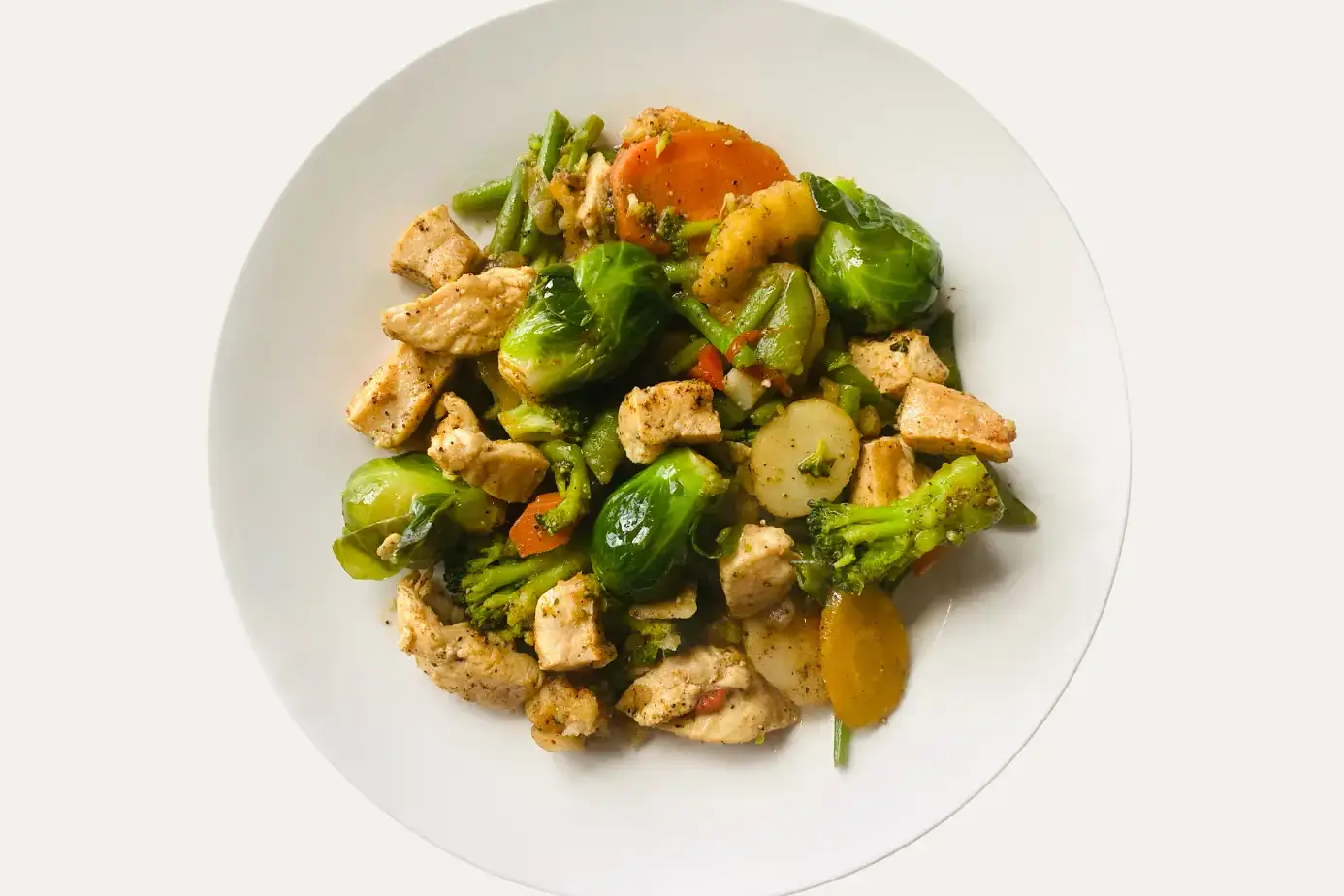
The Mediterranean diet is the strongest evidence for improving nonalcoholic fatty liver disease . Olive oil, nuts, fish, vegetables, whole grains, and moderate wine consumption (if you drink at all). It reduces liver fat and inflammation even without weight loss.
Protein intake matters more than people realize. Getting 1.2-1.6 grams per kilogram of body weight preserves muscle mass during weight loss. Good sources include fish, chicken, eggs, Greek yogurt, and legumes.
Coffee drinkers have lower NAFLD rates. Three cups daily reduces fibrosis risk by roughly 30%.
Avoid processed meats and fried foods, such as bacon, sausage, hot dogs, and deli meats. Choose baked, grilled, or steamed foods instead.
Can NAFLD Be Reversed?
Simple steatosis disappears by losing 7% of your body weight, and liver fat drops by 30-40% within months.
NASH reverses, too, but you need sustained 10% weight loss minimum. About 45% of people who achieve this see complete resolution of inflammation and liver cell damage. Fibrosis improvement happens slower, over 12-18 months rather than weeks.
Advanced fibrosis (F3-F4) rarely reverses completely. Once your liver has formed thick bands of scar tissue, that architecture tends to persist. About 20-30% of people with F3 fibrosis show improvement with major lifestyle changes.
Cirrhosis is mostly permanent. The stages of NAFLD peak at this level with structural damage that doesn’t undo itself. You can prevent further scarring and reduce cancer risk.
FAQs – Nonalcoholic Fatty Liver Disease
What is nonalcoholic fatty liver disease?
Nonalcoholic fatty liver disease occurs when more than 5% of your liver’s weight becomes fat without alcohol consumption being the primary cause, usually from insulin resistance and obesity.
Is NAFLD serious?
Yes. Simple fatty liver isn’t immediately dangerous, but 20% progress to inflammation and scarring. Cirrhosis, liver failure, and liver cancer become real risks without intervention and lifestyle changes.
Can NAFLD turn into cirrhosis?
Yes. About 20% of nonalcoholic fatty liver disease cases develop NASH, and roughly 20% of those progress to cirrhosis over 10-20 years if left unmanaged through weight loss.
Does NAFLD cause symptoms early?
No. Early nonalcoholic fatty liver disease causes fatigue and mild abdominal discomfort, but serious symptoms only emerge with advanced liver damage or cirrhosis.
Is NAFLD reversible?
Yes, if caught early. Simple steatosis reverses completely with 7-10% weight loss. NASH can reverse with 10% or more weight loss. Advanced fibrosis and cirrhosis rarely reverse fully.
Is NAFLD the same as MASLD?
Yes. MASLD (metabolic dysfunction-associated steatotic liver disease) replaced NAFLD recently, but most doctors and patients still use the older term for nonalcoholic fatty liver disease .
Does NAFLD require medication?
No FDA-approved drugs specifically treat nonalcoholic fatty liver disease . Medications manage related conditions like diabetes and high cholesterol, but lifestyle changes remain the primary treatment for NAFLD .
Can lean people have NAFLD?
Yes. About 10-20% of nonalcoholic fatty liver disease cases occur in normal-weight individuals. Genetics, visceral fat (even with normal BMI), insulin resistance, and poor diet cause lean NAFLD independently of obesity.
About The Author

Medically reviewed by Dr. Nivedita Pandey, MD, DM (Gastroenterology)
Dr. Nivedita Pandey is a U.S.-trained gastroenterologist and hepatologist with extensive experience in diagnosing and treating liver diseases and gastrointestinal disorders. She specializes in liver enzyme abnormalities, fatty liver disease, hepatitis, cirrhosis, and digestive health.
All content is reviewed for medical accuracy and aligned with current clinical guidelines.