MASH liver disease develops when fat builds up in your liver and triggers inflammation that damages liver cells. This happens because of metabolic problems like diabetes or insulin resistance. Unlike simple fatty liver, MASH liver disease actively destroys your liver tissue through ongoing inflammation. Left alone, it can turn into scarring, cirrhosis, or liver failure symptoms.
What Is MASH?
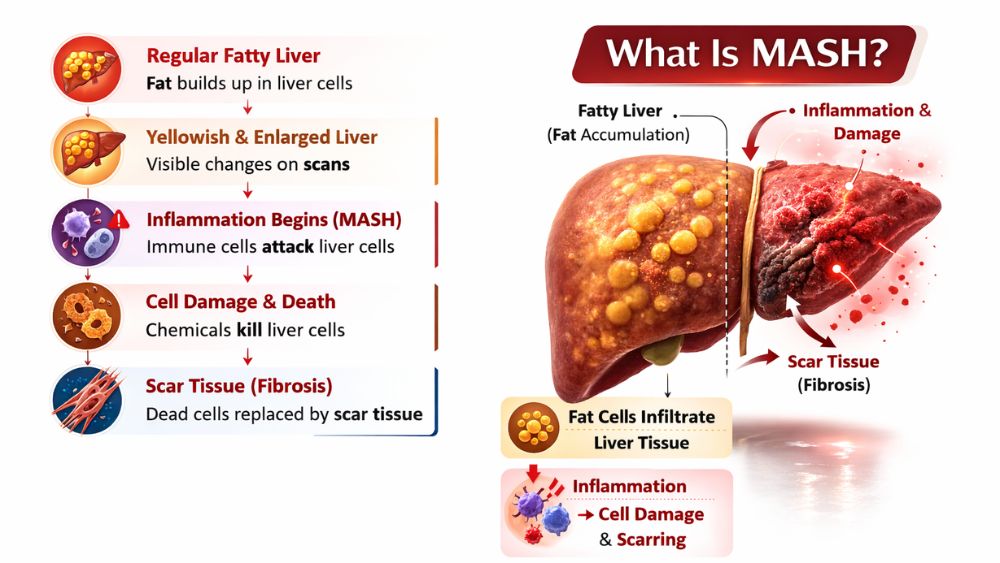
MASH liver disease stands for Metabolic Dysfunction–Associated Steatohepatitis. Metabolic dysfunction means your body struggles to process sugar and fat properly. Steatohepatitis means fat in the liver plus inflammation.
Your liver stores fat, which it shouldn’t because your metabolism is broken. That fat triggers your immune system to attack.
- Regular fatty liver means fat cells have invaded your liver tissue. Your liver looks yellowish and enlarged on scans. But the fat is mostly dormant.
- MASH liver disease means that fat has activated inflammation. Your immune cells flood in. They release chemicals that kill liver cells. Dead cells get replaced with scar tissue.
In MASH fatty liver disease , your body attacks its own liver because metabolic dysfunction has made those cells sick. The liver can’t repair damage fast enough. Scars form, and function drops.
MASH vs MASLD: What’s the Difference?
MASLD stands for Metabolic Dysfunction–Associated Steatotic Liver Disease. Steatotic means fat-filled. So MASLD is a fat-accumulated liver because of metabolic problems.
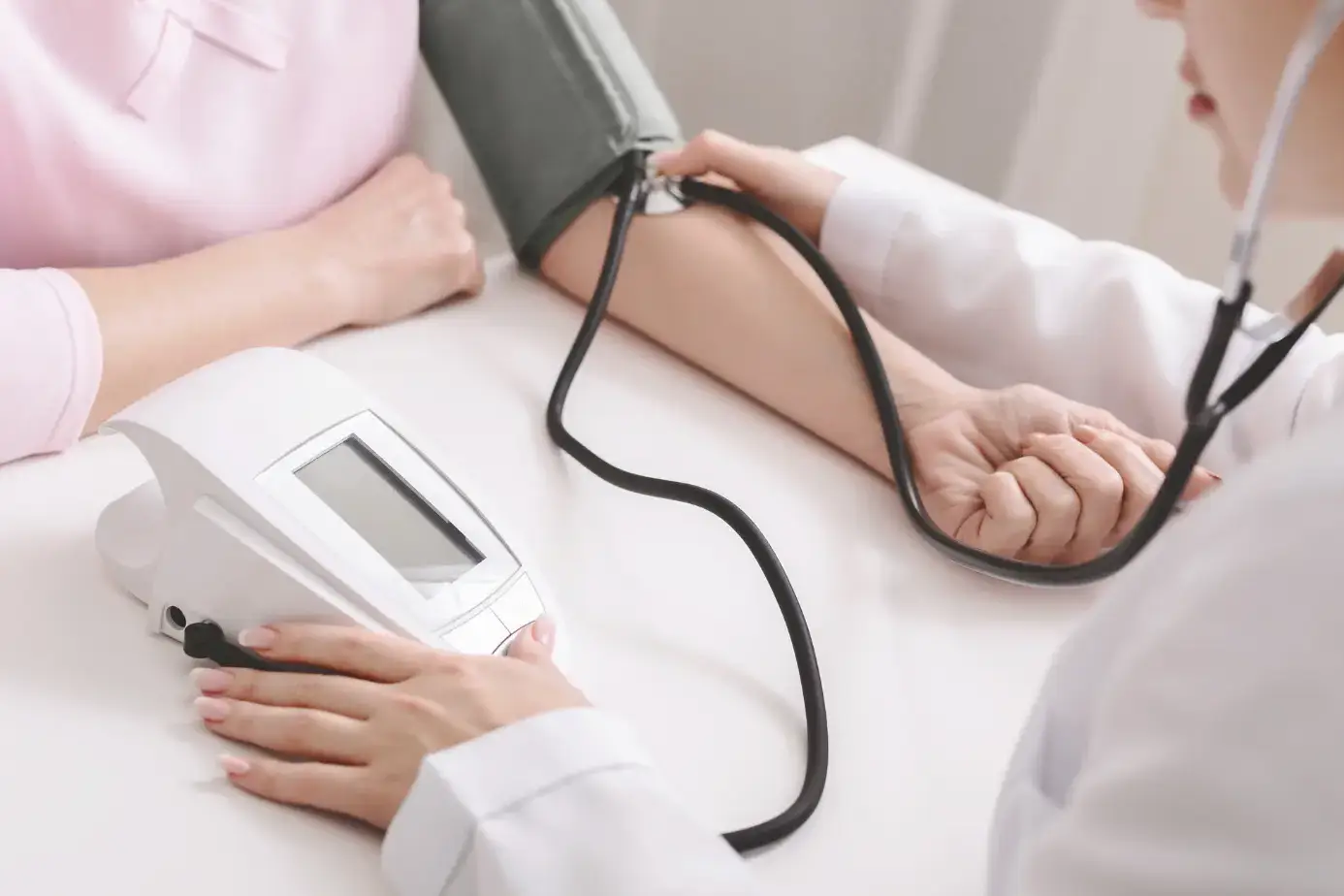
You have high chances of MASLD if you have liver fat plus at least one metabolic issue. That could be type 2 diabetes, high blood pressure, elevated triglycerides, low HDL cholesterol, or obesity.
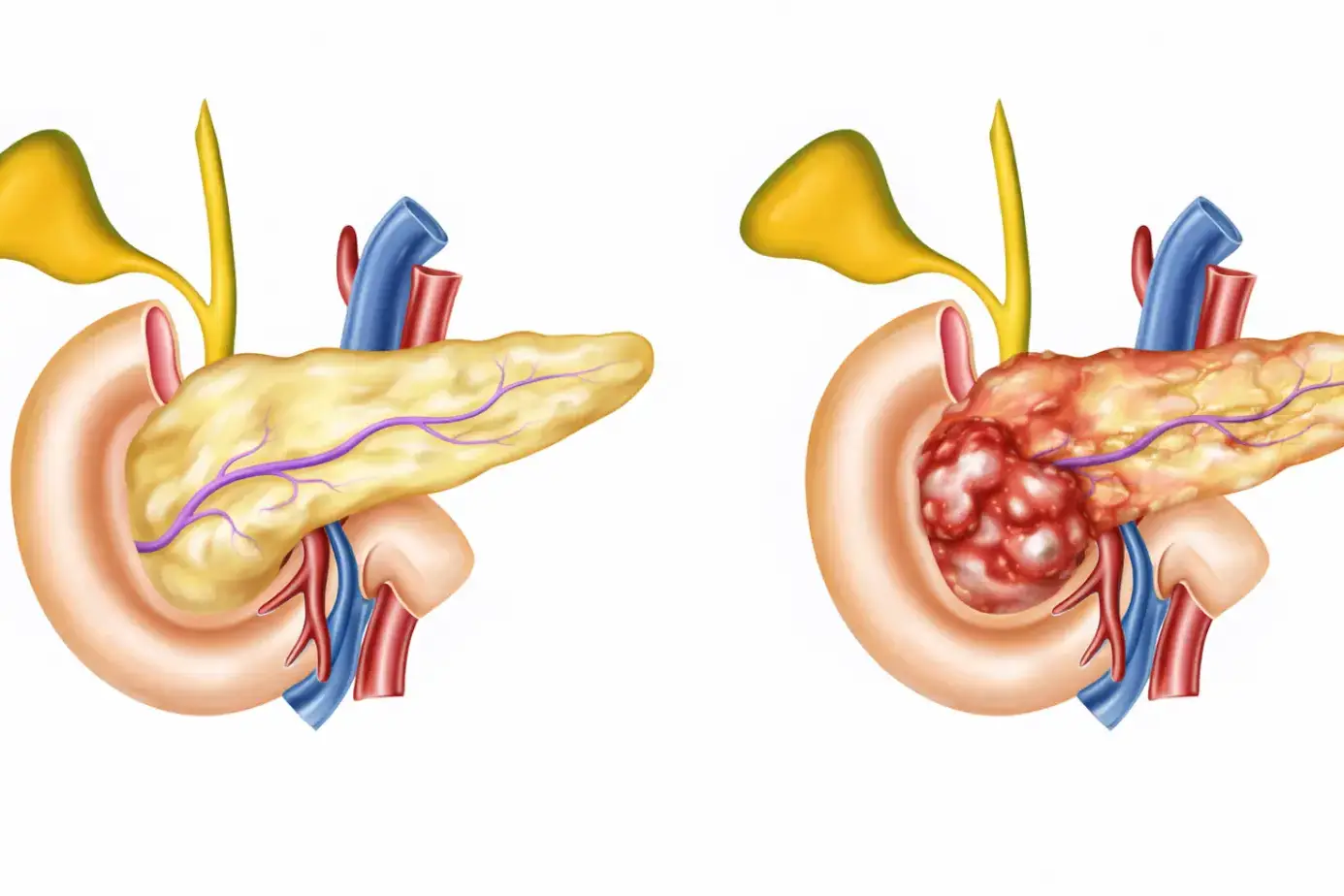
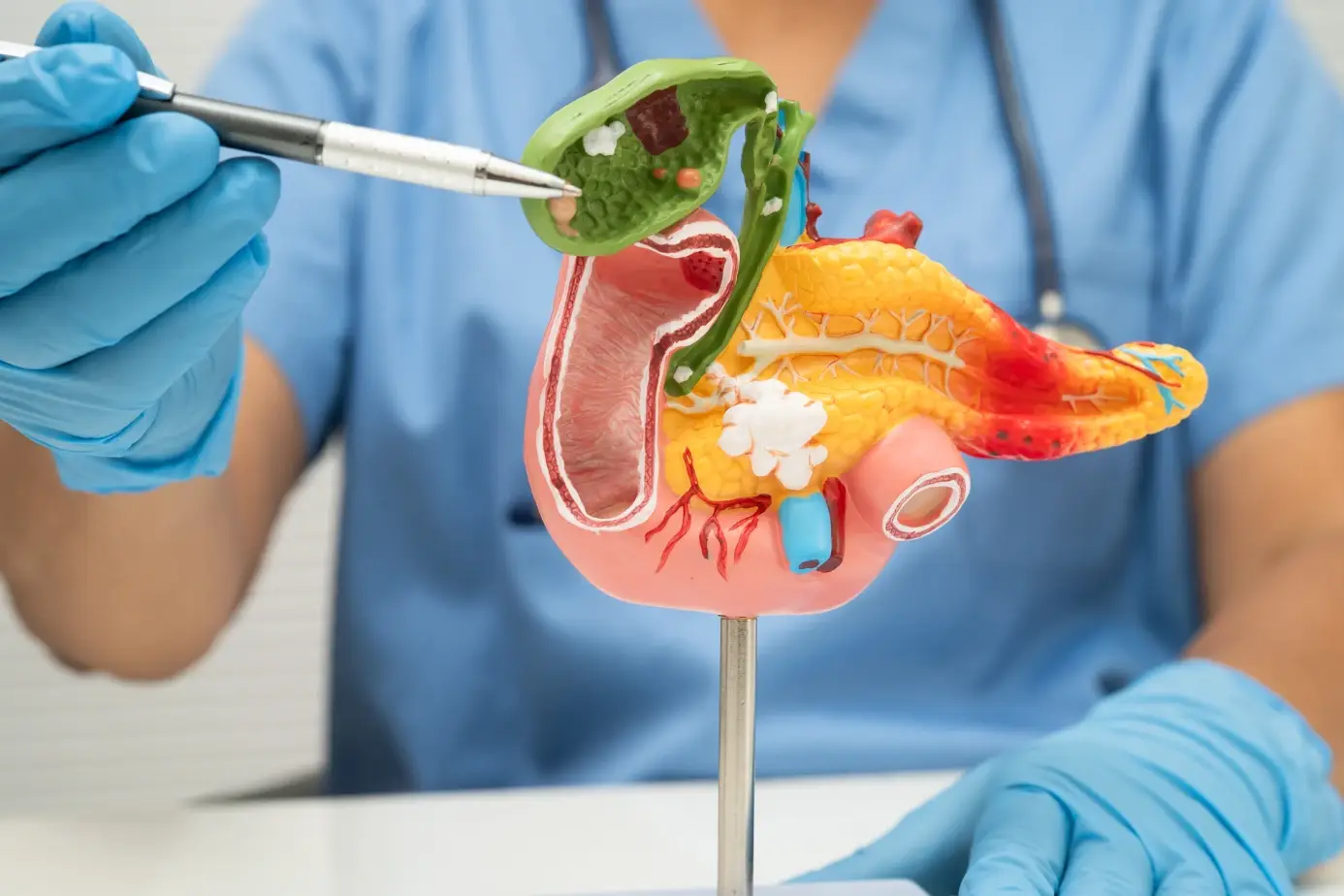
MASH liver disease sits inside MASLD as the dangerous subset. You still have the fat. You still have metabolic dysfunction. But now your liver is inflamed, and cells are dying. A biopsy would show ballooned liver cells, clusters of immune cells, and early scarring called fibrosis.
If you have a simple MASLD, you might live your whole life without progression. Your liver stays fatty but functional. MASH liver disease patients face a real risk of cirrhosis and liver failure if nothing changes. 20-30% people with MASLD develop MASH liver disease .
How MASH Develops
Fat accumulates in liver cells when your body can’t process it correctly. Insulin resistance usually drives this. Your cells stop responding to insulin’s signals, so glucose and fat pile up in your bloodstream. Your liver tries to help by storing the excess fat, but it’s not built for long-term fat storage like adipose tissue is.
Once fat overwhelms liver cells, oxidative stress damages cell membranes and DNA. Your liver’s natural antioxidant systems get overloaded trying to clean up the mess.
Your immune system notices the cellular damage. White blood cells move into liver tissue. They release inflammatory molecules like cytokines and chemokines to clear out dying cells. But the inflammation doesn’t stop because new fat keeps arriving. The metabolic problems haven’t been fixed.
Chronic inflammation becomes the default state in MASH liver disease . Liver cells die faster than they can regenerate. Your body fills in the gaps with scar tissue made of collagen fibers. This is fibrosis. Scar tissue can’t do any liver work. It just takes up space.
As fibrosis spreads, liver architecture distorts. Blood can’t flow through properly. Nutrients can’t reach healthy cells. The liver struggles to make proteins, clear toxins, and regulate metabolism.
MASH liver disease is more dangerous than simple fatty liver because inflammation drives active destruction every day. Fat sitting in cells is relatively stable. Inflammation kills cells and builds scars that never fully disappear.
MASH Causes
MASH causes are predictable once you understand metabolic dysfunction. Specific breakdowns in how your body processes energy create the perfect conditions for MASH liver disease .
Metabolic Causes
Type 2 diabetes ranks among the strongest MASH causes . Severe insulin resistance forces the liver to convert excess glucose into fat for storage. Diabetics have three times the risk of developing MASH liver disease compared to people with normal blood sugar.
Obesity, especially visceral fat around your abdomen, amplifies MASH causes . Belly fat acts like an endocrine organ, releasing inflammatory chemicals called adipokines into your bloodstream. These signals tell your liver to store more fat and trigger immune responses. The bigger your waist circumference, the higher your risk of MASH liver disease .
Genetic & Individual Risk
Genetics explains why some thin people still develop MASH liver disease . Variants in genes like PNPLA3, TM6SF2, and GCKR affect how your liver processes and exports fat. You can have a normal BMI but still accumulate dangerous levels of liver fat if you carry these variants.
Lean MASH gets overlooked constantly. About 10-20% of MASH liver disease patients have a completely normal weight. You might have a hidden genetic makeup that makes your liver vulnerable at lower fat thresholds than average.
Some ethnic groups, such as Hispanic and Asian populations, develop MASH liver disease at higher rates than others, probably because of genetic differences in fat metabolism and storage patterns.
MASH Symptoms
MASH symptoms rarely show up early because your liver doesn’t have pain nerves inside the actual tissue. You only feel something when inflammation stretches the capsule around the liver or affects nearby organs. That takes months or years of damage.
Fatigue is the most common MASH symptom once anything appears. You feel drained without an obvious reason. Afternoon energy crashes become routine. Sleep stops being restorative. But fatigue happens with dozens of conditions, so people rarely link it to their liver.
You may notice right upper abdominal discomfort. It’s not a sharp stabbing pain. More like dull pressure or fullness under your right ribs. This happens when MASH liver disease causes the liver to swell beyond its normal size.
MASH symptoms don’t match how sick your liver actually is. You can have advanced scarring and feel completely normal. Or you can have mild inflammation and feel exhausted all the time. The disconnect makes self-diagnosis impossible.
How MASH Is Diagnosed
Blood tests for liver enzymes called ALT and AST spill into your bloodstream when liver cells die. Elevated levels suggest liver damage. But these tests are unreliable for MASH liver disease . You can have normal enzymes with severe inflammation. Or high enzymes from completely different causes, like alcohol or medications.
Imaging provides more concrete evidence. Ultrasound shows whether fat has accumulated in your liver. It’s cheap and widely available, but can’t measure inflammation or scarring. FibroScan uses special sound waves to measure liver stiffness. Stiffer liver tissue usually means more fibrosis. MRI gives detailed pictures of fat distribution and can estimate fibrosis severity through specialized sequences.
Liver biopsy remains the only definitive test for MASH liver disease . Liver biopsy can detect fat droplets, inflammation, ballooned cells, and fibrosis patterns.
MASH Treatment
MASH treatment focuses on fixing the metabolic dysfunction that’s destroying your liver. No pill dissolves liver fat or stops inflammation directly.
Losing 7-10% of your body weight reduces liver fat and inflammation, and is the foundation of MASH treatment . If you lose 10% or more, you often see fibrosis improvement on follow-up biopsies.
Better blood sugar control reduces the signals telling your liver to store fat. Medications like metformin improve insulin sensitivity. GLP-1 receptor agonists help with both blood sugar and weight loss.
Controlling cholesterol and triglycerides helps. Statins are safe in MASH liver disease despite old myths about liver damage.
Monitoring fibrosis progression guides treatment intensity. If scarring advances on repeat FibroScans, you need more aggressive metabolic intervention.
Medications specifically targeting MASH liver disease exist, but aren’t widely available yet. Resmetirom got FDA approval in 2024. Specialists may prescribe them for severe cases with advanced fibrosis.
Avoiding alcohol completely helps your liver recover. Even moderate drinking adds stress to an already damaged organ.
Is MASH Reversible?
Is MASH reversible? Early MASH liver disease with minimal fibrosis can reverse completely. Weight loss and metabolic improvement reduce inflammation.
Stage 1 or 2 fibrosis can improve significantly with aggressive intervention. Stage 3 fibrosis (bridging fibrosis) becomes harder to reverse. You can halt progression and maybe reduce some scarring, but a complete reversal gets unlikely.
But once your liver develops cirrhosis (extensive scarring that completely remodels your liver architecture), you can stabilize the disease and prevent decompensation (liver failure). But the scar tissue is permanent. Your liver has lost most of its regenerative capacity.
Younger livers heal better than older ones. A 35-year-old with early MASH liver disease has better reversal odds than a 65-year-old with the same degree of inflammation.
What Happens If MASH Is Not Treated?
Fibrosis progresses through predictable stages when MASH liver disease goes untreated. Thin bands of scar tissue appear first around blood vessels and between liver cells. They spread and connect over months to years. Your liver architecture starts distorting.
Cirrhosis represents end-stage scarring. Your liver becomes hard, shrunken, and nodular. Blood can’t flow through the damaged tissue properly. Pressure builds in the portal vein system that drains blood from your intestines, and causes fluid to leak into your abdomen (ascites). Veins in your esophagus swell and can rupture, causing life-threatening bleeding.
Liver failure means your organ can’t perform basic survival functions anymore. Toxins like ammonia build up in your blood and cause confusion or coma. Your skin turns yellow from bilirubin accumulation. Transplant becomes the only option at this stage.
Liver cancer risk increases with cirrhosis from MASH liver disease . Scarred livers develop hepatocellular carcinoma at rates of 1-2% per year.
Cardiovascular disease kills more MASH liver disease patients than liver failure does. Heart attacks and strokes happen at higher rates in people with MASH liver disease compared to the general population.
FAQs – What Is MASH Liver Disease?
What does MASH stand for?
MASH stands for Metabolic Dysfunction–Associated Steatohepatitis. It describes fatty liver with active inflammation and liver cell damage caused by metabolic problems like diabetes and insulin resistance, not alcohol.
Is MASH the same as NASH?
Yes, MASH liver disease and NASH are identical conditions. Medical organizations renamed NASH to MASH in 2023 to emphasize the metabolic causes rather than just stating it’s non-alcoholic.
Is MASH more serious than MASLD?
Yes, MASH liver disease is far more serious. MASLD means fat in your liver without major inflammation. MASH means fat plus ongoing inflammation that kills liver cells and builds scar tissue leading to cirrhosis.
Can MASH progress to cirrhosis?
MASH liver disease progresses to cirrhosis in approximately 20% of patients over 10-15 years if untreated. The inflammation continuously builds scar tissue that eventually remodels the entire liver structure into dysfunctional cirrhotic tissue.
Does MASH cause symptoms early?
No, MASH liver disease rarely causes noticeable symptoms in early stages. Most patients feel completely normal despite ongoing liver inflammation and damage. Symptoms like fatigue only appear after years of progression in some cases.
Is MASH reversible?
Early MASH liver disease with stage 1-2 fibrosis reverses with 7-10% weight loss and metabolic improvement. Advanced fibrosis and cirrhosis cannot fully reverse, though progression can be stopped with aggressive intervention.
Do all MASLD patients develop MASH?
No, only 20-30% of MASLD patients progress to MASH liver disease . Most maintain simple fat accumulation without developing the inflammation and cell damage that defines MASH. Genetic factors and metabolic severity determine progression.
Does MASH require medication?
MASH liver disease primarily requires weight loss and metabolic management rather than specific medications. Resmetirom is FDA-approved for advanced cases with fibrosis, but most patients improve through lifestyle changes and diabetes control.
About The Author

Medically reviewed by Dr. Nivedita Pandey, MD, DM (Gastroenterology)
Dr. Nivedita Pandey is a U.S.-trained gastroenterologist and hepatologist with extensive experience in diagnosing and treating liver diseases and gastrointestinal disorders. She specializes in liver enzyme abnormalities, fatty liver disease, hepatitis, cirrhosis, and digestive health.
All content is reviewed for medical accuracy and aligned with current clinical guidelines.