Grade 1 fatty liver causes relate to early fat storage (5-33%) inside liver cells before damage develops. This stage means mild buildup, not scarring or failure. You usually reach this point due to metabolic stress, diet habits, alcohol exposure, inactivity, or certain health conditions. The liver still functions well, and change is possible if triggers are corrected.
Key Takeaways
- Grade 1 fatty liver causes include insulin resistance, excess weight, calorie surplus, alcohol intake, and sedentary behavior
- Fat buildup remains mild and often produces no warning signs
- Early correction prevents progression toward inflammation or scarring
What Is Grade 1 Fatty Liver?
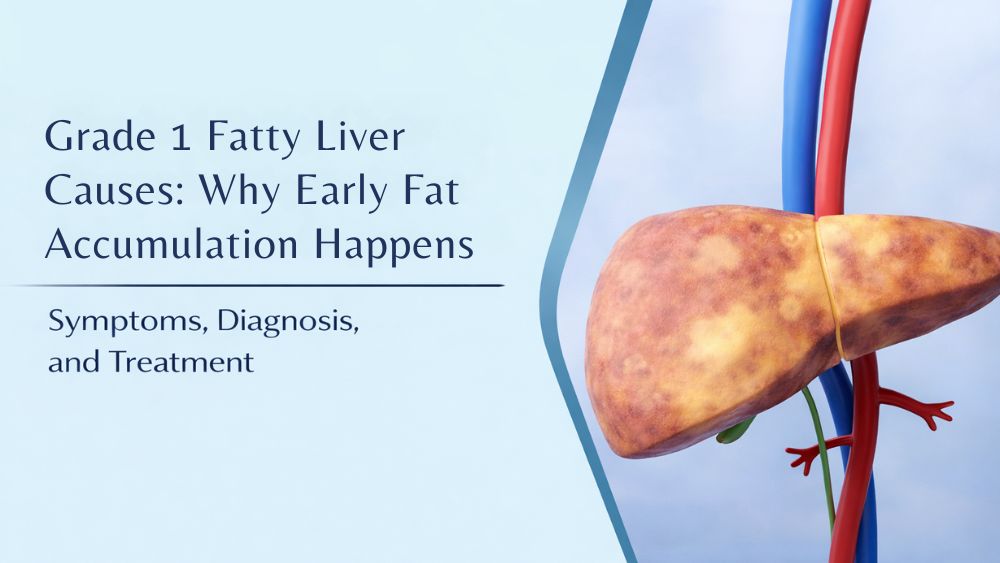
Grade 1 fatty liver refers to mild steatosis (fat accumulation inside liver cells). When clinicians discuss grade 1 fatty liver causes , they discuss fat droplets in 5-33% of your liver cells.
Ultrasound compares liver brightness with nearby kidney tissue. Grade 1 shows a slight brightness increase while blood vessel outlines remain visible. This indicates lipid presence without structural damage. The finding does not mean cell death or fibrosis (scar tissue formation).
Fat storage reflects an imbalance between fat input and fat removal. Injury involves inflammation, oxidative stress, and cell breakdown. In the early stages, the liver still exports triglycerides and maintains metabolic functions.
Fat enters hepatocytes through three main biological routes:
- Conversion of excess glucose into fatty acids via lipogenesis, meaning fat creation from sugar
- Direct transport of fatty acids released from visceral fat surrounding abdominal organs
- Reduced oxidation, which means slower burning of stored fats for energy
These pathways are behind grade 1 fatty liver causes . Another detail often overlooked involves liver resilience. Hepatocytes regenerate and adjust metabolic activity rapidly. This adaptability allows reversal if input loads decrease.
Grade 1 Fatty Liver Causes
Understanding grade 1 fatty liver causes means examining physiological and behavioral drivers together. You show overlapping influences rather than a single factor.
Metabolic Causes
Insulin resistance plays a central role. When body tissues respond poorly to insulin, glucose remains elevated in circulation. The liver converts excess glucose into fat and stores it. This creates a vicious cycle. More sugar means more fat production. More fat in the liver makes insulin resistance worse.
Obesity amplifies everything, especially when you carry weight around your midsection. Belly fat is a metabolically active tissue that releases inflammatory chemicals into your bloodstream. These chemicals travel to your liver and interfere with normal fat processing. The more central fat you have, the more inflammatory signals your liver receives, and the more likely fat accumulation becomes.
People with waist measurements over 40 inches for men or 35 inches for women face significantly higher risks. The location of fat matters as much as the total amount.
Metabolic syndrome combines high blood pressure, elevated blood sugar, excess waist fat, low HDL cholesterol, or high triglycerides. When these factors cluster together, they create ideal conditions for fat to flood into liver cells. Your body’s entire metabolic system struggles, and your liver bears much of that burden.
Dietary Causes
Excess calories from any source can cause problems. Your body needs a certain amount of energy each day. Anything beyond that gets stored. Some goes to fat tissue under your skin. Some goes to fat around your organs. And increasingly, some gets stored right in liver cells.
Consistently eating 200-300 extra calories daily adds up over months. Your liver gradually accumulates more fat deposits.
High sugar and refined carbohydrates deserve special attention among the grade 1 fatty liver causes. When you eat white bread, pastries, or candy or drink soda, you’re flooding your system with simple sugars that spike your blood glucose fast. The overflow gets converted to fat through a process called de novo lipogenesis (making new fat from sugar).
Fructose, the sugar in sweetened drinks and many processed foods, goes straight to your liver for processing. Unlike glucose, which your muscles can use directly, fructose must be handled by liver cells first. High fructose intake overwhelms this system.
Processed and ultra-processed foods combine refined carbs, added sugars, unhealthy fats, and excess sodium in single products. Packaged snacks, frozen meals, fast food burgers, and shelf-stable desserts hit your liver from multiple angles at once. They make grade 1 fatty liver causes more common in populations with heavy processed food consumption.
Alcohol-Related Causes
Regular alcohol intake changes how your liver handles fats. Even amounts considered moderate by social standards can contribute to fat accumulation.
Your liver treats alcohol as a priority toxin that needs immediate processing. While your liver cells are busy breaking down alcohol, they can’t efficiently process dietary fats. Those fats get stored temporarily. Drink regularly enough, and that temporary storage becomes permanent accumulation.
For some individuals, just one or two drinks daily over months or years is enough to trigger changes. Body size, genetics, and overall metabolic health all influence how much alcohol your liver can handle without storing excess fat.
Lifestyle-Related Causes
Physical inactivity ranks among the most significant grade 1 fatty liver causes in modern life. When you don’t move much, your muscles don’t demand much energy. That means less glucose gets pulled from your blood for muscle use. Your liver ends up storing more of it as fat.
Exercise improves insulin sensitivity, meaning your cells respond better to insulin’s signals. Better insulin sensitivity means less sugar gets converted to liver fat. Even moderate activity like brisk walking makes measurable differences.
Prolonged sitting for hours without breaks changes how your body metabolizes fats and carbohydrates. Your leg muscles (the largest muscle group in your body) stay inactive during sitting. When these muscles don’t contract regularly, they don’t pull glucose effectively from your bloodstream. Office workers, truck drivers, and anyone with desk-heavy jobs face elevated risks.
Poor sleep patterns affect grade 1 fatty liver causes through hormonal pathways. When you don’t get enough sleep, your body produces more cortisol, a stress hormone. Elevated cortisol promotes fat storage, particularly in the liver and around your abdomen.
Medical And Medication-Related Causes
Type 2 diabetes and fatty liver are deeply interconnected. Persistently high blood sugar overwhelms your liver’s processing capacity. The connection is so strong that doctors now routinely screen diabetic patients for liver fat, and vice versa.
- Poor blood sugar control over the years damages the mechanisms that normally prevent fat buildup. This makes type 2 diabetes one of the most powerful grade 1 fatty liver causes in metabolic disease.
- PCOS (polycystic ovary syndrome) have insulin resistance even if they’re not overweight. This insulin resistance drives the same fat accumulation process described earlier. PCOS patients develop fatty liver at rates two to three times higher than women without the condition.
- Hypothyroidism slows your entire metabolic rate. Your thyroid gland produces hormones that control how fast your body burns energy. When thyroid hormone levels drop too low, fat metabolism in your liver is affected.
- Certain corticosteroids, some chemotherapy drugs, tamoxifen, and a few other medications list hepatic steatosis among their potential effects.
Symptoms Of Grade 1 Fatty Liver
Symptoms of grade 1 fatty liver are practically invisible in most cases. Your liver doesn’t have pain nerves the way your skin or muscles do. Fat can build up for months or years without sending any distress signals.
When symptoms do show up, some people notice mild fatigue that doesn’t match their activity level. Others describe a dull heaviness in the upper right part of their belly, just below the ribs. But these feelings are so common and so non-specific that they rarely point clearly to liver issues.
How bad you feel doesn’t match how much fat you have. Someone with grade 1 might feel exhausted, while someone with more advanced stages feels fine. Symptoms of grade 1 fatty liver don’t reliably tell you anything about severity.
Why Grade 1 Fatty Liver Often Goes Undetected
You discover grade 1 fatty liver completely by accident. You go in for an ultrasound to check your gallbladder, investigate some stomach pain, or follow up on something totally unrelated. The radiologist scanning your abdomen notices your liver looks brighter than it should, confirming fatty liver.
In grade 1, ALT and AST enzymes often come back perfectly normal. This enzyme paradox explains why so many cases slip through routine checkups. By the time symptoms appear, if they ever do, the condition has often progressed beyond grade 1.
Diagnosis Of Grade 1 Fatty Liver
Ultrasound is the first method used to diagnose grade 1 fatty liver. It’s cheap, widely available, safe, and reasonably accurate for detecting fat.
- During an ultrasound, the technician moves a probe over your upper abdomen.
- Sound waves bounce off your liver tissue and create images on a screen.
- A fatty liver reflects sound waves differently from a normal liver. It appears brighter; radiologists call this “increased echogenicity.”
- They compare your liver’s brightness to your kidney.
- If your liver looks significantly brighter than your kidney, fat accumulation is likely.
Blood tests have real limitations here. As mentioned, liver enzymes can be totally normal.
FibroScan technology offers more precision when ultrasound results are unclear. This specialized device measures liver stiffness (indicating scarring) and fat content. It uses controlled vibrations sent through your liver. The machine calculates a CAP score (controlled attenuation parameter) that quantifies fat levels.
Is Grade 1 Fatty Liver Curable?
Yes. At this early stage, complete reversal is possible for most people. Grade 1 is reversible. If you eliminate the underlying grade 1 fatty liver causes, the fat can leave your liver cells.
At grade 1, your liver’s basic structure remains intact. The cells are stressed from carrying extra fat, but they’re not scarred or destroyed. Change the metabolic environment, and those cells can recover.
Grade 1 fatty liver is curable and depends partly on how quickly you act. Left alone, grade 1 can progress to grade 2, then grade 3. It can develop inflammation (steatohepatitis) where liver cells get damaged. Eventually, scarring (fibrosis) can form. Once significant scarring sets in, reversal becomes much harder. Some damage becomes permanent.
Fatty Liver Grade 1 Treatment
Fatty liver grade 1 treatment centers on addressing root causes rather than taking pills. There’s no medication that dissolves liver fat.
- If insulin resistance triggered your fat accumulation, improving insulin sensitivity reverses the process.
- If carrying excess weight was the problem, losing 5-10% of your body weight can produce dramatic improvements. You may see complete resolution at these levels.
The core treatment approach follows:
- Identify which grade 1 fatty liver causes apply to your situation specifically.
- Address those exact factors through targeted lifestyle changes.
- Monitor your progress with follow-up testing to ensure you’re moving in the right direction.
Removing the underlying cause is the actual medicine. If poor diet caused it, dietary changes become your treatment. If physical inactivity contributed, adding regular movement becomes essential. If alcohol intake played a role, reducing or eliminating alcohol reverses the accumulation.
Medical monitoring tracks whether your fatty liver grade 1 treatment plan is working. Doctors typically repeat ultrasounds every 6-12 months to see if fat levels are decreasing, staying stable, or increasing. Blood tests might be repeated to check if metabolic markers like blood sugar, cholesterol, and liver enzymes are improving.
FAQs – Grade 1 Fatty Liver Causes
What causes grade 1 fatty liver?
Insulin resistance, abdominal fat, excess refined carbohydrate intake, alcohol metabolism, inactivity, and endocrine disorders directly drive grade 1 fatty liver causes by increasing triglyceride synthesis or fatty acid delivery into hepatocytes.
Is grade 1 fatty liver serious?
Yes, it is mild but clinically relevant because persistent grade 1 fatty liver causes raise risk of inflammatory progression, metabolic syndrome worsening, and cardiovascular complications documented in population metabolic outcome tracking.
Can grade 1 fatty liver be reversed?
Yes. Correcting grade 1 fatty liver causes through weight stabilization, improved insulin response, and reduced hepatic fat input commonly produces imaging normalization within months depending on metabolic baseline.
Does grade 1 fatty liver cause symptoms?
No, most cases show no clear signals. When symptoms of grade 1 fatty liver appear, they usually involve mild fatigue or abdominal heaviness linked to enlargement rather than cellular injury.
Is alcohol always the cause?
No. Metabolic dysfunction explains most grade 1 fatty liver causes , particularly insulin resistance and visceral fat release, while alcohol represents only one contributing biochemical pathway.
Can liver enzymes be normal in grade 1 fatty liver?
Yes. Normal laboratory values occur frequently because diagnosis of grade 1 fatty liver depends on imaging detection of lipid accumulation rather than markers indicating cell damage.
Does grade 1 fatty liver need medication?
No. Lifestyle-driven fatty liver treatment usually suffices. Medication addresses related disorders only when clinical assessment identifies metabolic or hormonal conditions requiring therapy.
Can grade 1 fatty liver progress?
Yes. Continued exposure to grade 1 fatty liver causes can initiate inflammation, oxidative stress, and fibrosis development, shifting disease stage despite initial mild imaging findings.
About The Author

Medically reviewed by Dr. Nivedita Pandey, MD, DM (Gastroenterology)
Dr. Nivedita Pandey is a U.S.-trained gastroenterologist and hepatologist with extensive experience in diagnosing and treating liver diseases and gastrointestinal disorders. She specializes in liver enzyme abnormalities, fatty liver disease, hepatitis, cirrhosis, and digestive health.
All content is reviewed for medical accuracy and aligned with current clinical guidelines.