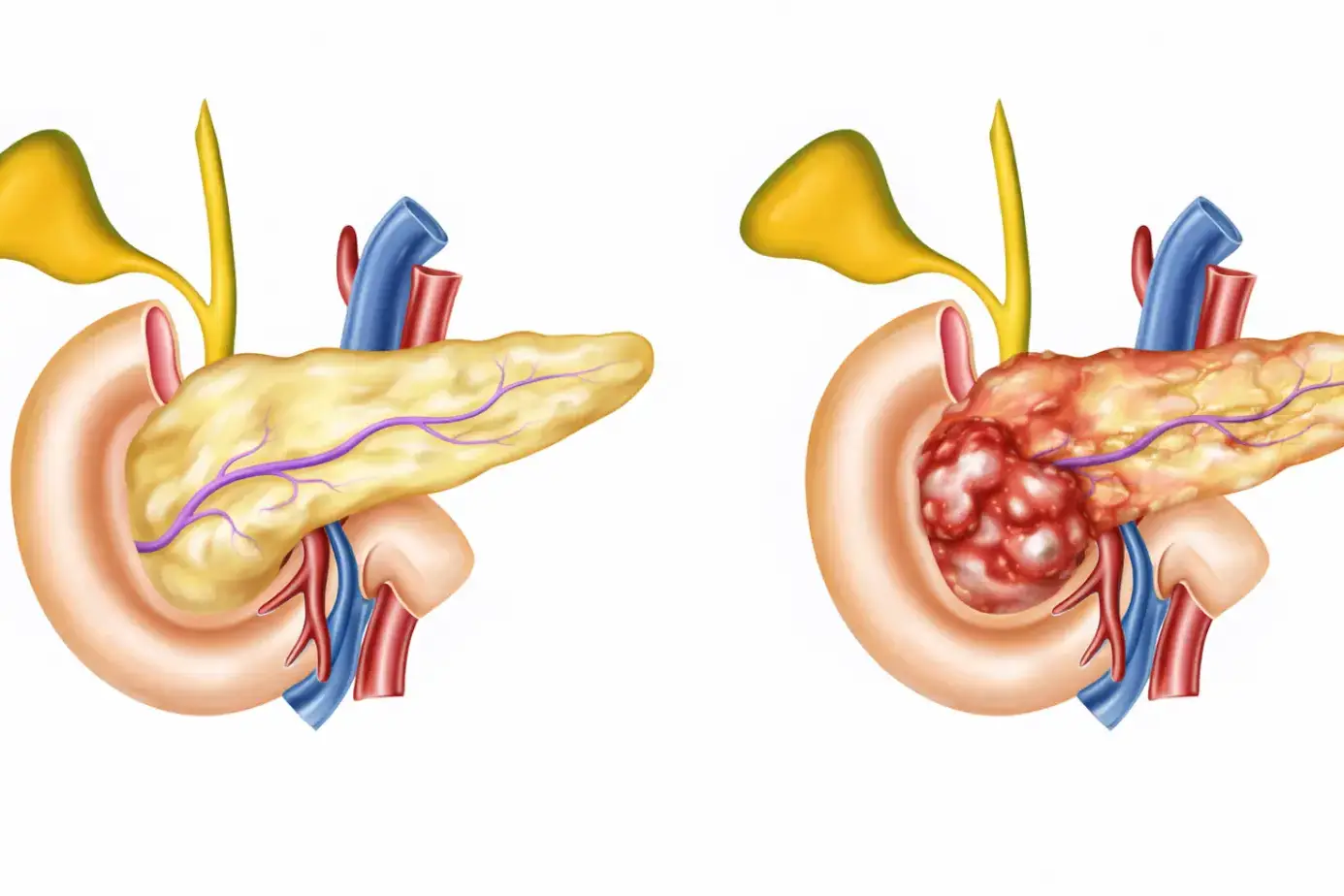
What Is a Hepatic (Liver) Function Panel?
The hepatic liver function panel is a group of blood tests that assess how your liver is working and whether it shows signs of stress or injury. You get a direct snapshot of current liver activity rather than a lifetime health verdict. It matters because the liver constantly adapts to diet, drugs, infections, and metabolic changes.
Key Takeaways
- The hepatic liver function panel checks enzymes, bilirubin, and proteins in the blood
- Used to screen liver health or monitor treatment
- It cannot diagnose disease alone
- Temporary changes may occur from illness or medication
A hepatic (liver) function panel test combines multiple markers. Each marker reflects a separate biological task performed by liver tissue. A single number cannot represent all these functions. That is why laboratories combine them into a structured set.
Clinically, this grouping explains the term “panel.” When your blood sample reaches the lab, automated chemistry analyzers measure several biochemical compounds simultaneously. These compounds originate from hepatocytes (liver cells). When those cells become stressed, molecules leak into circulation. That leakage creates detectable shifts.
Doctors request a hepatic liver function panel during routine exams, when symptoms raise concern, or when monitoring treatments. Screening use remains common because liver disease often progresses silently. Conditions related to metabolic disorders, viral infection, toxin exposure, or immune activity can exist without pain signals. Early biochemical shifts may appear before physical symptoms.
A normal panel does not guarantee absence of disease. Early fibrosis, meaning scar formation, may exist while enzyme levels remain stable. Conversely, abnormal readings do not automatically sign permanent damage. Temporary metabolic stress can influence outcomes. Understanding this balance prevents misinterpretation.
What Does The Hepatic Function Panel Measure?
The hepatic liver function panel evaluates several categories of biochemical markers. It helps you separate injury indicators from functional indicators.
Markers fall into three primary categories shown below.
| Marker Group | Examples | What They Reflect |
| Enzyme indicators | ALT, AST, ALP | Cell irritation or bile flow issues |
| Waste markers | Bilirubin | Processing and clearance of breakdown products |
| Protein markers | Albumin, Total Protein | Production capacity |
Recognizing category boundaries clarifies what the hepatic function panel measure represents biologically.
Liver Enzymes
Enzymes act as biochemical catalysts. ALT and AST exist inside hepatocytes. When cells face mechanical stress, infection, or metabolic overload, membranes become permeable. Enzymes leak outward. Blood concentrations rise.
ALT reflects liver-specific activity more strongly. AST also exists in muscle and cardiac tissue, which requires contextual interpretation. ALP relates to bile duct function and skeletal turnover. Elevated ALP sometimes reflects obstruction within bile channels rather than hepatocyte injury.
Bile And Waste Markers
Bilirubin forms from hemoglobin breakdown after red cell recycling. The liver converts bilirubin into a water-soluble form for elimination.
Elevated bilirubin may produce a visible yellow skin tint. This marker group expands beyond cellular leakage and illustrates metabolic handling ability.
Liver-Made Proteins
Albumin stabilizes fluid balance in blood vessels. Total protein reflects combined albumin and immune-related globulins. Because the liver synthesizes these molecules, reduced levels may signal decreased production capacity.
Protein markers represent functional output rather than damage signals. This division between enzyme leakage and production efficiency defines the structure of the hepatic liver function panel .
How To Prepare For Hepatic Function Tests
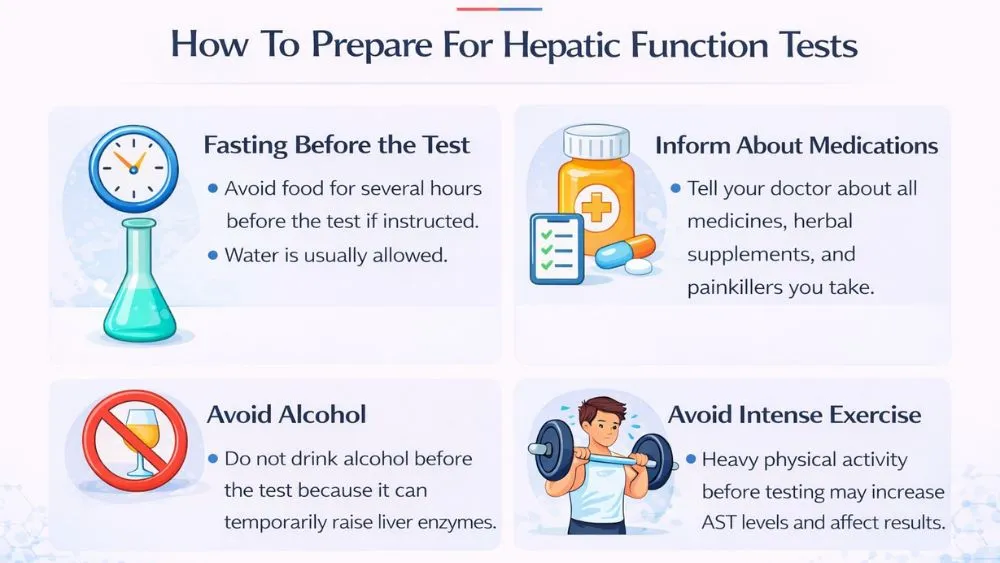
Instructions on how to prepare for hepatic function tests aim to minimize temporary biochemical shifts that could distort readings.
Fasting sometimes becomes necessary. Food intake influences glucose metabolism and lipid transport, which indirectly alters enzyme activity. Laboratories often request several hours without meals before sampling. Water remains acceptable unless instructed otherwise. Following fasting instructions helps you prepare for hepatic function tests correctly.
Medication disclosure is equally critical. Analgesics, herbal supplements, and metabolic drugs influence hepatic enzyme release and protein synthesis. Some compounds affect bile transporters within hepatocyte membranes. Reporting all intake enables correct contextual interpretation.
Alcohol consumption and intense muscular exertion may elevate enzyme values transiently. Exercise causes micro-injury within muscle tissue. AST release may occur independent of liver activity.
Failure to prepare for hepatic function tests appropriately can lead to misleading readings and repeat sampling.
How Is a Hepatic Function Panel Performed?
A hepatic liver function panel requires venous blood collection using sterile technique. A trained professional inserts a small needle into a superficial vein, typically within the forearm. Blood flows into sealed tubes designed to preserve chemical stability.
Laboratory analyzers process samples using photometric measurement, meaning light absorption detects concentration changes in chemical reactions. This automated approach produces consistent results across large patient populations. Turnaround time generally falls within one to two days, depending on facility workload.
Repeat testing often accompanies initial evaluation. Biological values fluctuate daily. A single snapshot cannot establish a trajectory. That is why clinicians frequently schedule another hepatic liver function panel even when changes appear minor.
Understanding Hepatic Function Panel Results
Doctors compare enzymes, bilirubin, and protein markers together because each reflects different biological activity. Looking at a single marker without context creates misleading conclusions.
When reading hepatic function panel results , clinicians first identify whether enzyme shifts dominate or protein shifts dominate.
- Enzyme-heavy changes often point toward active cellular irritation or bile flow issues.
- Protein decline suggests reduced synthetic capacity, which may occur in long-standing metabolic or inflammatory stress.
- Bilirubin elevation suggests clearance problems within hepatocyte processing pathways.
Hydration state, viral illness, muscle injury, and medication exposure influence readings. Even sleep deprivation can shift metabolic signaling that affects enzyme expression. Because of this variability, doctors review prior tests before acting. That is why interpretation of the hepatic liver function panel always includes historical comparison.
Pattern Recognition Approach
Doctors do not read results as pass or fail. Instead, they use clustering logic:
| Pattern Type | Typical Marker Direction | Clinical Implication |
| Enzyme dominant | ALT/AST elevated | Active irritation or stress |
| Cholestatic (bile-related) | ALP/Bilirubin elevated | Flow disturbance |
| Functional decline | Albumin reduced | Production decrease |
Why Single Abnormal Values Mislead
A lone abnormal number rarely defines pathology. Physical training, dehydration, or medication metabolism can cause transient enzyme release. Physicians, therefore, confirm trends before concluding abnormal hepatic panel results .
When Should a Hepatic Function Panel Be Repeated?
A hepatic liver function panel is repeated when results are near decision limits. Small changes may not represent true biological shifts. Follow-up testing confirms whether values stabilize or move further away from normal.
Ongoing metabolic or viral conditions require regular measurement to track response to treatment. Repeated testing allows doctors to adjust therapy safely. This ensures the hepatic liver function panel supports long-term care decisions.
Medication monitoring also requires repetition. Some drug groups interact with liver metabolism pathways. Doctors schedule periodic tests to detect early biochemical changes before symptoms appear. Regular review of the hepatic liver function panel prevents unnoticed complications.
Hepatic Function Panel Vs Liver Function Test
The hepatic liver function panel and liver function test usually describe the same blood testing process. Different hospitals and laboratories prefer different names. The sample collection method remains identical.
Some laboratories include additional markers in the hepatic liver function panel . These may involve clotting-related proteins because the liver produces factors required for blood coagulation. Other labs keep the panel limited to core enzyme and protein markers. Reading the listed components shows exactly what was measured.
FAQs – Hepatic Liver Function Panel
What is a hepatic liver function panel?
A hepatic liver function panel measures enzymes, bilirubin, and proteins from one blood sample to assess cellular irritation, waste processing, and protein production. Doctors use it for screening, medication monitoring, and symptom investigation rather than a standalone diagnosis.
Is a hepatic panel the same as an LFT?
Yes. The hepatic liver function panel and LFT generally refer to identical testing. Differences occur when labs include additional clotting or protein markers. Always review the listed components rather than relying solely on naming.
Do you need to fast before a hepatic panel?
Yes, sometimes. When instructed to prepare for hepatic function tests , fasting usually lasts 6 to 8 hours to stabilize metabolic readings. Skipping fasting can alter enzyme levels and reduce interpretive accuracy.
Can results be abnormal temporarily?
Yes. Viral infections, intense exercise, alcohol intake, and medications commonly cause abnormal hepatic panel results that normalize within weeks. Doctors confirm persistence through repeat testing before considering further investigation.
Does an abnormal hepatic panel mean liver disease?
No. Hepatic panel abnormal results often reflect temporary metabolic stress, medication metabolism, or muscle injury. Diagnosis requires imaging, history, and follow-up testing because biochemical signals alone cannot confirm disease.
Can liver disease exist with a normal panel?
Yes. Early fibrosis or chronic metabolic strain may not alter markers enough for detection. A hepatic liver function panel reflects current chemistry, not microscopic structural change, so additional imaging may still be necessary.
How long does it take to get results?
Yes, results typically arrive within 24 to 48 hours after blood draw. High-volume hospitals process hepatic function panel results faster due to automated analyzers operating continuously.
Should results be interpreted alone?
No. Doctors evaluate hepatic function panel results alongside symptoms, medications, imaging, and history. Numbers without clinical context can misrepresent physiology and lead to incorrect conclusions.
About The Author

Medically reviewed by Dr. Nivedita Pandey, MD, DM (Gastroenterology)
Dr. Nivedita Pandey is a U.S.-trained gastroenterologist and hepatologist with extensive experience in diagnosing and treating liver diseases and gastrointestinal disorders. She specializes in liver enzyme abnormalities, fatty liver disease, hepatitis, cirrhosis, and digestive health.
All content is reviewed for medical accuracy and aligned with current clinical guidelines.