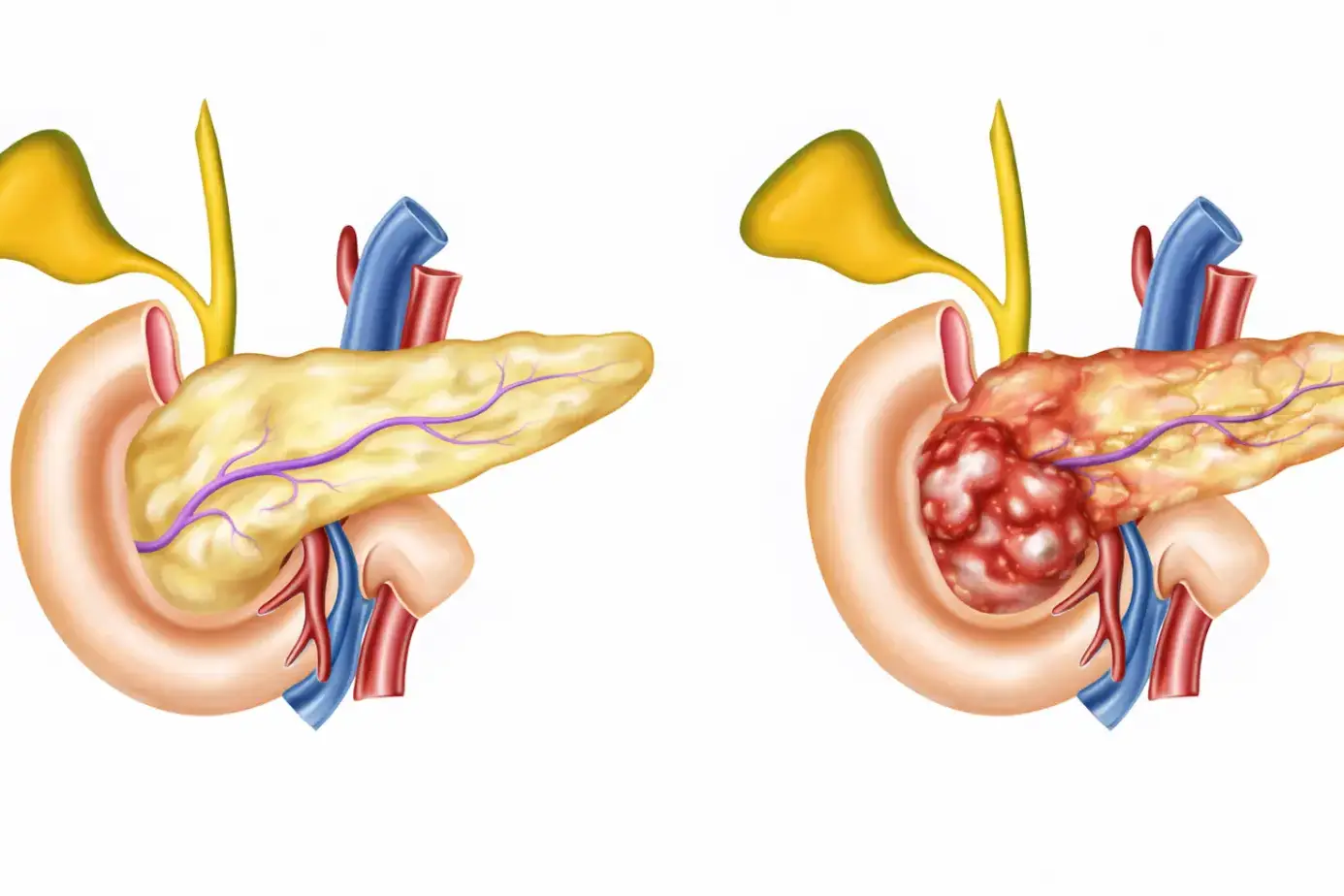
ALT is a liver enzyme released into the blood when cells break down. Normal ALT ranges indicate whether alanine aminotransferase values fall within expected healthy limits. You see this number on routine blood panels. Results change with age, sex, body composition, and lab methods. Values outside normal ranges of ALT do not always mean disease, but persistent shifts need medical review.
Key Takeaways
- Normal ranges of ALT reflect healthy enzyme levels in blood.
- ALT measures liver cell activity and possible injury.
- Reference values vary by age, sex, and laboratory methods.
- Results outside limits require context, not an immediate alarm.
What Is ALT?
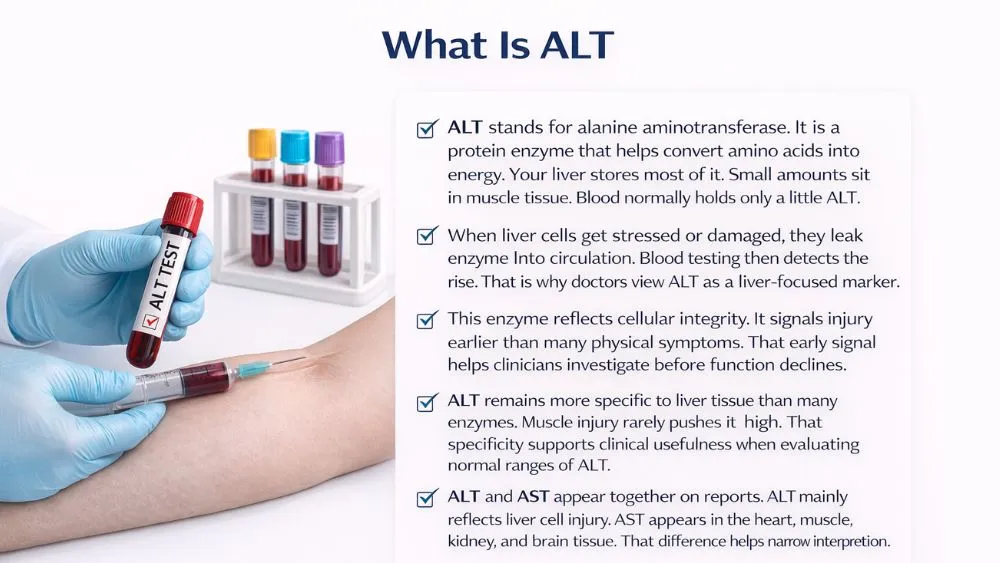
ALT stands for alanine aminotransferase. It is a protein enzyme that helps convert amino acids into energy. Your liver stores most of it. Small amounts sit in muscle tissue. Blood normally holds only a little ALT .
When liver cells get stressed or damaged, they leak enzyme into circulation. Blood testing then detects the rise. That is why doctors view ALT as a liver-focused marker.
This enzyme reflects cellular integrity. It signals injury earlier than many physical symptoms. That early signal helps clinicians investigate before function declines.
ALT remains more specific to liver tissue than many enzymes. Muscle injury rarely pushes it high. That specificity supports clinical usefulness when evaluating normal ranges of ALT .
ALT and AST appear together on reports. ALT mainly reflects liver cell injury. AST appears in the heart, muscle, kidney, and brain tissue. That difference helps narrow interpretation.
Normal Ranges of ALT
You might expect a fixed universal number. Medicine does not work that way. Each laboratory calibrates instruments differently. Population averages vary by region and genetics. That explains the variation in normal ranges of ALT .
Reference intervals reflect statistical modeling from healthy populations. Labs remove outliers. They calculate upper and lower limits. This process gives context rather than absolute truth.
ALT Normal Range In Adults
Most adult reports list upper limits between 35 and 56 units per liter. Women often sit at the lower end. Men often tolerate higher ceilings due to muscle mass differences.
Doctors interpret values relative to body composition, metabolic health, and medication exposure. Even exercise intensity before testing can slightly shift results.
You should treat lab-specific limits as authoritative. These calibrated intervals define normal ranges of ALT for that facility. Cross-lab comparison creates confusion and wrong assumptions.
Advanced analyzers now correct for temperature sensitivity and reagent variation. This improves reliability but does not eliminate variation. That is why normal ranges of ALT remain locally defined.
Repeated testing strengthens interpretation. Trends carry more weight than isolated readings. A stable pattern inside normal ranges of ALT usually signals low concern.
ALT Normal Range By Age
Age strongly influences enzyme interpretation. Tissue turnover and metabolic rate shift across life. That shift shapes ALT normal range by age patterns.
Children
Children often show wider intervals. Rapid growth changes liver activity. Neonates especially display higher enzyme activity shortly after birth due to metabolic adjustment outside the womb.
Pediatric references differ from adult tables. Doctors rely on age-adjusted charts. That approach reflects the ALT normal range by age considerations used in clinical pediatrics.
Adults
Healthy adults fall within narrower bands. Hormonal stability and consistent metabolism produce predictable results. Lifestyle factors still influence baseline levels.
Diet composition, alcohol intake, and physical conditioning contribute to personal baseline variation.
Older Adults
Later life often brings lower baseline values. Muscle reduction affects enzyme production. Extremely low readings may prompt nutritional assessment or chronic condition review.
Older populations show altered enzyme release patterns. Clinicians consider comorbidities before labeling deviations from ALT normal range by age as pathology.
Why Age Affects Interpretation
Enzyme production reflects cellular turnover. Younger bodies renew tissue faster. Older bodies slow synthesis. This biological gradient explains age influence on normal ranges of ALT .
Liver enzyme distribution shifts steadily after midlife. Interpretation, therefore, requires age context rather than static comparison.
What Are The Causes Of Low ALT?
Low enzyme readings rarely receive attention, yet they carry clinical meaning in certain contexts. You should read them alongside nutrition status, muscle health, and chronic disease history.
Reduced enzyme synthesis often links to metabolic slowdown. Protein deficiency, vitamin shortages, or reduced liver cell activity may lower production. These patterns guide evaluation of causes of low ALT before concluding.
Nutritional Deficiencies
Protein intake directly supports enzyme creation. Long-term low intake reduces substrate availability for hepatic protein synthesis. Vitamin B6 also acts as a cofactor in amino acid processing. Deficiency disrupts enzyme function and can lower serum levels.
Malnutrition remains one of the overlooked causes of low ALT in elderly or restrictive diets. Clinical nutrition audits often restore balance once addressed. Persistent deficits may push readings outside normal ranges of ALT .
Reduced Muscle Mass
Skeletal muscle contributes small enzyme reserves. Aging, immobilization, or chronic disease reduces muscle stores. That decline lowers circulating enzyme baseline.
Population data from aging cohorts consistently shows lower averages tied to sarcopenia. This physiological shift explains frequent causes of low ALT in older adults and supports age-adjusted interpretation within normal ranges of ALT .
Chronic Illness
Long-term systemic illness alters metabolism and protein synthesis. Kidney dysfunction, endocrine imbalance, or inflammatory states may suppress production rates.
These medical states represent recognized causes of low ALT in clinical evaluation. Evidence exists but remains limited for precise thresholds, so interpretation stays individualized. Persistent suppression still warrants review when values drift beyond normal ranges of ALT .
Advanced Liver Damage
Severe structural loss reduces active hepatocytes. Fewer functioning cells release less enzyme. This paradox creates low values despite serious disease.
Doctors recognize this as one of the more serious causes of low ALT . Numbers alone cannot indicate stability. They must be compared with imaging and other markers to judge relation to normal ranges of ALT .
What Are The Symptoms Of Low ALT?
You rarely feel enzyme shifts directly. Blood tests reveal the change. Yet underlying drivers may produce physical clues. Recognizing symptoms of low ALT depends on identifying associated conditions rather than enzyme decline itself.
When values fall outside normal ranges of ALT , clinicians assess broader metabolic signs. These signs reflect body state rather than enzyme quantity.
Usually No Direct Symptoms
Most individuals show no sensation from decreased enzyme concentration. Routine screening identifies it incidentally. This absence of signs defines the baseline expectation for symptoms of low ALT .
Monitoring still matters because silent biochemical changes can reflect nutrition or systemic shifts beyond normal ranges of ALT .
Malnutrition-Related Signs
Protein and micronutrient deficits may cause fatigue, hair thinning, or delayed wound repair. These are functional indicators rather than enzyme-specific outcomes.
Vitamin B6 Deficiency Indicators
Low B6 levels may produce nerve tingling or irritability. The vitamin supports enzyme reactions, including amino acid metabolism.
These neurologic complaints appear among contextual symptoms of low ALT tied to cofactor shortage. Restoration often stabilizes readings near normal ranges of ALT .
Advanced Liver Disease Indicators
Fluid retention or jaundice may occur when structural damage exists. These signs reflect functional decline, not enzyme drop itself.
Clinicians include these among severe symptoms of low ALT scenarios requiring imaging and biochemical panels beyond simple comparison to normal ranges of ALT .
Can ALT Be Normal Even With Liver Disease?
Yes. Enzyme stability does not guarantee organ integrity. Certain structural changes cause little leakage of intracellular proteins.
Fat accumulation within hepatocytes can progress without enzyme release. Many imaging-confirmed fatty liver cases fall within normal ranges of ALT despite metabolic disturbance.
Late fibrotic change shows another blind spot. When viable cells decline, fewer enzymes enter circulation. Values may remain in normal ranges of ALT even while function weakens. Evidence exists but remains limited regarding prediction accuracy.
These realities reinforce combined testing. Bilirubin, albumin, and imaging provide functional context. Understanding limits prevents false reassurance based solely on normal ranges of ALT .
How Is An ALT Test Performed?
Blood testing measures enzyme activity. A technician collects blood from your arm. The lab analyzes the sample using automated equipment. This process occurs whenever ALT test performed .
During ALT test performed , instruments measure reaction speed to calculate enzyme level. Fasting usually is not required unless combined with other tests.
Doctors repeat testing when changes appear after ALT test performed . Monitoring trends helps determine whether values stay within normal ranges of ALT .
When Should You Be Concerned About ALT Levels?
Concern depends on the pattern and symptoms. A single change rarely signals danger. Doctors review repeated results before acting.
Persistent deviation from normal ranges of ALT requires evaluation. Rising or falling trends over time matter more than isolated numbers. Symptoms like pain or swelling combined with abnormal readings increase concern.
People with metabolic risks or viral exposure require closer monitoring. Reviewing context ensures the correct interpretation of normal ranges of ALT .
FAQs – Normal Ranges Of ALT
What is the normal range of ALT?
Values usually fall between 7 and 56 units per liter. However, normal ranges of ALT depend on analyzer calibration, sex, and body composition. Always interpret results using your report reference interval.
Does ALT normal range change with age?
Yes. Pediatric values trend higher due to growth metabolism, while older adults trend lower due to reduced muscle mass. Age adjustment is required when comparing results with normal ranges of ALT .
Can ALT be normal in fatty liver disease?
Yes. Fat storage inside hepatocytes may not trigger enzyme leakage. Imaging often identifies fatty infiltration even when readings sit inside normal ranges of ALT .
Is low ALT dangerous?
No. Mild reduction rarely indicates danger. Doctors investigate nutrition deficits, sarcopenia, or chronic illness only when results fall significantly outside normal ranges of ALT .
Do men and women have different ALT ranges?
Yes. Men typically show higher upper limits due to lean mass differences. Women usually present lower baselines. Sex-specific interpretation improves accuracy when reviewing normal ranges of ALT .
Should ALT be interpreted alone?
No. Interpretation requires bilirubin, alkaline phosphatase, albumin, and imaging context. Using only normal ranges of ALT risks missing structural or functional abnormalities.
Does fasting affect ALT results?
No. Enzyme activity remains stable regardless of short fasting periods. Lipid panels may require fasting, but ALT measurement accuracy relative to normal ranges of ALT stays unaffected.
How often should ALT be rechecked?
Yes. Follow-up typically occurs within 3 to 6 months when abnormal, or annually in routine screening. Timing depends on the severity from normal ranges of ALT and clinical risk factors.
About The Author

Medically reviewed by Dr. Nivedita Pandey, MD, DM (Gastroenterology)
Dr. Nivedita Pandey is a U.S.-trained gastroenterologist and hepatologist with extensive experience in diagnosing and treating liver diseases and gastrointestinal disorders. She specializes in liver enzyme abnormalities, fatty liver disease, hepatitis, cirrhosis, and digestive health.
All content is reviewed for medical accuracy and aligned with current clinical guidelines.