Health risks of being overweight affect almost every system in your body. Extra body fat changes how your heart pumps, how your blood sugar behaves, how your joints move, and how your organs age. These changes start early and often stay silent for years. Over time, the damage becomes harder to reverse.
The health risks of being overweight include heart disease, diabetes, breathing problems, liver damage, joint breakdown, and mental health strain. Even modest excess weight can raise these risks when it stays for years.
10 Health Risks Of Being Overweight
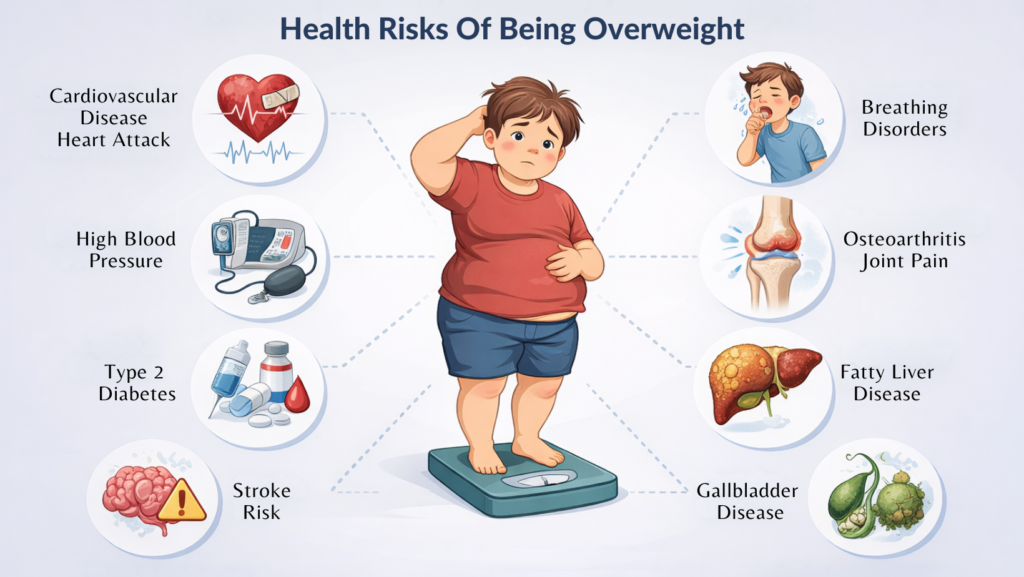
Excess body fat alters blood flow, hormone signaling, and organ workload at the same time. These combined changes explain why multiple diseases often appear together rather than alone. The longer extra weight stays, the higher the cumulative damage.
Cardiovascular Disease And Heart Attack
Extra fat tissue increases blood volume and forces your heart to pump harder every minute. Over time, the heart muscle thickens and stiffens. Blood vessels lose flexibility. Fat also releases substances that irritate vessel walls. This combination speeds up artery narrowing and clot formation. These changes explain why heart attacks remain one of the most serious health risks of being overweight .
High Blood Pressure (Hypertension)
Blood pressure rises when arteries stay under constant strain. Excess weight increases pressure inside the vessels even at rest. High blood pressure often causes no early symptoms, yet it damages the heart, kidneys, eyes, and brain. This silent damage is a key reason the health risks of being overweight often go unnoticed.
Type 2 Diabetes
Fat cells reduce insulin sensitivity, meaning insulin cannot move sugar into cells properly. Sugar stays in the blood and damages tissues. Over time, the pancreas struggles to keep up. Type 2 diabetes is strongly caused by being overweight , especially when fat collects around the abdomen.
Stroke Risk
Stroke happens when blood flow to the brain stops or a vessel ruptures. Extra weight raises stroke risk by worsening blood pressure, blood sugar, and cholesterol. These factors together explain why stroke remains one of the most dangerous health risks of being overweight .
Fatty Liver Disease
When the liver stores excess fat, inflammation follows. Scar tissue can form and block normal liver function. This process may progress even without alcohol use. Many people discover liver damage late because early signs are mild. Fatty liver disease is a growing problem caused by being overweight .
Sleep Apnea And Breathing Disorders
Fat around the neck and chest narrows airways during sleep. Breathing pauses reduce oxygen levels and disrupt sleep cycles. Poor sleep raises blood pressure and blood sugar. This cycle strengthens the health risks of being overweight and increases daytime fatigue.
Osteoarthritis And Joint Pain
Joints carry more load with extra weight. Cartilage wears down faster, especially in knees and hips. Inflammation inside joints increases pain and stiffness. Reduced movement then leads to more weight gain, worsening the health risks of being overweight .
Certain Cancers
Excess fat alters hormone levels and promotes chronic inflammation. These changes increase the risk of cancers such as colon, breast after menopause, kidney, liver, and uterine cancer. Cancer risk is one of the most severe health risks of being overweight .
Gallbladder Disease
Extra cholesterol in bile forms gallstones. Gallbladder attacks cause sharp abdominal pain and often need surgery. Gallbladder disease appears more often in people with rapid weight gain or long-standing excess weight.
Mental Health Disorders (Depression And Anxiety)
Weight affects brain chemicals linked to mood. Chronic inflammation and sleep problems worsen emotional health. Social stigma adds stress. Depression and anxiety are real health risks of being overweight , not personal weakness.
Causes Of Being Overweight
Weight gain develops when calorie intake repeatedly exceeds energy use, but biology shapes how strongly this imbalance affects you. Hormones, stress chemicals, sleep patterns, and genetics all influence fat storage and appetite control, not just willpower.
Poor Dietary Habits And Excess Calories
Frequent intake of calorie-dense foods leads to fat storage. Sugary drinks bypass fullness signals. Large portions stretch stomach capacity and increase hunger later.
Physical Inactivity And Sedentary Lifestyle
Long sitting hours slow metabolism and reduce muscle activity. Fewer calories burn each day. This imbalance drives gradual weight gain and raises the health risks of being overweight .
Genetic And Hormonal Factors
Genes influence appetite, fat storage, and metabolism speed. Hormone disorders can slow calorie use. These factors raise risk but do not remove the benefit of lifestyle changes.
Stress, Sleep Deprivation, And Medications
Stress hormones promote fat storage, especially around the waist. Short sleep increases hunger signals. Some medicines affect appetite or metabolism. Together, they raise weight over time.
Cardiovascular Risks Of Being Overweight
Extra weight forces the heart to pump against higher pressure while blood vessels stiffen and narrow. Fat-driven inflammation damages vessel walls, accelerating plaque buildup and raising the risk of heart attack, stroke, and heart failure.
How Excess Weight Strains The Heart
Your heart pumps against higher resistance when body mass increases. The heart muscle thickens to cope but later weakens. This constant strain explains many cardiovascular risks of being overweight .
Cholesterol Imbalance And Atherosclerosis
Extra weight raises harmful cholesterol and lowers protective cholesterol. Fatty deposits build inside arteries and restrict blood flow. These plaques can rupture and cause heart attack or stroke.
Increased Risk Of Heart Failure
Long-term overload damages heart muscle cells. The heart cannot fill or pump efficiently. Fluid builds in lungs and legs. Heart failure is a late-stage outcome of the cardiovascular risks of being overweight .
Metabolic Risks Of Being Overweight
Fat tissue disrupts insulin action and releases inflammatory signals that interfere with normal metabolism. These changes raise blood sugar, triglycerides, and blood pressure together, setting the stage for diabetes and metabolic syndrome.
Insulin Resistance And Metabolic Syndrome
Insulin resistance means cells stop responding to insulin. Blood sugar rises. Blood pressure and triglycerides increase. This cluster of problems defines metabolic syndrome and signals high future risk.
Hormonal Imbalance And Inflammation
Fat tissue releases inflammatory chemicals that disrupt hormone balance. Hunger and fullness signals weaken. Inflammation damages blood vessels and organs, reinforcing the metabolic risks of being overweight .
Increased Risk Of Type 2 Diabetes
Persistent insulin resistance pushes the pancreas to exhaustion. Blood sugar stays high, and diabetes develops. This process explains why diabetes is among the most serious health risks of being overweight and why early action matters.
Long Term Effects Of Being Overweight
Chronic exposure to excess fat speeds up organ aging and functional decline. Damage accumulates quietly across years, reducing mobility, resilience, and recovery capacity even before a clear disease diagnosis appears.
Progressive Organ Damage Over Time
Extra fat keeps organs under constant stress. The heart thickens, the liver scars, and the kidneys filter blood under higher pressure. Blood vessels lose elasticity. Nerves suffer from poor blood sugar control. This gradual damage explains why the health risks of being overweight often appear together later in life.
Reduced Mobility And Physical Function
Joint wear, muscle weakness, and shortness of breath reduce movement. Everyday tasks like climbing stairs or standing for long periods become difficult. Reduced activity then worsens weight gain. This cycle is one of the most disabling long-term effects of being overweight .
Decreased Life Expectancy
Excess weight increases early death from heart disease, stroke, diabetes, and cancer. The risk rises as weight and duration increase. Even without a single disease diagnosis, the body ages faster under excess fat. This outcome remains one of the most serious health risks of being overweight .
Impact On Quality Of Life
Chronic pain, poor sleep, fatigue, and low mood affect work and relationships. Medical visits become frequent. Dependence on medicines grows. These daily burdens are real long-term effects of being overweight , not just future threats.
Can Health Risks Of Being Overweight Be Reduced?
Yes. Lowering body fat improves insulin sensitivity, blood vessel function, and inflammatory balance. Even modest weight reduction can reverse early damage and slow progression of heart, metabolic, and joint-related conditions.
Weight Loss And Risk Reduction
Losing a small percentage of body weight improves blood pressure, blood sugar, and cholesterol. Joint pain eases as load decreases. Sleep quality often improves. These changes lower the cardiovascular risks of being overweight and the metabolic risks of being overweight .
Role Of Diet And Physical Activity
Balanced meals stabilize blood sugar and reduce inflammation. Regular movement improves insulin sensitivity and heart strength. Consistency matters more than intensity. These habits directly reduce health risks of being overweight without extreme methods.
Medical And Lifestyle Interventions
Doctors may suggest nutrition counseling, behavior therapy, or medicines when lifestyle steps fall short. In severe cases, surgery may be considered after evaluation. Treatment plans differ because weight-related damage varies between people.
When To See A Doctor
Persistent symptoms linked to excess weight often signal internal strain rather than simple fatigue. Early evaluation allows detection of silent problems like high blood pressure, insulin resistance, or fatty liver before permanent injury develops.
Warning Signs Linked To Excess Weight
Shortness of breath, chest discomfort, loud snoring, daytime sleepiness, joint pain, swelling, or frequent infections need evaluation. These signs often point to health risks of being overweight already in progress.
Importance Of Early Medical Evaluation
Blood tests and exams detect problems before organ damage becomes severe. Early guidance improves outcomes and lowers long-term costs. Acting early reduces the long term effects of being overweight .
Prevention Of Weight-Related Health Risks
Long-term protection depends on stable habits that regulate blood sugar, reduce inflammation, and maintain muscle mass. Consistent eating patterns, daily movement, stress control, and sleep quality work together to limit future health decline.
Healthy Eating Habits
Meals rich in fiber, protein, and healthy fats improve fullness and blood sugar control. Reducing ultra-processed foods lowers inflammation. These changes reduce the health risks of being overweight over time.
Regular Physical Activity
Daily movement strengthens the heart, muscles, and joints. Activity improves mood and sleep. Even light activity lowers the cardiovascular risks of being overweight when done consistently.
Long-Term Weight Management Strategies
Tracking habits, managing stress, and protecting sleep help maintain results. Support systems improve adherence. Long-term planning prevents regain and limits future health risks of being overweight .
FAQs
What Are The Main Health Risks Of Being Overweight?
The main health risks of being overweight include heart disease, high blood pressure, type 2 diabetes, joint damage, breathing disorders, fatty liver disease, certain cancers, and mental health strain that worsens over time.
How Does Being Overweight Affect The Heart?
Extra weight increases blood volume and vessel resistance, forcing the heart to work harder. This raises blood pressure, damages arteries, and explains many cardiovascular risks of being overweight seen in adults.
Can Being Overweight Cause Diabetes?
Yes. Insulin resistance develops when fat blocks insulin action. Blood sugar stays high, leading to type 2 diabetes. This condition is commonly caused by being overweight , especially abdominal fat.
Are The Health Risks Of Being Overweight Reversible?
Many health risks of being overweight improve with weight loss, especially blood pressure and blood sugar. Long-standing organ damage may not fully reverse, which is why early action matters.
How Much Weight Loss Improves Health Risks?
Losing five to ten percent of body weight improves glucose control, cholesterol levels, and joint stress. This level of loss reduces several health risks of being overweight without extreme measures.
Does Being Overweight Shorten Life Expectancy?
Yes. Excess weight increases early death from heart disease, stroke, diabetes, and cancer. The long term effects of being overweight grow stronger the longer excess weight remains.
What Cancers Are Linked To Being Overweight?
Higher weight increases the risk of colon, breast after menopause, liver, kidney, pancreatic, and uterine cancers. Hormone imbalance and inflammation drive this health risks of being overweight link.
Is Being Slightly Overweight Dangerous?
Risk rises on a spectrum. Mild excess weight may not cause immediate disease but still increases future metabolic risks of being overweight when it persists for years.
How Can I Reduce Health Risks Without Drastic Dieting?
Focus on steady meals, daily movement, stress control, and sleep. These steps improve insulin sensitivity and heart health, lowering health risks of being overweight without extreme restriction.
When Should I Seek Medical Help For Weight-Related Issues?
Seek help when symptoms appear, weight continues to rise, or family history raises risk. Early care limits the long term effects of being overweight and protects organ function.
About The Author

Medically reviewed by Dr. Nivedita Pandey, MD, DM (Gastroenterology)
Dr. Nivedita Pandey is a U.S.-trained gastroenterologist and hepatologist with extensive experience in diagnosing and treating liver diseases and gastrointestinal disorders. She specializes in liver enzyme abnormalities, fatty liver disease, hepatitis, cirrhosis, and digestive health.
All content is reviewed for medical accuracy and aligned with current clinical guidelines.