Common weight loss mistake patterns stop progress more often than genetics or age. Most people fail to lose fat because daily habits block results. These errors affect calories, hormones, sleep, stress, and muscle. Fixing them improves fat loss without extreme diets. Common weight loss mistakes often look small, but they add up fast. When weight loss feels stuck, these issues usually explain why.
15 Common Weight Loss Mistakes
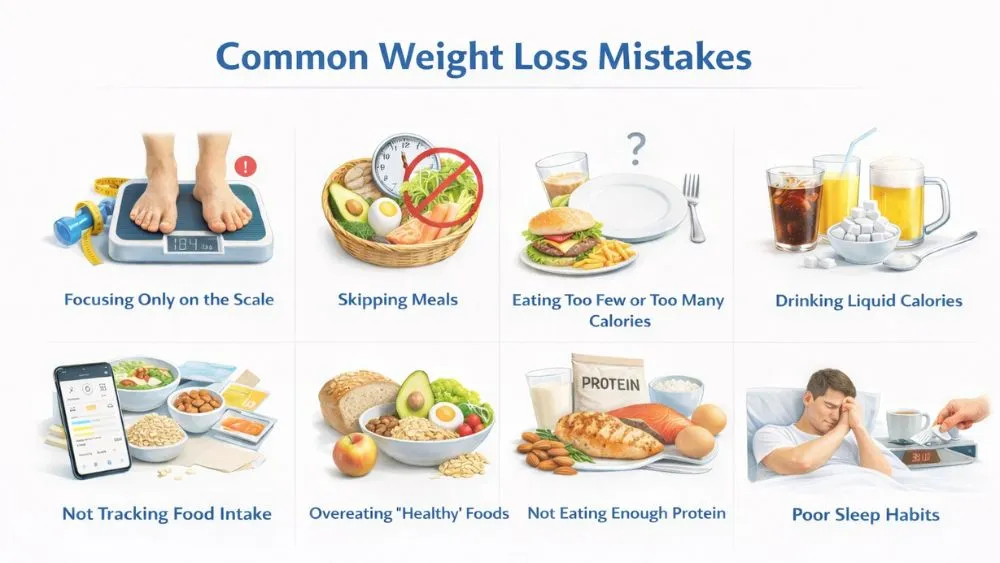
These mistakes disrupt calorie balance, muscle retention, hormone control, and appetite signals. Most stalls happen because several errors stack together. Fixing even two or three often restarts fat loss without stricter dieting.
Focusing Only on the Scale
The scale only shows body weight, not fat loss. You can lose fat and gain muscle at the same time. That keeps weight stable. Common weight loss mistake is thinking that makes you quit too soon. Waist size, strength, and energy matter more than daily scale changes.
Eating Too Few or Too Many Calories
Eating too little slows metabolism (how fast your body burns energy). Eating too much blocks fat loss. Both cause stalls. Common weight loss mistakes are extreme stress hormones that control hunger and fat storage. Your body needs enough fuel to burn fat.
Skipping Meals
Skipping meals raises hunger hormones later in the day. This leads to overeating at night. Blood sugar swings increase fat storage. Common weight loss mistake is meal skipping, which often feels helpful but backfires fast.
Not Tracking Food Intake
Most people undercount calories by hundreds each day. Oils, sauces, and snacks add up. Common weight loss mistake is guessing portions, which hides the real problem. Tracking builds awareness, not obsession.
Drinking Liquid Calories
Sugary drinks do not fill you up. Juice, sweet coffee, and alcohol add calories fast. The body does not reduce food intake later to balance them. Common weight loss mistake is that liquid calories slow fat loss more than solid food.
Overeating “Healthy” Foods
Nuts, avocado, and granola are healthy but calorie dense. Large portions stop fat loss. Common weight loss mistake is thinking healthy foods have no limits leads to hidden overeating.
Not Eating Enough Protein
Protein protects muscle during fat loss. It controls hunger hormones. Low protein diets increase muscle loss and slow metabolism. Common weight loss mistake is protein neglect, which reduces results even with exercise.
Ignoring Fiber Intake
Fiber slows digestion and controls blood sugar. It feeds gut bacteria that support fat control. Low fiber diets increase hunger. Common weight loss mistake is that fiber neglect, which makes diets harder than needed.
Inconsistent Eating Patterns
Eating at random times disrupts hunger signals. Late-night eating raises fat storage hormones. Common weight loss mistake is chaotic schedules that confuse the body and increase cravings.
Unrealistic Weight Loss Expectations
Fast weight loss often includes water and muscle loss. Fat loss is slower. Expecting rapid change leads to quitting. Common weight loss mistake is that impatience kills long-term success.
Constantly Changing Diet Plans
Switching diets resets habits before they work. The body needs time to adapt. Common weight loss mistake is that diet hopping prevents steady progress.
Poor Sleep Habits
Short sleep raises hunger hormones and lowers fat-burning hormones. One bad week can stop fat loss. Common weight loss mistake is sleep neglect, which blocks results even with perfect meals.
High Stress Levels
Stress raises cortisol (a stress hormone). High cortisol increases belly fat storage. Common weight loss mistake is that unmanaged stress cancels calorie control.
Lack of Meal Planning
No plan leads to fast food choices. Hunger pushes you toward high-calorie foods. A common weight loss planning failure causes daily calorie overflow.
Giving Up Too Early
Fat loss works in cycles. Plateaus are normal. Quitting early resets progress. Common weight loss mistake is impatience, which keeps people stuck year after year.
Exercise Mistakes for Weight Loss
Exercise supports fat loss only when it protects muscle and recovery. Poor training choices raise stress hormones, increase hunger, and slow calorie burn. Training errors often explain plateaus despite “working out regularly.”
Doing Only Cardio and Avoiding Strength Training
Cardio burns calories during the workout only. Strength training builds muscle that burns calories all day. Without resistance work, muscle loss increases. That slows fat loss and weakens metabolism. Many exercise mistakes for weight loss start here.
Overtraining Without Proper Recovery
Daily hard workouts raise cortisol and inflammation. Recovery time allows muscle repair and hormone balance. Without rest, fat loss stalls and injuries rise. Fat loss works better with fewer quality sessions.
Inconsistent Workout Routine
Random workouts do not create adaptation. The body changes when stress stays consistent. Skipping weeks resets progress. This pattern explains why weight loss is not working for many active people.
Ignoring Daily Physical Activity
Steps, posture, and movement matter. Sitting most of the day lowers calorie burn. Short walks improve blood sugar and fat use. Exercise cannot fix inactivity alone.
Overestimating Calories Burned
Fitness trackers overestimate burn. This leads to overeating later. Exercise supports fat loss but cannot cancel excess calories. Many exercise mistakes for weight loss come from this belief.
Why Weight Loss Is Not Working
When fat loss stops, the body usually adapts to stress, low calories, or inconsistency. Hidden intake, hormone shifts, and poor recovery block progress. Willpower rarely causes these stalls.
Hidden Calorie Intake
Sauces, oils, and bites add up. Stress eating also sneaks in calories. People often eat more on workout days. This explains why weight loss is not working despite clean meals.
Hormonal Imbalances
Insulin (blood sugar hormone), thyroid hormones, and cortisol affect fat storage. Poor sleep and chronic stress disrupt them. Medical checks help when fat gain feels unexplained.
Poor Adherence to Diet Plans
Most plans fail due to poor follow-through, not design. Social events and weekends break disrupt consistency. Small daily slips matter more than rare cheat days.
Lack of Progressive Overload
Exercise must slowly increase in in difficulty. Without progression, the body stops adapting. Fat loss slows when workouts stay the same.
Inadequate Sleep and Recovery
Short sleep raises hunger and lowers fat use. One hour less sleep can raise the next-day calorie intake. Recovery supports hormone balance.
Metabolism Mistakes Weight Loss
Metabolism slows mainly from muscle loss, extreme dieting, and inactivity. These changes reduce daily calorie burn and increase fat regain risk. Most damage happens gradually and goes unnoticed.
Chronic Crash Dieting
Repeated extreme dieting lowers resting calorie burn. Muscle loss increases. Hunger hormones rise. These metabolism mistakes during weight loss create rebound weight gain.
Extremely Low-Calorie Diets
Very low intake triggers energy conservation. Fat loss slows after initial drops. Muscle loss increases without protein and strength training.
Prolonged Sedentary Lifestyle
Sitting lowers insulin sensitivity. Muscles stop pulling sugar from blood. This raises fat storage even with normal calories.
Inadequate Protein Intake
Low protein speeds muscle loss. Muscle protects metabolic rate. Protein also reduces hunger and supports repair.
Severe Nutrient Deficiencies
Low iron, vitamin D, or magnesium affects energy and hormone balance. Deficiencies reduce exercise capacity and fat use. Blood tests guide correction.
Lifestyle Mistakes Affecting Weight Loss
Daily habits shape hormones that control hunger and fat storage. Sleep loss, stress, alcohol, and routines matter more than perfect meals. Lifestyle errors silently cancel diet effort.
Stress-Induced Overeating
Stress raises cortisol. Cortisol increases cravings for sugar and fat. Emotional eating often bypasses hunger signals.
Poor Sleep Quality
Light exposure at night disrupts melatonin (sleep hormone). Poor sleep raises appetite the next day. Fat loss slows without deep sleep.
Irregular Daily Routine
Changing meal and sleep times confuses hunger hormones. Regular routines improve appetite control and energy use.
Social and Environmental Triggers
Large portions, food ads, and social pressure increase intake. Environment shapes behavior more than willpower.
Alcohol Consumption
Alcohol lowers fat burning for hours. It increases appetite and weakens food control. Liquid calories add up fast.
How to Fix Common Weight Loss Mistakes
Sustainable fixes focus on consistency, not extremes. Balanced eating, muscle-focused training, sleep, and stress control restore fat loss signals. Progress improves without drastic restriction.
Setting Realistic Goals
Safe fat loss averages one to two pounds weekly. Slower loss protects muscle and hormones. Progress comes from consistency.
Building a Sustainable Diet
Balanced meals include protein, fiber, and healthy fats. Flexible plans work better than rigid rules.
Creating a Balanced Exercise Plan
Mix strength training, cardio, and daily movement. Two to four strength sessions weekly protect muscle.
Improving Sleep and Stress Management
Regular sleep times improve hormone balance. Breathing drills and walks lower stress hormones.
Tracking Progress Beyond the Scale
Photos, measurements, and strength gains show fat loss better than weight alone.
When to Seek Professional Help
Repeated failure may signal medical, hormonal, or metabolic barriers. Early evaluation prevents further slowdown and muscle loss. Professional guidance improves safety and accuracy.
Repeated Weight Loss Failure
Multiple failed attempts may signal metabolic or behavioral issues. Professional plans improve accuracy.
Medical Conditions Affecting Weight
Conditions like thyroid disorders or insulin resistance affect fat storage. Diagnosis guides safe treatment.
Suspected Hormonal Issues
Symptoms like fatigue, hair loss, or irregular cycles need evaluation. Hormone balance supports fat loss.
FAQs
Why Do I Gain Weight Even After Dieting?
Weight gain often comes from slowed metabolism, muscle loss, or hidden calories. Stress and sleep issues also raise fat storage even when food intake seems controlled.
Can Exercise Alone Help With Weight Loss?
Exercise helps health and muscle, but diet controls fat loss. Without calorie control, workouts alone rarely cause lasting weight loss.
How Long Does Healthy Weight Loss Take?
Healthy fat loss takes weeks to months. Rapid drops often include water and muscle. Steady loss protects hormones and strength.
Does Metabolism Really Slow Down With Age?
Metabolism slows mainly due to muscle loss and inactivity. Strength training and protein intake protect calorie burn at any age.
What Is the Biggest Mistake People Make While Losing Weight?
The biggest error is inconsistency. Small daily habits matter more than perfect plans followed for short periods.
Can Eating Too Few Calories Slow Down Weight Loss?
Yes. Very low intake reduces calorie burn and raises hunger hormones. This leads to plateaus and rebound weight gain.
How Important Is Protein Intake for Weight Loss?
Protein preserves muscle, controls hunger, and supports recovery. Low protein intake increases fat regain risk after dieting.
Is Focusing Only on the Weighing Scale a Mistake?
Yes. The scale misses fat loss and muscle gain. Measurements, photos, and strength give better progress signals.
How Does Skipping Meals Affect Weight Loss?
Skipping meals increases hunger later. It raises overeating risk and disrupts blood sugar control.
Can Liquid Calories Prevent Weight Loss?
Yes. Liquid calories do not reduce hunger like solid food. They add calories without fullness and slow fat loss.
About The Author

Medically reviewed by Dr. Nivedita Pandey, MD, DM (Gastroenterology)
Dr. Nivedita Pandey is a U.S.-trained gastroenterologist and hepatologist with extensive experience in diagnosing and treating liver diseases and gastrointestinal disorders. She specializes in liver enzyme abnormalities, fatty liver disease, hepatitis, cirrhosis, and digestive health.
All content is reviewed for medical accuracy and aligned with current clinical guidelines.