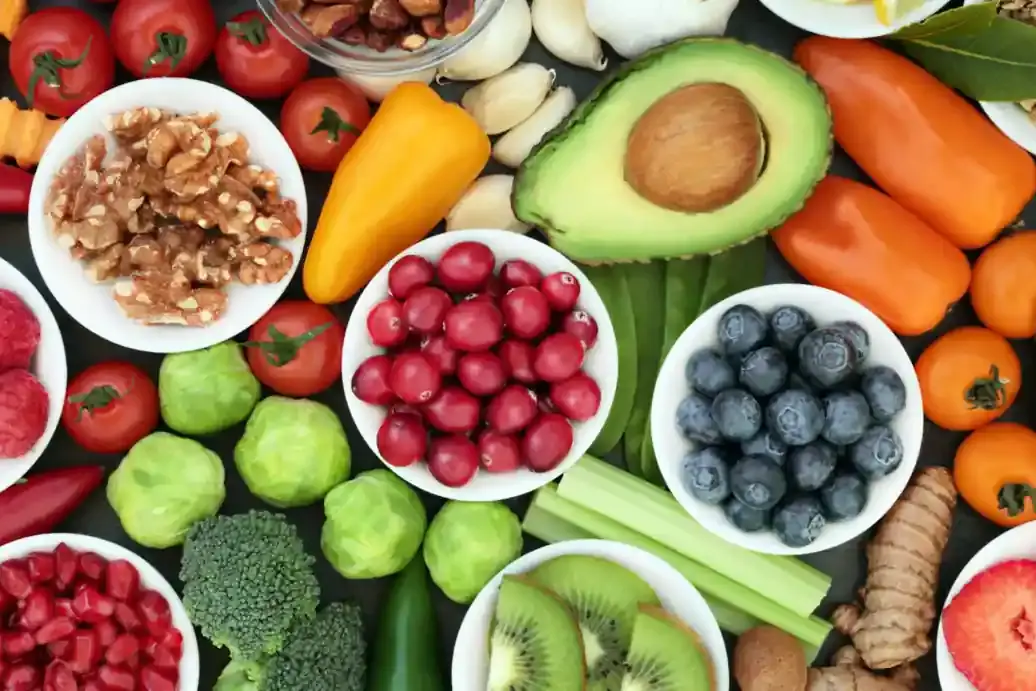
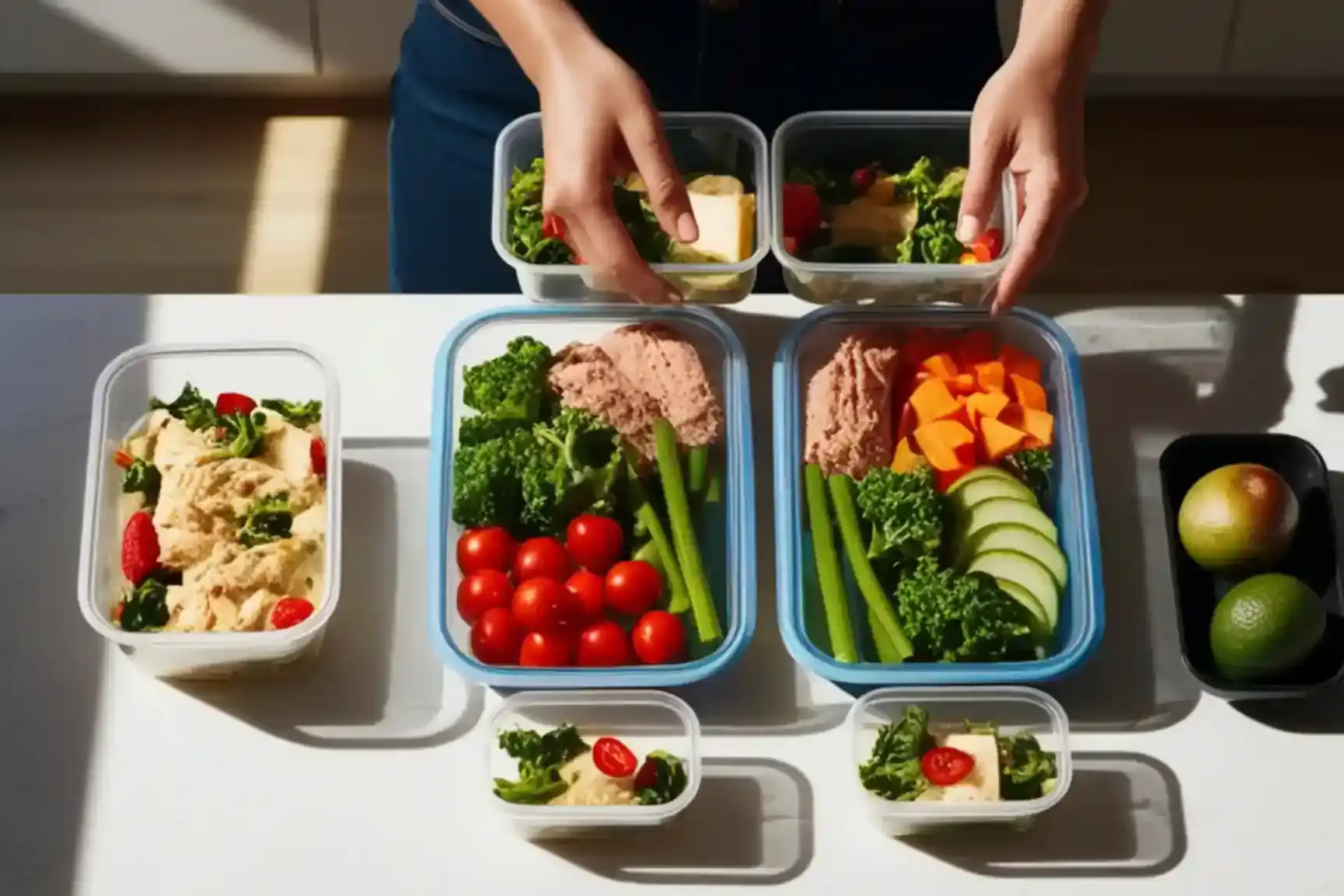
A weight gain diet plan involves eating in a planned manner so that your body receives more energy than it burns, while still maintaining good health. You gain weight when your daily calories stay higher than your daily needs for many weeks. Random eating does not work. Skipping meals, eating low-calorie foods, or relying on junk food slows progress. A structured weight gain diet plan focuses on calorie surplus, muscle support, digestion, and steady appetite control.
20 Healthy Foods to Gain Weight
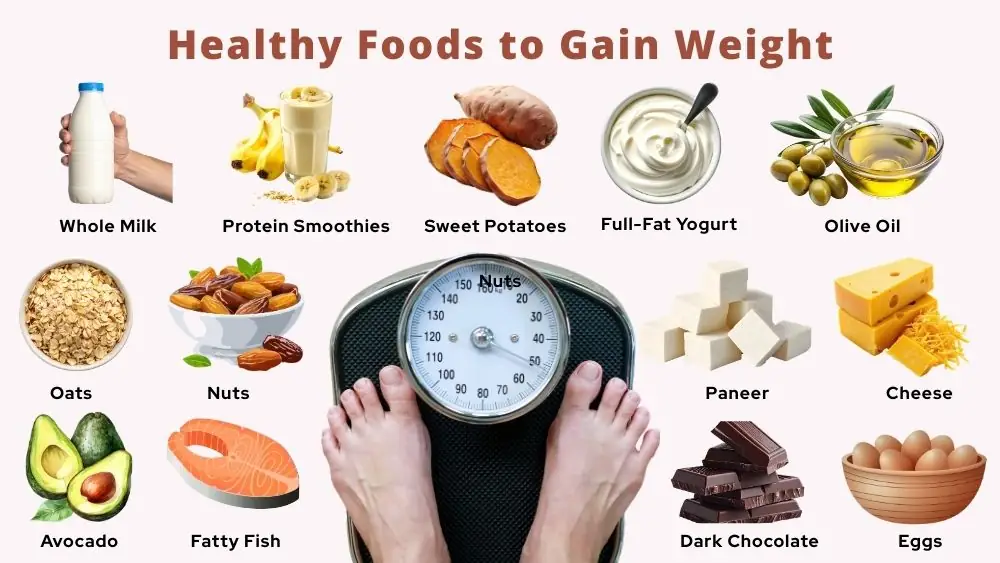
Weight gain depends on food energy density and nutrient absorption, not just portion size. These foods supply calories alongside protein, fats, and micronutrients that support muscle growth, digestion, and hormone balance. When used consistently, they help your body stay in a calorie surplus without causing bloating, poor blood sugar control, or nutrient gaps.
Whole Milk
Whole milk provides protein, fat, calcium, and vitamin B12. These nutrients help muscle repair and bone strength. Liquid calories digest faster, which helps if your appetite is low.
Homemade Protein Smoothies
Smoothies help you consume more calories in less time. They also reduce chewing fatigue. Mixing milk, fruit, oats, and nut butter supports a high calorie diet for weight gain without processed junk.
Rice
Rice gives fast energy and supports insulin release, which helps nutrients enter muscles. White rice works well after workouts. Brown rice adds fiber and minerals for daily meals.
Potatoes And Sweet Potatoes
These root vegetables supply carbs, potassium, and vitamin C. Potassium helps muscle contraction and reduces fatigue during training.
Oats
Oats digest slowly and provide steady energy. They also support gut bacteria that improve nutrient absorption.
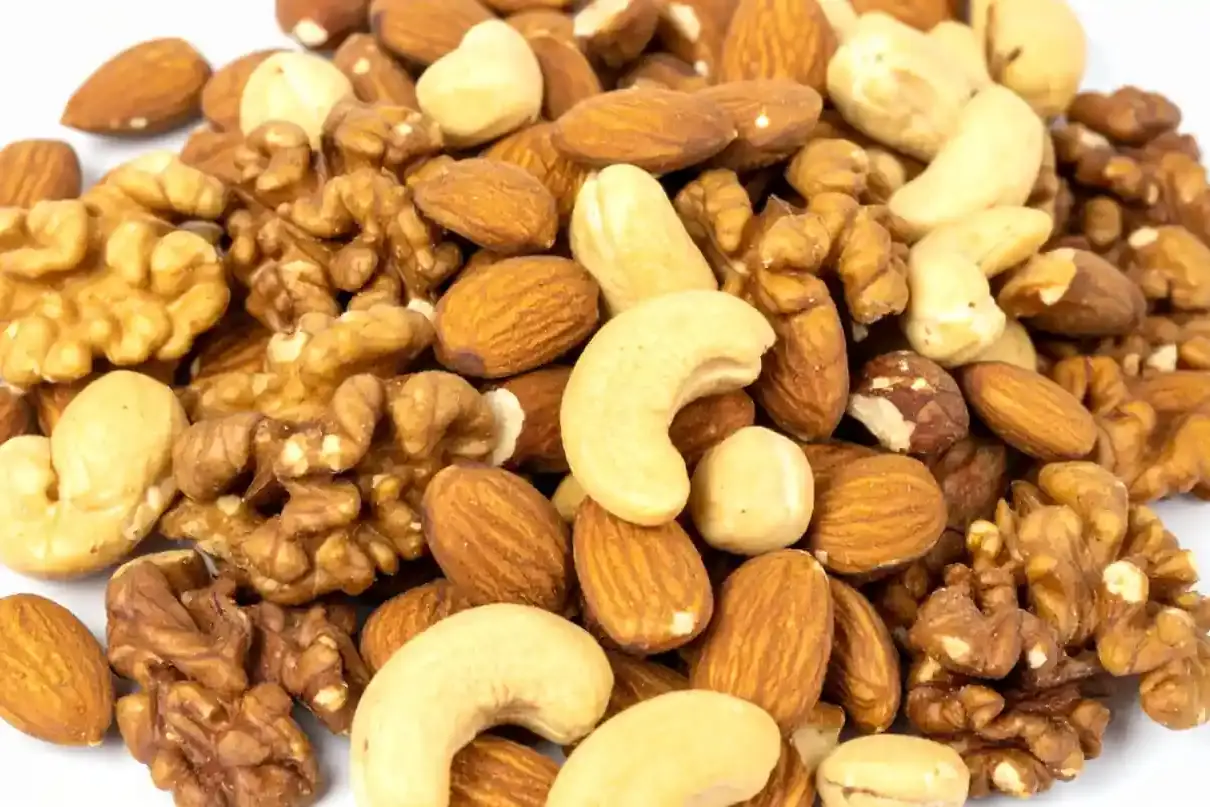
Nuts
Nuts are rich in fats, magnesium, and calories. Small portions add significant energy, which helps if you struggle to eat large meals.
Nut Butters
Nut butters combine fats and protein. They raise calorie intake without increasing meal size. This makes them ideal for a weight gain diet plan .
Avocado
Avocados supply monounsaturated fats that support hormone production. Hormones like testosterone and insulin affect muscle growth.
Olive Oil
Olive oil adds calories without bulk. It also supports heart health when used instead of refined oils.
Eggs
Whole eggs contain protein, fats, and choline, which supports muscle control and nerve function. Eating yolks improves calorie intake.
Cheese
Cheese provides protein, calcium, and fat. Fermented cheeses also support gut bacteria.
Full-Fat Yogurt
Full-fat yogurt supports digestion and appetite control. Gut health affects how well your body absorbs calories.
Paneer
Paneer offers protein and fat with low fiber, which reduces bloating. It fits well in a vegetarian diet plan for weight gain .
Lentils And Legumes
Lentils provide protein, iron, and carbs. Pairing them with rice improves protein quality.
Bananas
Bananas supply fast carbs and potassium. They help refill muscle energy after workouts.
Whole Grain Bread
Whole grain bread provides carbs, fiber, and minerals. Pair it with fats for higher calories.
Fatty Fish
Fatty fish supplies protein and omega-3 fats. These fats reduce muscle breakdown during weight gain phases.
Lean Red Meat
Lean red meat offers iron and zinc, which support oxygen flow and hormone balance.
Dark Chocolate
Dark chocolate adds calories and antioxidants. Small portions help appetite without excess sugar.
Seeds
Seeds provide fats, minerals, and calories. They also support digestion when used in small amounts.
7-Day Healthy Weight-Gain Meal Plan
A structured meal plan prevents under-eating caused by poor appetite, busy schedules, or skipped meals. Repeating calorie-balanced meals trains hunger hormones, stabilizes blood sugar, and improves digestion efficiency. This approach helps your body adapt to higher intake instead of resisting it.
Day 1 Meal Plan
Breakfast: Oats cooked in whole milk, banana, peanut butter
Lunch: Rice, lentils, olive oil
Snack: Full-fat yogurt with nuts
Dinner: Paneer, potatoes, vegetables
Day 2 Meal Plan
Breakfast: Eggs, whole grain toast, whole milk
Lunch: Chicken, rice, avocado
Snack: Homemade protein smoothie
Dinner: Fatty fish, sweet potatoes
Day 3 Meal Plan
Breakfast: Yogurt, granola, seeds
Lunch: Lentils, rice, olive oil
Snack: Banana with nut butter
Dinner: Lean red meat, vegetables
Day 4 Meal Plan
Breakfast: Smoothie with milk, oats, fruit
Lunch: Paneer, bread, salad with oil
Snack: Nuts and dark chocolate
Dinner: Fish, rice
Day 5 Meal Plan
Breakfast: Eggs, potatoes
Lunch: Chicken, rice
Snack: Yogurt with seeds
Dinner: Lentils, whole grain bread
Day 6 Meal Plan
Breakfast: Oats with milk
Lunch: Lean red meat, sweet potatoes
Snack: Smoothie
Dinner: Paneer, rice
Day 7 Meal Plan
Breakfast: Yogurt, banana, nuts
Lunch: Fish, rice
Snack: Nut butter sandwich
Dinner: Chicken, vegetables
This 7-day healthy weight-gain meal plan supports steady calorie surplus without digestive overload. Repeating meals helps appetite signals adapt over time.
A weight gain diet plan works best when meals stay regular. Long gaps reduce hunger hormones and slow progress. Pairing this plan with basic strength training improves muscle gain and limits fat gain.
Vegetarian Diet Plan for Weight Gain
Vegetarian weight gain succeeds when meals avoid excess fiber and include calorie-dense fats and complete protein combinations. Proper food pairing improves amino acid availability, iron absorption, and energy levels. Without planning, vegetarian diets often fail due to fullness before calorie needs are met.
High-Protein Vegetarian Foods
High-protein vegetarian foods help protect muscle tissue during weight gain. Paneer, milk, yogurt, lentils, chickpeas, kidney beans, soy products, nuts, and seeds provide steady protein across the day. Dairy proteins digest slowly, which helps muscle repair during rest.
Protein intake also affects appetite hormones. When protein stays too low, hunger signals become unstable. Balanced protein intake improves meal timing and reduces energy crashes, which supports long-term adherence to a weight gain diet plan .
High-Calorie Vegetarian Meal Ideas
High-calorie vegetarian meals rely on fats and carbs rather than volume. Rice with lentils and olive oil, paneer cooked in healthy fats, oats with nut butter, and smoothies with milk and seeds raise calorie intake without bloating.
Liquid meals work well when appetite stays poor. Smoothies reduce chewing effort and move faster through the stomach, making them useful for people struggling to meet calorie targets on a high-calorie diet for weight gain .
Balanced Vegetarian Meal Structure
Each vegetarian meal should contain three parts: carbs for energy, protein for muscle repair, and fats for hormones. Skipping any one part slows progress. Meals built this way keep blood sugar stable and reduce fatigue.
Spacing meals every three to four hours improves nutrient absorption. Long gaps lower insulin and increase muscle breakdown, which works against a weight gain diet plan .
Common Vegetarian Weight Gain Mistakes
Common mistakes include eating only salads, avoiding fats, and relying on fruits alone. These choices increase fullness without calories. Another mistake is ignoring iron and vitamin B12, which affect energy and appetite.
Overloading fiber also causes bloating. Too much fiber slows digestion and reduces hunger. Moderation helps sustain calorie intake in a vegetarian diet plan for weight gain .
Tips for Healthy Gaining Weight
Healthy weight gain requires more than eating extra food. Meal timing, sleep quality, stress control, and strength training determine whether calories turn into muscle or fat. Small daily habits influence appetite hormones, insulin response, and muscle recovery more than extreme eating strategies.
Eat More Frequently
Eating five to six meals keeps calories steady and prevents appetite drops. Smaller meals feel easier to finish and reduce stomach discomfort. This approach suits people with fast metabolism or low hunger signals.
Frequent meals also keep blood sugar stable, which reduces fatigue and helps training performance. This supports long-term success on a weight gain diet plan .
Combine Diet With Strength Training
Strength training sends a signal to store calories as muscle. Without training, extra calories often turn into fat. Even basic resistance exercises improve nutrient use.
Training also increases appetite naturally. Many people notice hunger improves after regular workouts, which helps maintain a high-calorie diet for weight gain .
Improve Appetite Naturally
Regular meal timing trains hunger hormones. Skipping meals weakens appetite signals over time. Liquid calories, warm meals, and mild spices can help stimulate hunger.
Managing stress also matters. Chronic stress suppresses appetite and digestion. Relaxed eating improves calorie intake and nutrient absorption.
Sleep And Recovery Importance
Sleep supports hormone balance. Growth hormone and testosterone are released during deep sleep, which affects muscle repair. Poor sleep slows weight gain even with enough food.
Recovery days prevent burnout and muscle breakdown. Overtraining increases calorie needs and appetite loss, which disrupts a weight gain diet plan .
Common Mistakes That Prevent Weight Gain
Missed meals, low-energy food choices, and lack of resistance training reduce calorie effectiveness. These mistakes cause stalled progress even when you believe you are eating enough.
Skipping Meals
Skipping meals breaks calorie consistency. Missing one meal can erase the surplus created by two meals. Setting fixed eating times improves reliability.
Morning meal skipping is especially harmful. Appetite often stays low all day when breakfast is missed, which affects a weight gain diet plan .
Eating Low-Calorie Foods Only
Large portions of vegetables or fruits alone do not support weight gain. These foods are healthy but low in energy. Pairing them with fats and carbs raises calorie density.
Balanced meals prevent fullness before calorie needs are met. This supports adherence to a high-calorie diet for weight gain .
Not Tracking Calorie Intake
Most people underestimate their intake needs. Tracking for a few weeks builds awareness and removes guesswork. It also highlights problem areas like missed snacks.
Once patterns become clear, tracking can stop. Awareness alone improves results on a weight gain diet plan .
Avoiding Resistance Training
Avoiding training leads to poor muscle gain. Extra calories without training often increase fat storage. Training improves how the body partitions calories. Even light resistance work improves results. Consistency matters more than intensity.
FAQs
How Many Calories Should You Eat To Gain Weight?
Calorie needs vary by age, activity, and metabolism. Most people gain weight by eating 300 to 500 extra calories daily for several weeks while following a structured weight gain diet plan .
How Fast Should Healthy Weight Gain Be?
Healthy weight gain usually ranges from 0.25 to 0.5 kilograms per week. Faster gain often increases fat storage rather than muscle, even on a high calorie diet for weight gain .
Can You Gain Weight Without Exercise?
You can gain weight without exercise, but much of it may be fat. Exercise improves muscle gain and nutrient use, which strengthens results from a weight gain diet plan .
Which Foods Help Gain Weight Fastest?
Foods rich in fats and carbs help fastest. Nuts, oils, rice, dairy, and smoothies support rapid calorie intake while fitting into a high calorie diet for weight gain .
Is A High-Calorie Diet Safe Long Term?
A high-calorie diet remains safe when food quality stays high. Whole foods, healthy fats, and balanced meals reduce health risks while supporting a weight gain diet plan .
Can Vegetarians Gain Weight Easily?
Vegetarians can gain weight with planning. A balanced vegetarian diet plan for weight gain that includes dairy, legumes, fats, and carbs supports steady progress.
How Long Does It Take To See Results?
Most people notice changes within three to four weeks. Visible muscle gain often takes longer, especially without training, even when following a weight gain diet plan .
Are Supplements Necessary For Weight Gain?
Supplements are not required. Whole foods work best. Supplements may help when appetite stays low, but they should support, not replace, a weight gain diet plan .
What Is The Best Time To Eat For Weight Gain?
Eating evenly across the day works best. Post-workout meals improve recovery and calorie use, which supports long-term success on a weight gain diet plan .
What Are Signs Of Unhealthy Weight Gain?
Excess fat gain, low energy, bloating, and poor sleep signal an imbalance. Adjust food quality, training, and meal timing to restore progress on a weight-gain diet plan .
About The Author

Medically reviewed by Dr. Nivedita Pandey, MD, DM (Gastroenterology)
Dr. Nivedita Pandey is a U.S.-trained gastroenterologist and hepatologist with extensive experience in diagnosing and treating liver diseases and gastrointestinal disorders. She specializes in liver enzyme abnormalities, fatty liver disease, hepatitis, cirrhosis, and digestive health.
All content is reviewed for medical accuracy and aligned with current clinical guidelines.