Healthy nuts for diabetics can be part of daily eating when you choose the right types and control portions. Nuts contain fiber, protein, and healthy fats that slow sugar absorption. This helps keep blood glucose stable. They also support heart health, which matters because diabetes raises heart disease risk.
When eaten in excess or in processed forms, nuts can raise calories and harm blood sugar control. The key is selection, timing, and quantity. If you snack smart, healthy nuts for diabetics can work for you instead of against you.
10 Best Nuts for People With Diabetes
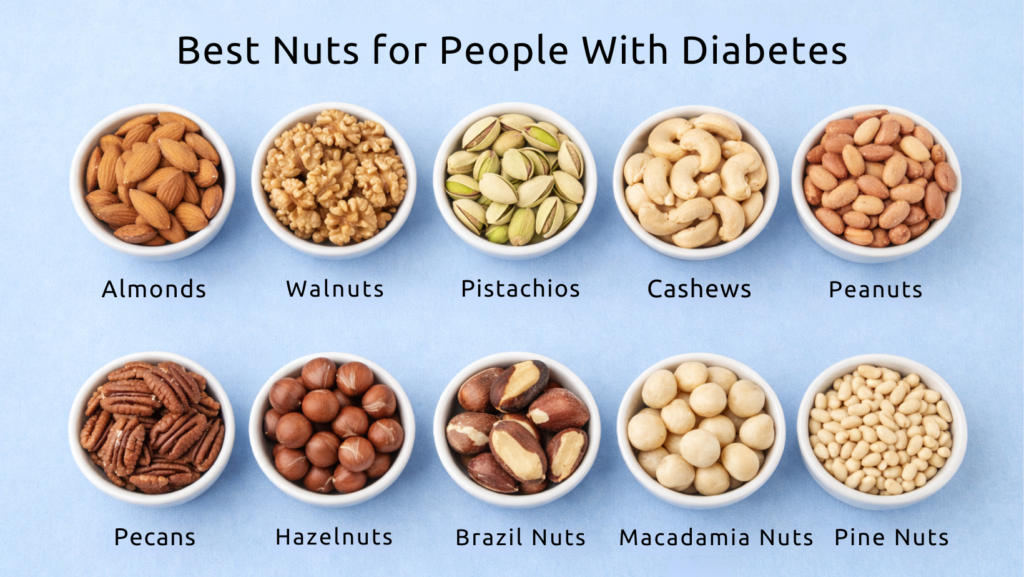
The 10 best nuts for people with diabetes share low glycemic load, slow digestion, and high satiety value. These nuts blunt post-meal glucose rise, improve lipid balance, and lower overeating risk when used as replacements, not add-ons.
Almonds
Almonds help slow digestion. This reduces sharp sugar rises after meals. They provide magnesium, a mineral that helps insulin move sugar into cells. Many adults with diabetes lack magnesium. A small handful supports fullness and better control. This makes almonds a strong choice among healthy nuts for diabetics .
Walnuts
Walnuts contain plant omega-3 fats. These fats help calm low-grade inflammation, which worsens insulin resistance. Walnuts also support artery health. Diabetes damages blood vessels over time. Eating walnuts a few times a week supports long-term heart protection.
Pistachios
Pistachios contain fewer calories per nut. You eat more pieces but fewer calories. This helps portion control. Pistachios also improve post-meal blood sugar when eaten with carbs. Their fiber and fat slow glucose entry into blood.
Cashews
Cashews contain slightly more carbs than other nuts. Still, they fit a diabetic plan in small amounts. They provide zinc, which supports insulin storage in the pancreas. Limit the portion and pair them with protein.
Peanuts
Peanuts are legumes, but they act like nuts in the body. They contain protein and healthy fats. Unsalted peanuts help reduce hunger between meals. Avoid sweetened peanut products. Plain peanuts remain one of the healthy nuts for diabetics when eaten wisely.
Pecans
Pecans contain very low carbs. They also provide antioxidants that protect blood vessels. This matters because high sugar damages vessel walls. Pecans work well as salad toppings or snacks.
Hazelnuts
Hazelnuts supply vitamin E. This vitamin supports nerve health. Nerve damage often develops with long-term diabetes. Hazelnuts also help improve cholesterol balance when eaten in place of refined snacks.
Brazil Nuts
Brazil nuts are rich in selenium. Selenium supports thyroid and immune function. One or two nuts meet daily needs. Eating more can cause excess intake, so keep portions small.
Macadamia Nuts
Macadamia nuts contain mostly monounsaturated fat. This fat supports heart health and insulin response. These nuts cause minimal blood sugar change but remain calorie dense.
Pine Nuts
Pine nuts contain fats that help reduce appetite signals from the gut. Feeling full sooner helps prevent overeating. Use them as small additions to meals.
Together, these form the 10 best nuts for people with diabetes when you avoid sugar coatings and large portions.
Nuts for Diabetes Type 2
Nuts for diabetes type 2 work best when they replace refined carbs, not when you add them on top of meals. Type 2 diabetes develops from insulin resistance, meaning your cells stop responding well to insulin.
How Nuts Help Improve Insulin Sensitivity
Nuts slow stomach emptying. Slower digestion means sugar enters blood at a controlled pace. This lowers insulin spikes. Repeated insulin spikes worsen resistance over time. Some nuts also supply magnesium and healthy fats. These nutrients help insulin work better at the cell level. This is why nuts for diabetes type 2 often support better fasting glucose when eaten daily in small amounts.
Role of Fiber, Protein, and Healthy Fats
Fiber delays sugar absorption. Protein reduces hunger later in the day. Healthy fats support hormone balance. Together, they prevent rapid glucose swings. This combination explains why healthy nuts for diabetics often improve overall glucose patterns when used correctly.
Low-Glycemic Nuts for Diabetics
Low-glycemic nuts for diabetics release glucose slowly because fat and fiber delay digestion. This prevents sharp sugar peaks that damage blood vessels, nerves, and kidneys, especially in long-standing diabetes.
Understanding Glycemic Index in Nuts
The glycemic index measures how fast food raises blood sugar. Nuts score very low. Fat and fiber slow digestion and glucose release. This makes nuts safer than crackers, chips, or sweets.
Why Low-GI Nuts Are Safer for Blood Sugar
Low-GI foods reduce sharp sugar spikes. Spikes damage nerves, kidneys, and eyes over time. Low glycemic nuts for diabetics help keep glucose curves smooth when eaten in measured portions. Almonds, walnuts, pecans, and macadamias rank among the safest options.
Nuts to Avoid in Diabetes
Even healthy nuts for diabetics can turn harmful when processing adds sugar, excess salt, or refined carbs. These changes alter how nuts affect blood glucose and insulin response.
Sugar-Coated and Honey-Roasted Nuts
Sugar-coated nuts raise blood glucose quickly. The added sugars absorb faster than the fats can slow them. This causes sharp glucose spikes that strain insulin control. Regular intake increases average glucose levels over time. These products do not fit into a diabetes-safe eating pattern.
Salted and Flavored Packaged Nuts
Many flavored nuts contain starches, sugar, and excess sodium. High sodium raises blood pressure, which already runs high in many people with diabetes. Some seasonings hide sugars under names like maltodextrin. These belong on the nuts to avoid in diabetes list.
Nuts Mixed With Dried Fruits or Chocolate
Dried fruits contain concentrated sugar. Chocolate coatings often include added sugars and refined fats. Together, they create a calorie-dense snack that pushes blood sugar upward. These mixes remove the advantage of choosing healthy nuts for diabetics .
How Many Nuts Can a Diabetic Eat Per Day
Portion size matters more than nut type. Even healthy nuts for diabetics can cause weight gain when eaten without limits. Weight gain worsens insulin resistance.
Recommended Portion Size Per Day
A standard serving equals about 28 grams. This equals roughly 23 almonds, 14 walnut halves, or 49 pistachios. This amount provides benefits without excess calories. Most people do best with one serving daily.
Portion Control to Avoid Calorie Overload
Nuts are energy-dense. Eating from large containers leads to mindless overeating. Measure portions ahead of time. Use small bowls. Avoid eating directly from bags. Portion control keeps healthy nuts for diabetics helpful rather than harmful.
Best Time of Day to Eat Nuts
Nuts work best with meals or as mid-day snacks. Eating them with carbohydrates slows the rise after meals. Late-night eating may add calories without improving glucose control.
Health Benefits of Nuts for Diabetics
Regular intake of healthy nuts for diabetics supports steady glucose patterns, improves cholesterol quality, and reduces hunger-driven eating. These benefits appear only with consistent, moderate intake.
Blood Sugar Stabilization
Fiber and fat slow glucose absorption. This prevents rapid sugar swings after meals. Stable glucose reduces fatigue and cravings. Over time, smoother glucose patterns support better long-term control.
Heart Health and Cholesterol Control
Diabetes increases heart disease risk. Nuts improve LDL cholesterol quality and support flexible blood vessels. This reduces strain on the heart. Replacing refined snacks with nuts improves lipid balance.
Weight Management Support
Protein and fat increase fullness signals. Feeling full reduces snacking later in the day. This helps maintain body weight. Weight control improves insulin sensitivity, especially in nuts for diabetes type 2 plans.
Risks of Eating Too Many Nuts in Diabetes
Overeating nuts increases calorie load, which worsens insulin resistance. Excess fat intake may also cause digestive discomfort and slow stomach emptying, leading to delayed glucose rises hours later.
Excess Calorie Intake
Large servings add hundreds of calories fast. These calories convert to stored fat when unused. Fat gain worsens insulin resistance and glucose control.
Potential Blood Sugar Spikes From Overeating
Very large portions can still raise blood sugar. Excess calories eventually turn into glucose. Moderation remains essential, even with low glycemic nuts for diabetics .
Digestive Discomfort
High fat intake may cause bloating or stomach upset. This occurs more often when nuts replace balanced meals instead of complementing them. Start with small amounts.
How to Include Nuts in a Diabetic Diet
After choosing healthy nuts for diabetics , placement matters. Nuts work best when they replace refined carbs or sugary snacks. Adding them on top of an already heavy meal adds calories without benefit.
Adding Nuts to Meals and Snacks
Add chopped nuts to yogurt, vegetables, or soups. Use them as snack replacements instead of crackers or sweets. Pair nuts with protein for better glucose control.
Using Nuts in Salads, Breakfast, and Smoothies
Sprinkle nuts on salads for crunch. Add a small portion to oatmeal or smoothies. Avoid nut butters with added sugar. Choose plain versions only.
Choosing Raw vs Roasted Nuts
Raw or dry-roasted nuts work best. Oil-roasted nuts absorb extra fats. Avoid nuts roasted in refined oils. Simple preparation preserves the benefits of healthy nuts for diabetics .
FAQs
Are nuts safe for people with diabetes?
Yes, healthy nuts for diabetics are safe when eaten in controlled portions. They support blood sugar balance, heart health, and fullness without causing rapid glucose spikes.
Which nuts are best for diabetes type 2?
Almonds, walnuts, pistachios, pecans, and macadamias rank highest among nuts for diabetes type 2 due to low glycemic impact and beneficial fat profiles.
Can diabetics eat nuts every day?
Daily intake is safe for most people when limited to one serving. Regular intake helps stabilize glucose and supports heart health without raising sugar levels.
How many nuts should a diabetic eat daily?
One serving per day works best. This equals about 28 grams. Larger amounts raise calorie intake and may reduce glucose control.
Do nuts raise blood sugar levels?
Nuts cause minimal blood sugar rise when eaten alone or with meals. Overeating can still raise glucose due to excess calories.
Which nuts have the lowest glycemic index?
Pecans, walnuts, almonds, and macadamias qualify as low glycemic nuts for diabetics because they contain very few digestible carbs.
Are roasted nuts bad for diabetics?
Dry-roasted nuts are safe. Oil-roasted or sugar-roasted varieties increase calories and may raise blood sugar, placing them among nuts to avoid in diabetes .
Can nuts help control HbA1c levels?
Consistent intake in small portions may support better long-term glucose averages by reducing daily sugar spikes and improving insulin response.
Should diabetics avoid cashews?
Cashews are not harmful when eaten in small amounts. Portion control matters because they contain slightly more carbs than other nuts.
What is the best time to eat nuts for diabetes?
Eating nuts with meals or as mid-day snacks works best. This timing helps smooth glucose rises and prevents overeating later.
About The Author

Medically reviewed by Dr. Nivedita Pandey, MD, DM (Gastroenterology)
Dr. Nivedita Pandey is a U.S.-trained gastroenterologist and hepatologist with extensive experience in diagnosing and treating liver diseases and gastrointestinal disorders. She specializes in liver enzyme abnormalities, fatty liver disease, hepatitis, cirrhosis, and digestive health.
All content is reviewed for medical accuracy and aligned with current clinical guidelines.