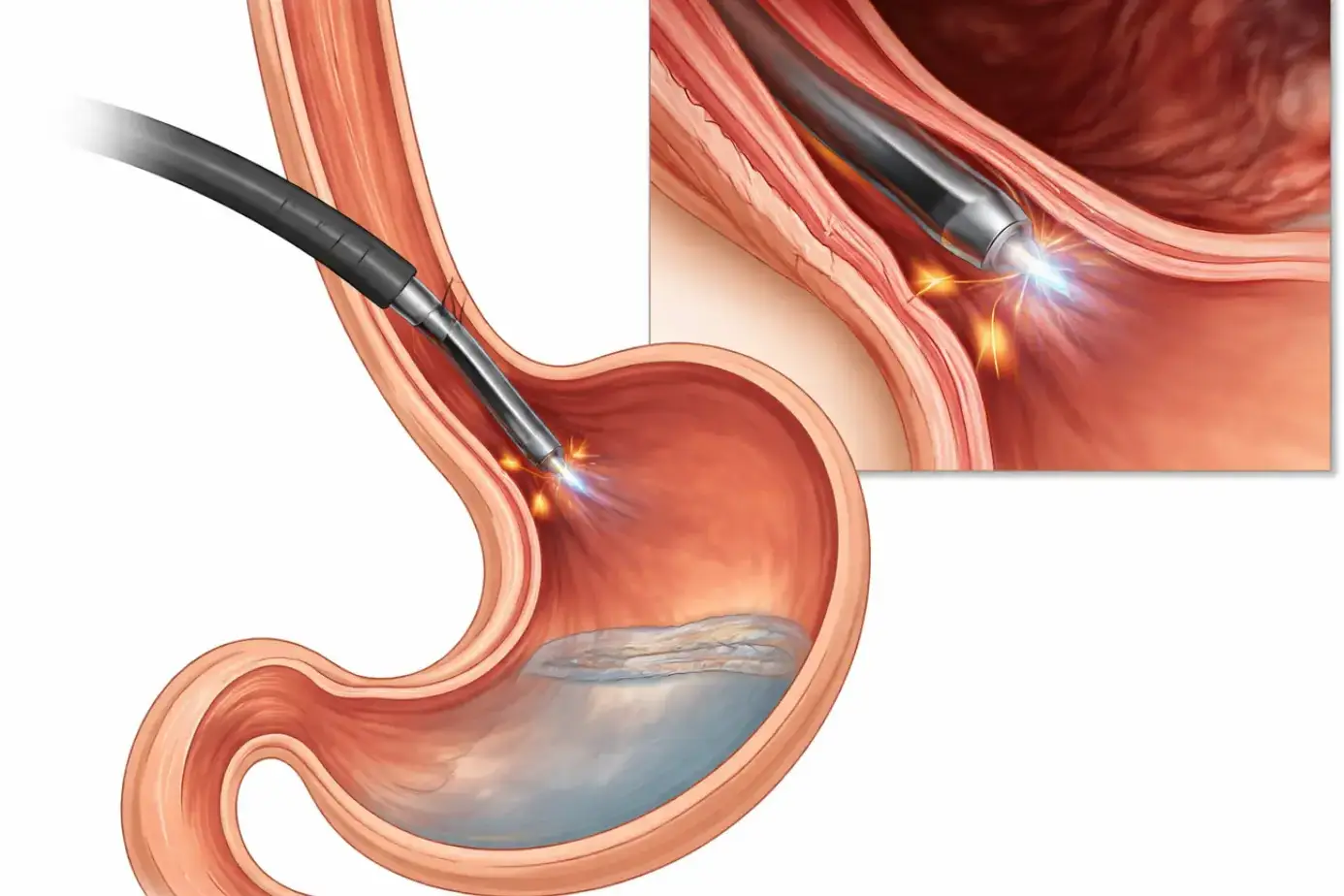
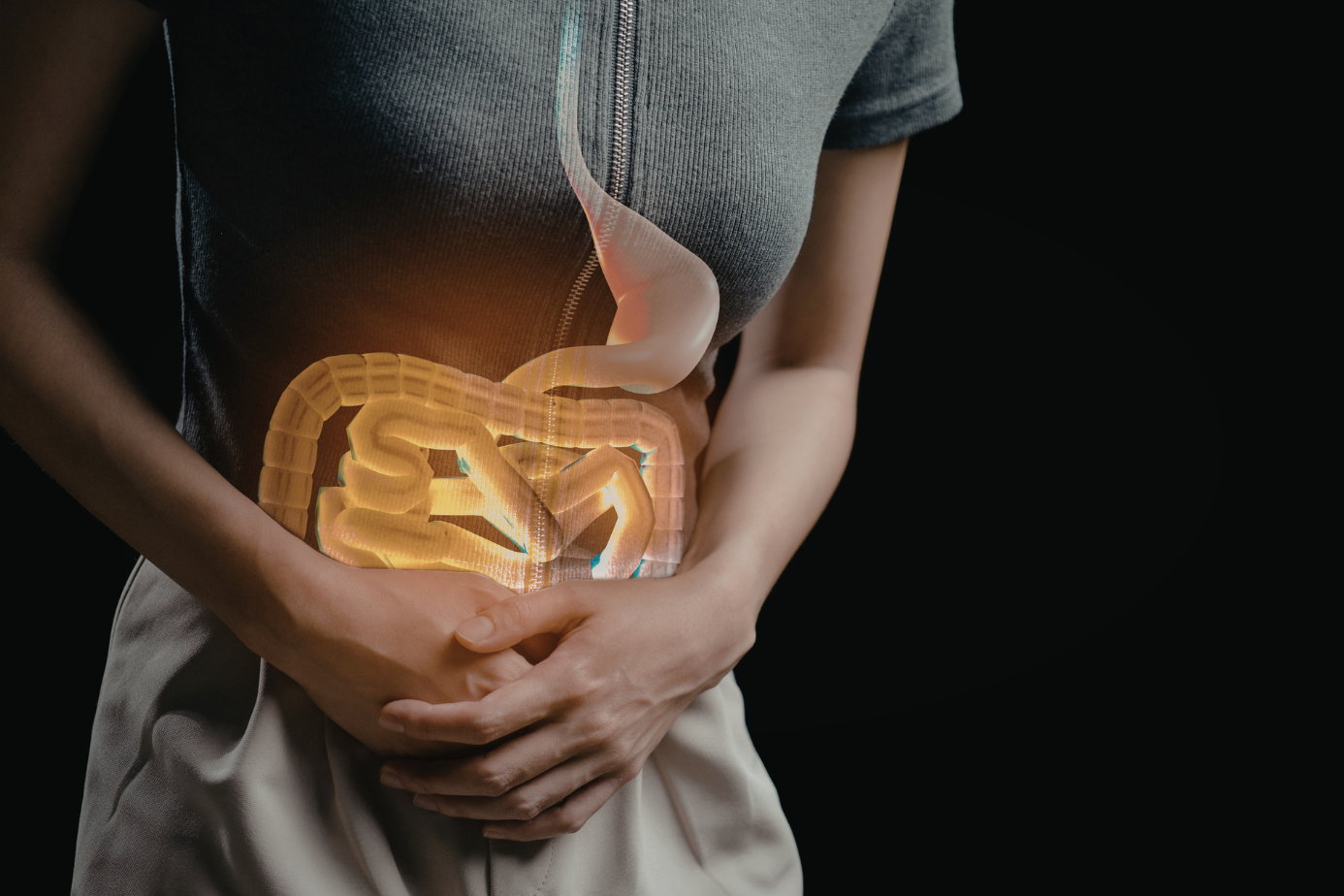
Sleep and digestion are more connected than most people realize. The way you rest each night directly affects how your stomach, intestines, and gut bacteria work. A good night’s sleep gives your digestive system time to repair, balance, and function smoothly. Poor sleep can lead to bloating, acid reflux, constipation, and even long-term gut problems.
This article will break down the science of gut health and sleep, explain how your gut microbiome reacts to rest, and give you practical tips for keeping both your sleep and digestion in top condition.
How sleep affects your gut health

Sleep and digestion are like teammates — when one struggles, the other follows. Your digestive system works in cycles, guided by your body’s internal clock, known as the circadian rhythm and digestion link. When you sleep well, your gut processes food efficiently, repairs the intestinal lining, and regulates hormone signals.
If you’re not sleeping enough, your body produces more stress hormones, slowing digestive enzyme production and increasing inflammation. This is why lack of sleep and gut health problems often appear together. Poor rest can also disrupt the gut-brain axis, making your gut more sensitive to pain and food triggers.
Research also shows that lack of sleep causes digestive issues and chronic sleep deprivation can worsen acid reflux, slow bowel movements, and increase risk for IBS flare-ups.
The gut microbiome and sleep
Your gut houses trillions of microorganisms, collectively known as the gut microbiota. These tiny partners digest fiber, produce vitamins, and protect against harmful bacteria. A balanced mix, known as microbiome balance, depends heavily on good sleep.
When your sleep cycle is disrupted, due to late nights, shift work, or circadian rhythm disruption, your gut bacteria lose their rhythm too. Harmful strains may multiply while helpful strains decline, reducing your gut’s ability to absorb nutrients and fight inflammation.
Adequate rest also boosts melatonin and digestion processes. Melatonin doesn’t just regulate sleep; it helps coordinate gut muscle contractions, ensuring smooth food movement. Without this, your sleep and digestive system can slow down, leaving you feeling heavy and sluggish.
Gut health and insomnia
The relationship between gut health and sleep goes both ways. When your gut is inflamed or imbalanced, it can lower serotonin and gut health levels, making it harder for you to fall asleep.
Insomnia is also linked to reduced production of short-chain fatty acids, compounds made by healthy bacteria that protect your gut lining. Without enough deep rest, your gut struggles to repair itself, creating a cycle of bad sleep and worse digestion.
Breaking this cycle often requires working on both areas at once, improving gut health while also building better sleep habits.
How to improve your sleep to improve your gut health
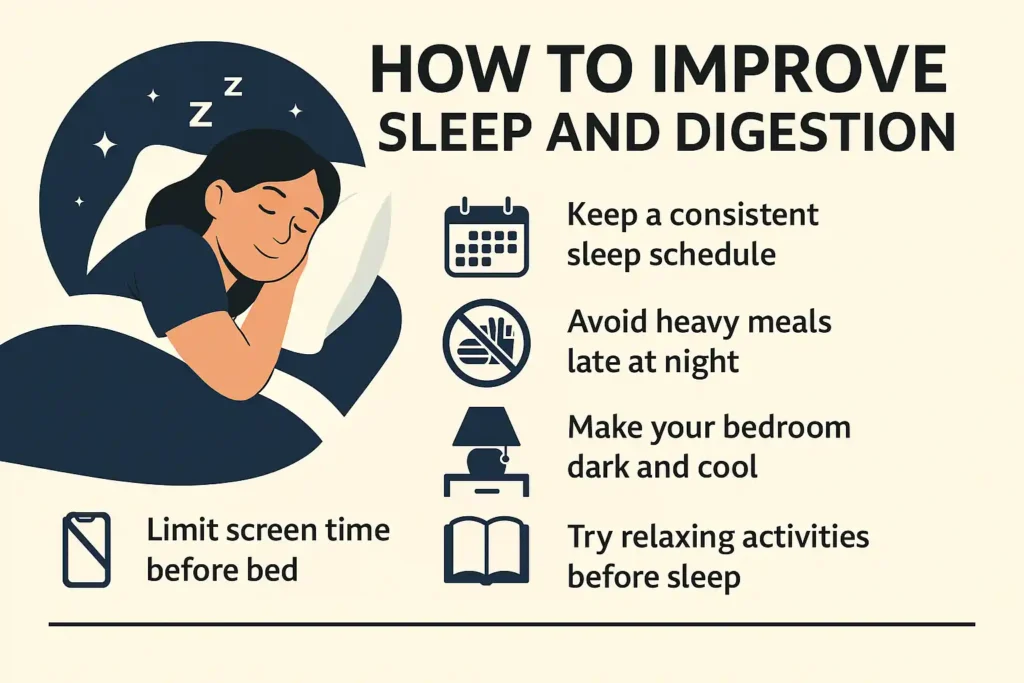
Better sleep means better digestion. Here’s how to help both:
- Set a consistent time each day for going to bed and waking up.
- To lessen bloating at night, avoid eating large or greasy meals two hours before bedtime.
- Create a sleep-friendly environment, cool, dark, and quiet to promote deep sleep stages.
- Limit screens before bed to help natural melatonin release.
- Try relaxing activities like light stretching or reading to signal your body it’s time to rest.
These habits don’t just improve sleep and digestion, they also help keep your gut bacteria balanced and your immune system strong.
Taking a holistic approach to your gut bacteria and sleep
You can’t fix digestion with sleep alone and you can’t fix sleep without caring for your gut. A holistic approach means working on diet, rest, and stress levels together.
Eat more fiber-rich foods to feed good bacteria, avoid processed sugars that harm your microbiome, and maintain a regular eating schedule to sync with your sleep and digestive system. Stay hydrated during the day, but reduce fluids close to bedtime to avoid nighttime bathroom trips.
Get Enough Sleep
Most adults need 7–9 hours per night to support healthy digestion. During this time, your gut clears waste, repairs tissue, and restores bacterial balance. If you’re falling short, you risk lack of sleep and gut health issues like constipation, bloating, and nutrient absorption problems.
Keep in mind: the relationship between gut health and sleep is confirmed.
Sleep & Gut Health — Expert Advice from Dr Nivedita Pandey
According to Dr. Nivedita Pandey, a gastroenterologist, the link between gut health and sleep is one of the most overlooked areas in digestive care. She notes that patients with chronic issues such as GERD, IBS, or bloating often improve significantly when sleep is addressed alongside diet and medication.
She points out that the ideal side for sleeping to enhance digestion is the left side. Sleeping on this side allows gravity to aid food movement and reduce acid reflux. In fact, when you sleep on the left side for digestion, your stomach is positioned below your esophagus, lowering the chance of nighttime heartburn.
Her advice: Eat dinner early, stick to a sleep routine, and avoid late-night snacks to keep both your gut and sleep cycle in harmony.
The bottom line
Your gut and sleep aren’t separate systems; they’re partners in keeping you healthy. Digestion is aided by rest, and sound digestion promotes sound sleep. If either one struggles, the other will feel it.
Small, consistent changes, from your bedtime routine to your eating schedule can bring big improvements in sleep and digestive system balance.
Frequently asked questions
How does the circadian rhythm influence digestion?
Circadian rhythm and digestion are linked because your body releases digestive enzymes at specific times. Sleeping and eating at irregular hours disrupts this cycle, slowing digestion.
Can improving sleep quality help with IBS symptoms?
Yes. Better rest reduces gut sensitivity, balances bacteria, and helps regulate bowel movements, making IBS symptoms less frequent and severe.
Does sleeping position affect digestive health?
Indeed. For better digestion, sleep on the left side. This position reduces acid reflux and helps food move through the intestines more easily.
How much sleep is needed for a healthy digestive system?
Most adults need 7–9 hours. This allows the sleep and digestive system to repair tissues, balance hormones, and process nutrients efficiently.
Can naps help improve digestion?
Short naps may reduce stress, supporting digestion. However, long or late naps can interfere with nighttime sleep patterns.
Can sleep disorders like insomnia or sleep apnea cause digestive issues?
Yes. Lack of sleep causes digestive issues is supported by research, poor rest can slow digestion, trigger inflammation, and worsen reflux.
What are the best bedtime habits for better digestion?
Avoid heavy meals, keep a cool dark bedroom, limit screens, and stick to a consistent bedtime.
How long before bed should I eat to improve digestion and sleep?
Finish eating at least 2–3 hours before bed. This reduces reflux risk and supports sleep and digestion.
About The Author

Medically reviewed by Dr. Nivedita Pandey, MD, DM (Gastroenterology)
Dr. Nivedita Pandey is a U.S.-trained gastroenterologist and hepatologist with extensive experience in diagnosing and treating liver diseases and gastrointestinal disorders. She specializes in liver enzyme abnormalities, fatty liver disease, hepatitis, cirrhosis, and digestive health.
All content is reviewed for medical accuracy and aligned with current clinical guidelines.