Symptoms of high stomach acid appear when your stomach produces more acid than your body can handle. Stomach acid helps break down food and kill germs. Problems start when acid stays too strong or moves to places it should not reach. This leads to pain, burning, and long-term damage if ignored. You may notice chest burning, sour taste, stomach pain, or throat irritation. These signs often grow slowly, so many people dismiss them until daily life feels affected.
Causes of High Stomach Acid
High stomach acid develops when acid control systems fail to match digestion needs. Hormones, nerve signals, infections, lifestyle habits, and medications can all push acid production beyond safe limits and keep it active longer than required.
Excess Acid Production
Your stomach releases acid using chemical signals. One key signal is gastrin, a hormone that tells acid-producing cells to work. Some people release too much gastrin. This pushes acid levels higher than needed. The stomach lining becomes irritated over time. This irritation increases sensitivity to normal foods. This process explains why symptoms of high stomach acid can appear even with simple meals.
Gastroesophageal Reflux Disease (GERD)
GERD happens when the lower esophageal sphincter, a ring of muscle between stomach and food pipe, weakens. This valve should stay closed after food enters the stomach. When it relaxes at the wrong time, acid flows upward. Acid does not belong in the food pipe.
Repeated exposure causes burning and swelling. GERD does not always mean too much acid. Even normal acid becomes harmful when it moves upward. Still, many people with GERD also have symptoms of high stomach acid because higher acid worsens damage.
H. pylori Infection
- pylori is a spiral-shaped bacteria that lives in the stomach. It survives acid by hiding under the stomach lining. Over time, it damages protective mucus. This makes acid touch sensitive tissue. The stomach reacts by producing more acid in some people. In others, acid drops, but irritation stays. When acid increases, pain and burning follow. This infection explains why symptoms of high stomach acid may appear without obvious triggers.
Stress and Anxiety
Stress changes how your brain talks to your stomach. Nerves linked to digestion become overactive. This signals acid release even when you are not eating. Stress also slows stomach emptying. Acid stays longer inside. This creates pressure and irritation. Long-term stress does not directly burn tissue, but it strongly increases symptoms of high stomach acid and makes recovery slower.
Diet Triggers and Overeating
Food choice matters. Fatty foods delay stomach emptying. Spicy foods irritate the lining. Sugar and refined carbs increase gas, which raises pressure. Large meals stretch the stomach wall. Stretching triggers more acid release. Eating late forces acid to work while lying down. These habits increase reflux and worsen symptoms of high stomach acid during sleep.
Smoking and Alcohol Consumption
Smoking weakens the valve that blocks acid from moving upward. It also reduces saliva, which normally helps neutralize acid. Alcohol irritates stomach tissue directly. It also increases acid release and slows healing. Even moderate use can worsen symptoms of high stomach acid in sensitive people.
Certain Medications
Some drugs damage the stomach lining or increase acid output. Common examples include nonsteroidal anti-inflammatory drugs, often used for pain. These drugs block protective chemicals in the stomach. Without protection, acid causes injury. Long-term use raises the risk of ulcers and ongoing symptoms of high stomach acid .
Symptoms of High Stomach Acid Levels
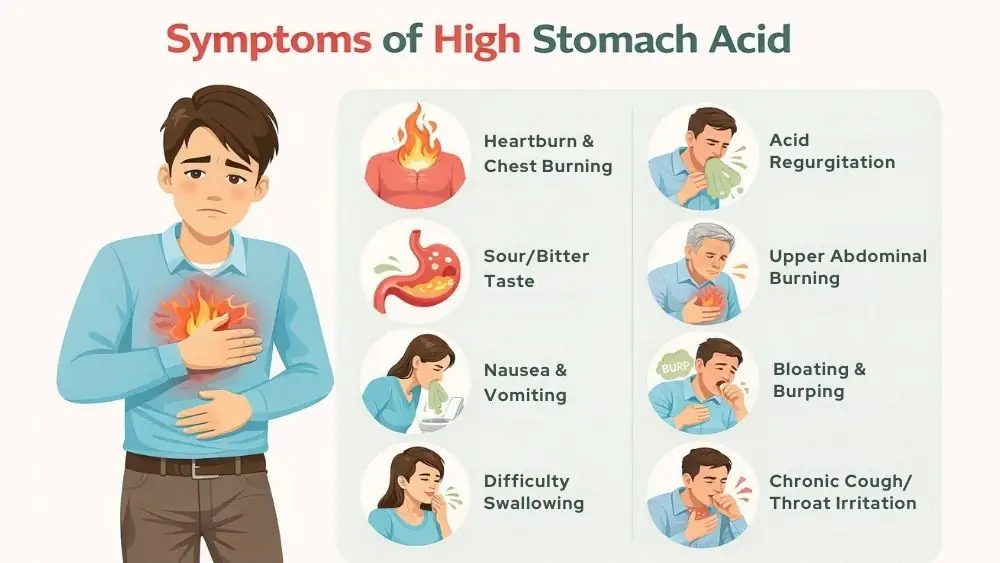
Symptoms appear when acid irritates tissues that lack protective lining. These signs often worsen after meals, during stress, or while lying down, and they may shift between the chest, upper belly, throat, and mouth over time.
Heartburn and Chest Burning Sensation
Heartburn feels like fire rising from your chest toward your throat. It often starts after meals. Lying down makes it worse. Bending forward also increases pain. This happens because acid moves upward. Heartburn remains the most recognized symptoms of high stomach acid .
Acid Regurgitation
Regurgitation means acid flows into your throat or mouth. You may feel liquid moving upward. It tastes sharp and sour. This often happens at night. Acid can reach your airway, which causes coughing. Repeated regurgitation strongly signals symptoms of high stomach acid that need attention.
Sour or Bitter Taste in Mouth
Acid reaching the mouth leaves a sour or bitter taste. Brushing does not fix it. This taste often returns after meals or sleep. Over time, acid harms tooth enamel. Dentists sometimes spot this before patients report symptoms of high stomach acid .
Upper Abdominal Pain or Burning
Pain often sits below the breastbone. It feels like burning or gnawing. Eating may ease pain briefly, then worsen it later. This pattern links to acid touching irritated tissue. Persistent upper belly pain suggests symptoms of high stomach acid rather than simple indigestion.
Nausea and Vomiting
Excess acid irritates stomach nerves. This triggers nausea. Some people vomit acidic fluid. Vomiting does not always bring relief. Frequent nausea paired with burning strongly supports symptoms of high stomach acid levels that require evaluation.
Bloating and Excess Burping
Gas builds when digestion slows. Acid imbalance changes how food breaks down. This creates pressure. Burping releases gas but does not solve irritation. Bloating paired with burning often points to symptoms of high stomach acid rather than food intolerance alone.
Difficulty Swallowing
Acid inflames the food pipe. Swallowing may feel painful or tight. Food may feel stuck. This symptom suggests swelling or scarring. Difficulty swallowing is never normal and often links to advanced symptoms of high stomach acid levels .
Chronic Cough or Throat Irritation
Acid reaching the throat irritates delicate tissue. This causes chronic cough, throat clearing, or hoarseness. Many mistake this for allergies or infection. When a cough lasts for months without lung disease, symptoms of high stomach acid often explain the cause.
Side Effects Of High Stomach Acid
Ongoing acid exposure slowly damages tissues not built to handle strong digestive acid. The side effects of high stomach acid often affect teeth, sleep, voice, and appetite before severe digestive pain becomes obvious.
Damage To Esophageal Lining
Stomach acid is strong enough to break down food. When it reaches the esophagus, it burns the lining. Repeated exposure causes swelling and small sores. Over time, this damage makes swallowing painful and increases sensitivity to hot or cold foods. This damage often explains ongoing symptoms of high stomach acid even when meals are small.
Tooth Enamel Erosion
Acid that reaches the mouth weakens tooth enamel. Enamel does not grow back once damaged. Teeth become sensitive and prone to cavities. Dentists often see erosion in people with silent reflux, even before stomach pain appears. This is a lesser-known part of the side effects of high stomach acid .
Chronic Throat And Voice Issues
Acid irritates the throat and voice box. This leads to hoarseness, voice cracking, or a constant need to clear your throat. Teachers and speakers notice this early. Damage builds slowly, which is why people often miss the link to symptoms of high stomach acid .
Sleep Disturbances
Lying flat allows acid to move upward. Nighttime reflux interrupts sleep cycles. Poor sleep increases stress hormones, which further raises acid levels. This creates a loop where sleep loss worsens symptoms of high stomach acid the next day.
Reduced Appetite
Eating becomes associated with pain. This leads to smaller meals or skipped meals. Over time, poor intake affects nutrition and energy levels. Reduced appetite is a common but overlooked part of the side effects of high stomach acid .
Complications Of High Stomach Acid Levels
When acid injury continues unchecked, inflammation turns into structural damage. The complications of high stomach acid levels involve scarring, abnormal cell changes, bleeding, and increased cancer risk, especially in the esophagus.
Esophagitis
Esophagitis means inflammation of the esophagus. Acid causes redness, swelling, and bleeding. Swallowing becomes painful. Some people feel sharp chest pain that mimics heart issues. Persistent symptoms of high stomach acid often lead to this diagnosis.
Peptic Ulcer Disease
Ulcers are open sores in the stomach or upper intestine. Acid eats through protective layers. Pain often improves briefly after eating, then worsens. Bleeding ulcers cause black stools or vomiting blood. Ulcers represent a serious outcome of the complications of high stomach acid levels .
Barrett’s Esophagus
Long-term acid exposure changes the cell type in the esophagus. This change is called Barrett’s esophagus. It does not cause unique symptoms. Doctors find it during scope exams. This condition increases cancer risk and often follows years of untreated symptoms of high stomach acid .
Esophageal Strictures
Healing after repeated injury creates scar tissue. Scar tissue narrows the esophagus. Food sticks and swallowing feels tight. Some people need stretching procedures. Strictures are a physical result of the complications of high stomach acid levels .
Increased Risk Of Esophageal Cancer
Chronic inflammation increases abnormal cell growth. Risk rises slowly over many years. Early treatment of reflux lowers this risk. Persistent symptoms of high stomach acid should never be ignored for this reason.
How High Stomach Acid Is Diagnosed
Diagnosis focuses on linking symptoms with acid exposure patterns and visible tissue damage. Doctors rely on symptom timing, imaging, and acid measurement to separate high acid problems from heart, lung, or gallbladder issues.
Clinical Symptom Assessment
Doctors review pain timing, food triggers, sleep patterns, and stress. Details matter. Symptoms that worsen at night or after meals often point to acid-related issues. This step helps identify causes of high stomach acid before testing.
Upper Endoscopy
A thin camera checks the esophagus and stomach. Doctors look for redness, ulcers, or narrowing. Small tissue samples may be taken. Endoscopy confirms damage linked to long-term symptoms of high stomach acid .
pH Monitoring Tests
This test measures acid levels over 24 hours. A small sensor tracks when acid rises and how long it stays. It shows whether symptoms match acid spikes. This helps guide treatment for acid reflux .
H. pylori Testing
Breath, stool, or tissue tests detect infection. Treating the bacteria often improves acid balance. Testing matters when pain persists despite medication.
Acid Reflux Treatment
Treatment for acid reflux aims to reduce acid strength, limit acid movement, and allow damaged tissue to heal. Successful care often combines medication with trigger control rather than relying on drugs alone.
Antacids
Antacids neutralize acid already present. They act fast but wear off quickly. They help occasional symptoms but do not heal damage. Doctors suggest them for mild symptoms of high stomach acid .
H2 Receptor Blockers
These medicines reduce acid release for several hours. They work better than antacids for nighttime symptoms. Doctors often use them for moderate cases.
Proton Pump Inhibitors (PPIs)
PPIs block acid production at its source. They allow ulcers and inflammation to heal. Doctors usually prescribe them for several weeks, depending on severity.
Treatment Of Underlying Causes
Removing triggers matters. Treating infection, adjusting medications, or managing stress improves results. Addressing root causes of high stomach acid prevents relapse.
Surgical Options (Severe Cases)
Surgery strengthens the valve between stomach and esophagus. Doctors reserve this for severe cases that do not respond to medicine.
Diet And Lifestyle Changes For High Stomach Acid
Meal size, food choices, body weight, sleep position, and stress levels directly influence how much acid your stomach releases and where that acid travels.
Foods To Avoid
Fatty foods, spicy meals, citrus, chocolate, soda, and coffee raise acid or weaken the valve. Avoiding them reduces pressure and irritation.
Foods That Help Reduce Acid
Oatmeal absorbs acid. Bananas coat the stomach. Rice and lean proteins digest easily. These foods calm symptoms of high stomach acid .
Eating Habits And Meal Timing
Eat smaller meals. Chew slowly. Stop eating at least three hours before sleep. These habits limit reflux.
Weight Management
Extra weight increases pressure on the stomach. Even modest weight loss reduces reflux episodes and improves treatment for acid reflux outcomes.
Stress Reduction Techniques
Breathing exercises, regular sleep, and physical activity calm nerve signals that trigger acid release.
When To See A Doctor
Medical evaluation becomes necessary when symptoms persist, worsen, or interfere with eating and sleep. Delayed care increases the risk of long-term complications linked to repeated acid injury.
Warning Signs That Need Medical Attention
Chest pain, trouble swallowing, vomiting blood, or black stools require urgent care. These signs may indicate serious complications of high stomach acid levels .
Symptoms Not Improving With Treatment
If pain continues after weeks of care, testing is needed. Ongoing symptoms of high stomach acid may signal infection or structural damage.
FAQs
Can High Stomach Acid Be Cured Permanently?
Some causes resolve with treatment, especially infection-related cases. Others need long-term control through diet, stress management, and medical care to manage symptoms of high stomach acid safely.
Is High Stomach Acid The Same As GERD?
No. GERD involves acid moving upward due to valve weakness. High acid refers to excess production. Many people have both, which worsens symptoms of high stomach acid levels .
Can Stress Alone Cause High Stomach Acid?
Stress increases nerve signals that raise acid output. It rarely acts alone but strongly worsens existing causes of high stomach acid and delays healing.
Are Home Remedies Effective For High Stomach Acid?
Some home measures ease mild symptoms. They do not heal tissue damage. Persistent symptoms of high stomach acid still require medical guidance.
How Does High Stomach Acid Differ From Acid Reflux?
High acid means excess production. Reflux means acid travels upward. Either can exist alone, but together they increase side effects of high stomach acid .
What Causes Excess Stomach Acid Production?
Hormonal signals, infection, stress, certain foods, and medications raise acid output. Identifying these factors helps control causes of high stomach acid .
Can Stress Or Anxiety Increase Stomach Acid Levels?
Yes. Stress activates nerves that stimulate acid release. Chronic stress often worsens symptoms of high stomach acid levels even with treatment.
Is GERD Caused By High Stomach Acid?
GERD mainly results from valve weakness. High acid increases damage severity and speeds the complications of high stomach acid levels .
Can H. pylori Infection Lead To High Stomach Acid?
Yes. The infection disrupts protective lining and alters acid control. Treating it often reduces long-term symptoms of high stomach acid .
About The Author

Medically reviewed by Dr. Nivedita Pandey, MD, DM (Gastroenterology)
Dr. Nivedita Pandey is a U.S.-trained gastroenterologist and hepatologist with extensive experience in diagnosing and treating liver diseases and gastrointestinal disorders. She specializes in liver enzyme abnormalities, fatty liver disease, hepatitis, cirrhosis, and digestive health.
All content is reviewed for medical accuracy and aligned with current clinical guidelines.