Mayonnaise is usually low FODMAP in a normal serving, as long as it is the classic version made with egg, oil, vinegar or lemon juice, and salt. Monash University and several IBS experts report that around 2 tablespoons of plain mayonnaise count as a low-FODMAP serving for most people.
For you, this means you can often keep mayo in your diet if you choose the right jar and watch your portion. The main things that turn mayo into a problem are added garlic, onion, and certain sweeteners, not the base ingredients themselves.
What Makes A Food Low FODMAP?
Understanding FODMAPs & Digestive Tolerance
FODMAPs are a group of short-chain carbohydrates. The full name is fermentable oligosaccharides, disaccharides, monosaccharides, and polyols. These are small sugars that your small intestine absorbs poorly.
Because they do not absorb well, they pull water into the gut and then get fermented (broken down) by bacteria in your large intestine. This can lead to gas, bloating, cramping, and changes in bowel habits, especially if you live with irritable bowel syndrome (IBS).
A food is called “low FODMAP” when:
- You get only a small amount of these carbs in a standard serving.
- Your gut can usually handle that amount without big symptoms.
Large research groups, like Monash University and hospital teams, test foods and set safe serving ranges. The low FODMAP diet uses these servings to help people with IBS figure out which foods trigger their personal symptoms.
For mayo , this testing shows that classic mayonnaise is low in FODMAPs at typical spoonful sizes, because it is almost pure fat and contains almost no carbs.
Why Condiments Often Trigger IBS Symptoms
Even though condiments are eaten in small amounts, they often cause IBS flares. That can feel confusing when you are trying hard to “eat clean”. There are several reasons this happens.
First, many condiments hide garlic and onion. Both are very high in fructans, a FODMAP type found in certain vegetables and grains. These fructans are known triggers for IBS symptoms like gas, bloating, and pain.
Second, sauces often contain high fructose corn syrup, honey, apple juice concentrate, or sugar alcohols such as sorbitol and mannitol. These are also common FODMAP sources.
Third, condiments are sometimes very fatty, spicy, or acidic. These things do not raise FODMAP levels, yet they can still upset a sensitive gut. Fatty and very spicy foods can trigger IBS symptoms in some people, even when the FODMAP content is low.
So even if a sauce looks tiny on the plate, it can have a big effect.
Mayonnaise Ingredients: Are They Low FODMAP?
Classic mayo is a simple emulsion. That means oil droplets are held in water with the help of egg yolk. The usual base recipe uses egg yolk, a neutral oil, an acid like vinegar or lemon juice, a little salt, and sometimes a tiny amount of sugar or mustard. Monash University even publishes a basic homemade mayonnaise recipe with these parts.
Egg Yolks And Their FODMAP Classification
Eggs are almost free of carbohydrates. That means they contain almost no FODMAPs. They are mostly protein and fat.
If you react to eggs, it is usually due to allergy or fat sensitivity, not FODMAP content. From a pure FODMAP view, egg yolk is safe. This is why dietitians generally allow eggs on a low FODMAP diet, unless there is another medical reason to avoid them.
In mayo , the egg yolk helps blend oil and water into a thick, creamy spread without adding FODMAP load.
Oil Types (Avocado, Canola, Olive, Soybean)
Oils are 100% fat. They contain no carbohydrates and therefore no FODMAPs. This is true for avocado oil, canola oil, olive oil, and soybean oil, which are common in mayo recipes.
You may see warnings about avocado on low FODMAP food lists, because the flesh contains sorbitol, a FODMAP type. The oil does not contain those carbs, so avocado oil is still low FODMAP.
However, fat can still bother an IBS gut even when FODMAPs are absent. High-fat meals can change gut movement and sometimes worsen IBS pain and loose stools. Evidence is still growing in this area, and not everyone responds the same way, so your own experience matters.
Vinegar Varieties In Mayonnaise & FODMAP Rating
Most mayo uses white vinegar, distilled vinegar, wine vinegar, or sometimes apple cider vinegar. These liquids have very low FODMAP content in normal serving sizes. Published FODMAP guides and dietitian resources tend to list vinegars as low FODMAP, except when used in very large volumes or in products that also contain other high FODMAP ingredients.
Apple cider vinegar does contain small amounts of natural sugars, yet the amount in a spoonful of mayo is tiny. Current evidence does not show that typical mayo vinegar levels push a serving into a high FODMAP zone.
Added Sugars And Low-FODMAP Limits
Some mayo brands add sugar for taste. Table sugar (sucrose) is low FODMAP in modest amounts because it is a balanced mix of glucose and fructose. Issues start when there is more free fructose than glucose, such as in high fructose corn syrup, apple juice concentrate, or large servings of honey.
In mayo , sugar is usually a tiny part of the recipe. That amount will not usually break low-FODMAP rules. The problem is when a jar includes higher FODMAP sweeteners near the top of the ingredient list.
Lemon Juice Vs Citrus Concentrates
Some mayo uses lemon juice or lemon juice concentrate as the acid. Lemon juice is low FODMAP in normal food amounts. Diet references list it as safe for a low FODMAP diet when used as a flavoring.
Citrus concentrates and “natural lemon flavor” are less clear. They are usually still low FODMAP in tiny amounts, but “natural flavor” can sometimes be a mix that also includes onion or garlic extracts.
Stabilizers, Preservatives, And Gums
To keep mayo smooth and stable, some brands add gums or starches such as xanthan gum, guar gum, or modified starch. These are used in very small amounts. Research suggests that these gums are not significant FODMAP sources in typical condiment servings.
However, some people with IBS report more gas or loose stools after foods with certain gums, even when FODMAP levels are low. Large trials on this are limited, so you may need to watch your own symptoms and adjust if you notice a pattern.
Garlic-Flavored Mayonnaise Vs Actual Garlic Content
This is where mayo often stops being low FODMAP. Garlic and onion are packed with fructans, one of the main FODMAP groups linked with IBS symptoms.
If your jar lists garlic, onion, garlic powder, onion powder, or mixed “spices” that the brand will not explain, the mayo may shift out of the safe range during the stricter phase of the diet.
Garlic-infused oil is different. FODMAPs are water-soluble, not fat-soluble, so garlic flavor can move into oil while the fructans stay behind in the garlic pieces. Garlic-infused oil, when prepared correctly, is low FODMAP.
Is Mayonnaise Safe For IBS?
Why Traditional Mayonnaise Is Typically Low FODMAP
Putting all of this together, classic mayo is mostly fat with a little protein and very few carbs. That structure means the FODMAP content is naturally very low. Monash-linked resources and low FODMAP guides list mayonnaise as low FODMAP at about 2 tablespoons, for both regular and low-fat styles.
So plain mayo that sticks to the basic recipe and skips garlic, onion, and high FODMAP sweeteners is usually safe for the IBS group. This does not mean you can eat unlimited amounts, but it does mean you do not need to fear every spoonful during a well-planned low-FODMAP phase.
When Mayonnaise May Still Cause Symptoms
You may still feel worse after mayo even if the ingredients look fine. This does not always mean a FODMAP problem. Other factors play a role.
High-fat foods can change gut movement and lead to cramping, faster bowel movements, or greasy stools in some people with IBS. Some people react to egg proteins or soy proteins due to allergy or intolerance reasons. That reaction is separate from IBS and needs medical advice.
Also, mayo is rarely eaten alone. You might be spreading it on bread, mixing it with coleslaw, or using it with processed meats. The combined FODMAP and fat load of the whole meal can tip you over your personal threshold even when mayo itself is low FODMAP.
Because of these layers, no expert group can promise that mayo will suit every person with IBS. IBS management must be personalized, and food reactions vary a lot between people.
How Fat Content Impacts IBS Flare-Ups
Researchers believe that fat can stimulate gut hormones and nerve pathways that control bowel movement. In people with IBS, these responses can be stronger, which may result in pain or urgency after fatty meals.
Regular mayo is very high in fat. Light mayo still contains fat, but usually less per tablespoon. FODMAP testing suggests both versions are low FODMAP at 2 tablespoons, yet symptom control might be better for some people with a lighter version, simply because of the lower fat load.
Evidence in this area is still limited. Because of this, it is safer to say that fat “may worsen IBS symptoms in some people” rather than promise an exact outcome for you.
Portion Sizes For Safe FODMAP Use
Serving size is key in FODMAP science. Tests show that the same food can be low FODMAP at one portion and high FODMAP at a larger one. Monash and other researchers use a traffic light system to reflect this.
For mayo , common low FODMAP guidance is up to 2 tablespoons, about 30 to 40 grams, per meal.
If you are in the strict elimination phase of the low FODMAP diet, you may want to:
- Start with 1 tablespoon of mayo and see how you feel.
- Keep other fatty foods in the same meal modest.
- Track your symptoms over several meals rather than one day.
Once you reach the reintroduction and personalization stages, your dietitian can help you test whether a slightly larger serving of mayo fits your own limits. There is no single rule that suits every IBS gut, and the low FODMAP diet should be done with professional guidance when possible.
Low FODMAP Diet Mayonnaise Options
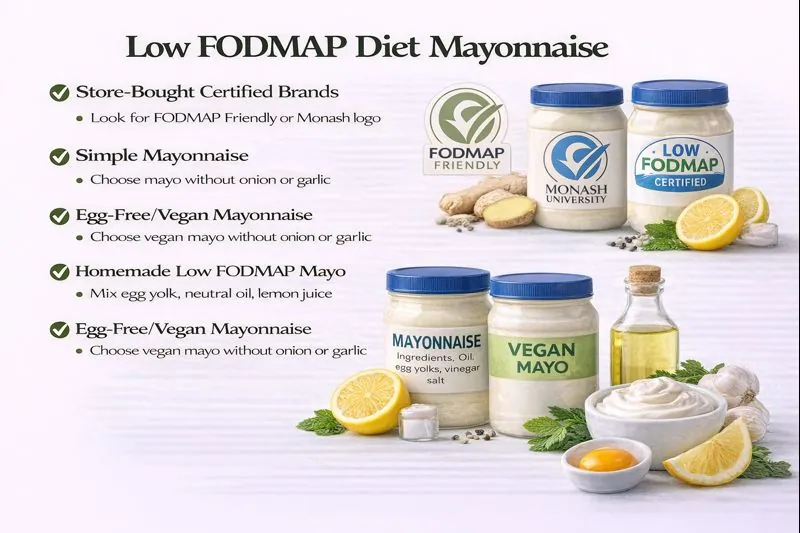
When you follow a structured low FODMAP plan, you want mayo that feels safe and simple. There are several low-FODMAP diet mayonnaise options you can consider, ranging from certified products to easy homemade versions.
Store-Bought Low-FODMAP Certified Brands
Some companies now submit their mayo to formal FODMAP testing and carry a certification logo. The FODMAP Friendly program and similar groups list selected mayonnaise products, including some vegan styles, that have passed lab tests at defined serving sizes.
These certified mayo jars remove much of the guesswork. You still need to respect the serving size and consider your fat tolerance, but you can be more confident that the carb content fits low FODMAP rules.
Mayonnaise Without Garlic Or Onion
Even without a logo, you can often find mayo that is suitable for IBS. Look for very short ingredient lists: egg, oil, vinegar or lemon juice, salt, maybe a little sugar or mustard. Avoid jars that list garlic, onion, or vague “spices” that the company cannot clarify.
Many careful shoppers build a small list of brands that stay simple and gentle. These brands then become everyday low FODMAP diet mayonnaise options they can rely on, right beside other trusted low FODMAP condiments like plain mustard or tested ketchup.
Egg-Free/Vegan Mayonnaise On A FODMAP Diet
Vegan mayo replaces egg with other thickening agents such as chickpea water (aquafaba), pea protein, or starches. Some of these are high in FODMAPs, especially chickpea-based products. At the moment, formal research on every vegan mayo ingredient mix is limited, and different brands can vary a lot.
For this reason, vegan mayo is not automatically low FODMAP. Check labels for onion, garlic, and high FODMAP fibers such as inulin. When possible, choose vegan products that are officially tested or clearly labeled as IBS-friendly. If you try a new brand, start with a teaspoon, note how you feel, then slowly adjust.
Homemade Low FODMAP Mayonnaise Recipe
Making mayo at home gives you full control over each ingredient. Monash University shares a simple recipe based on egg yolk, neutral oil, lemon juice or vinegar, a pinch of sugar, salt, and pepper.
You can adapt this idea for your own kitchen. Use a fresh egg yolk, whisk in a neutral oil such as canola or light olive oil, then add lemon juice and salt to taste. If you like garlic flavor, use a small amount of garlic-infused oil instead of real garlic. This keeps the flavor while keeping FODMAPs low.
Homemade mayo needs careful storage in the fridge and should be eaten within a few days for safety. Because you know every ingredient, it can be one of the most dependable mayonnaise choices safe for IBS in your kitchen.
FODMAP-Friendly Sauces & Condiments
You do not have to eat dry food to protect your digestion. Many sauces can fit into low-FODMAP condiments as long as you watch the ingredients and the serving size. Expert guides based on Monash University testing confirm that some popular sauces can stay low FODMAP in small portions.
Low FODMAP Ketchup Options
Ketchup often causes trouble because many brands mix tomato with onion, garlic, and high fructose corn syrup. These add fructans and excess fructose, which are known FODMAP triggers.
You can still use ketchup if you choose well. Industry summaries based on Monash data suggest that about 2 teaspoons, around 13 grams, can be a low-FODMAP serving when the recipe is simple.
To keep ketchup in your set of FODMAP-friendly sauces , you should look for bottles that use sugar instead of high fructose corn syrup and leave out onion and garlic. Some brands clearly state “no onion, no garlic” or carry a low FODMAP logo.
Is Soy Sauce Low FODMAP?
Soy sauce is usually made from soybeans, wheat, salt, and a starter culture. Because the soy and wheat are fermented, the FODMAP content drops. Several low-FODMAP guides list soy sauce as low-FODMAP in servings up to about 2 tablespoons.
Plain soy sauce or tamari often fits well beside mayo in stir-fries and marinades. You still need to read the label, because some flavored versions add garlic or onion. If you need gluten-free options, tamari gives you the same salty taste with similar FODMAP rules.
Worcestershire Sauce FODMAP Rating
Worcestershire sauce usually contains vinegar, molasses, anchovies, tamarind, and seasonings that may include small amounts of onion and garlic. Even with those ingredients, Monash-based resources classify it as low FODMAP in serving sizes of up to about 2 tablespoons, likely because of fermentation and the small quantity used.
If you enjoy this sauce, you can treat it as one of your FODMAP-friendly sauces , as long as you use it as a light seasoning instead of pouring it heavily over food.
BBQ Sauces & Ingredients To Avoid
BBQ sauce is trickier than mayo . Many recipes use tomato paste, onion, garlic, honey, and high fructose corn syrup. These raise the FODMAP load quickly.
You can look for low FODMAP certified BBQ sauces that clearly state “onion and garlic free” on the label, such as some Fody and Bay’s Kitchen products.
Homemade BBQ sauce is another option. Dietitian recipes use tomato puree in tested amounts, low FODMAP sweeteners, and garlic-infused oil instead of real garlic. These sauces can sit beside mayo as safe choices when you want a smoky flavor without a flare.
Hot Sauce: When It Is And Isn’t Safe
Most simple hot sauces contain chili, vinegar, and salt. Those ingredients are low FODMAP in tiny amounts, so a few drops are usually fine from a FODMAP view.
The problem is not only carbs. Spicy food itself can trigger IBS symptoms in many people, even when FODMAPs are low. Studies and guidance from large centers link spicy meals with more pain and urgency in sensitive guts.
So hot sauce can belong to FODMAP-friendly sauces , but only if the brand avoids garlic and onion and if your own gut tolerates chili.
Store-Bought Vs Homemade FODMAP Condiments
Store-bought low-FODMAP condiments are quick and easy. Brands such as Fody, Gourmend, and other certified companies design sauces without onion and garlic and then test them to fit low-FODMAP servings.
Homemade sauces give you full control. You can mix mayo with mustard, lemon juice, and herbs, or cook a small batch of tomato sauce with garlic-infused oil. Research on every home recipe is limited, so you rely on ingredient tables and your dietitian’s advice, but this still gives you many safe choices for daily meals.
Common Mayo Variations To Avoid
Some mayo twists are far more likely to upset IBS. Knowing which ones to treat as “high risk” helps you keep mayonnaise safe for IBS in your routine.
Garlic Mayo & Flavored Aiolis
Garlic mayo and thick aioli often contain a lot of fresh garlic or garlic paste. Garlic is very high in fructans, and lab tests link it strongly with IBS symptoms in sensitive people.
Unless a brand uses only garlic-infused oil and is tested, you should leave these sauces for later challenge phases, not for the elimination stage.
Truffle Mayo (High FODMAP Risk)
Truffle mayo usually includes mushroom extracts and often extra garlic or onion. Some mushrooms are high FODMAP, and the extra seasonings add more fructans. Research on truffle sauces and FODMAPs is still limited, so it is safer to treat truffle mayo as a high-risk option.
Mayo With Added Onion Powders
Onion powder is a concentrated source of fructans. Monash and other groups list onion powder as high FODMAP, even in small amounts.
If a jar lists onion powder or “caramelized onion” on the label, that mayo is unlikely to fit mayo ingredients’ low-FODMAP rules, especially if you are in the strict phase of the diet.
Spicy Mayo With Chili Pastes
Spicy mayo is usually made by mixing mayo with sauces such as sriracha or other chili pastes. These often contain garlic, and the spice factor itself can trigger symptoms.
If you want a spicy spread, you can stir a tested hot sauce into a plain low-FODMAP mayo at home. This keeps flavor while still aiming to keep mayonnaise safe for IBS .
How To Choose Low FODMAP Mayo At The Store
Ingredient Label Checklist (What To Avoid)
When you stand in front of the shelf, think about mayo ingredients and low-FODMAP steps. The base should be egg, oil, vinegar or lemon juice, salt, and maybe a little sugar or mustard.
You should place jars back on the shelf when they contain garlic, onion, onion powder, garlic powder, inulin, chicory root, or high fructose corn syrup. These ingredients push the product out of the low-FODMAP condiments category.
Certified FODMAP-Friendly Vs Uncertified Products
Some mayo and sauce brands carry a FODMAP-friendly or Monash-style logo. These products are lab tested at specific serving sizes and can give you more confidence.
Uncertified products can still be safe, low-FODMAP diet mayonnaise options when the ingredient list is simple and free of high-FODMAP items. Because formulas change, it is wise to recheck labels once in a while.
Safe Portion Size For Mayo On IBS Diets
Current guides that draw on Monash data suggest that about 1 to 2 tablespoons of plain mayo per meal sit in the low FODMAP range for most people.
At the same time, IBS is very individual. Foods that are low FODMAP can still bother you if you are very sensitive to fat or have other gut conditions. So take serving sizes as a starting point. Work with your doctor or dietitian to adjust amounts until the mayonnaise safe for IBS fits your reality.
FAQ
Is Mayonnaise Low FODMAP?
Yes. Plain mayo made with egg, oil, and vinegar or lemon juice is usually low FODMAP at 1 to 2 tablespoons. You still need to avoid garlic, onion, and high fructose sweeteners in the recipe.
Which Brands Of Mayo Are Low FODMAP?
Low FODMAP choices vary by country. You can use certified brands or simple supermarket jars that follow mayo ingredients low FODMAP rules. Always read labels, because companies can change recipes without warning.
Can I Eat Mayo on the Low FODMAP Diet With IBS?
You can usually eat mayo on a low FODMAP diet if you choose a simple recipe and keep to standard portions. Your IBS triggers are personal, so track symptoms and adjust servings carefully over time.
Is Vegan Mayo Low FODMAP?
Some vegan mayo products are low FODMAP, but others use chickpea water or added fibers that raise FODMAPs. Treat each brand as a test, and look for vegan low-FODMAP diet mayonnaise options when possible.
Can Mayonnaise Trigger Digestive Symptoms Even If Low FODMAP?
Yes. Mayo is high in fat, and fat alone can worsen IBS symptoms in some people. Even if mayonnaise is safe for IBS from a FODMAP view, it might cause trouble if your gut reacts strongly to rich foods.
How Much Mayo Is Safe Per Serving On FODMAP Diet?
Most guides suggest starting with 1 tablespoon of mayo and seeing how you feel. If that goes well, you can move toward 2 tablespoons, as long as other parts of the meal stay low FODMAP.
Are Condiments Generally High Or Low FODMAP?
Condiments sit across a wide range. Some, like plain mayo , soy sauce, and certain ketchups, can be low-FODMAP condiments . Others, such as garlic-heavy sauces, are clearly high FODMAP and best kept for challenge phases.
What Sauces Can I Use Instead Of Mayo On Low FODMAP?
You can try ketchup in tested servings, soy sauce, Worcestershire sauce, mustard, and certified FODMAP-friendly sauces like low FODMAP BBQ or salsa. Garlic-infused oil mixed with herbs also makes a gentle replacement.
Is Light Or Reduced-Fat Mayo Easier To Digest?
Light mayo has less fat than regular mayo , which may ease IBS symptoms for some people. The FODMAP content is similar, so the main difference is how your gut handles the lower fat load.
About The Author

Medically reviewed by Dr. Nivedita Pandey, MD, DM (Gastroenterology)
Dr. Nivedita Pandey is a U.S.-trained gastroenterologist and hepatologist with extensive experience in diagnosing and treating liver diseases and gastrointestinal disorders. She specializes in liver enzyme abnormalities, fatty liver disease, hepatitis, cirrhosis, and digestive health.
All content is reviewed for medical accuracy and aligned with current clinical guidelines.