Alcohol detox at home means stopping alcohol use while your body clears alcohol without staying in a medical center. This approach can feel private and low-cost, but it carries real health risks. Your brain and nervous system adapt to alcohol over time. When alcohol suddenly stops, your body reacts strongly.
Some people feel mild discomfort, while others face dangerous problems that need urgent care. Knowing what is safe, what is risky, and what to expect helps you protect your health from the start.
Is Alcohol Detox at Home Safe?
Alcohol detox at home can be safe only for a limited group of people. Safety depends on how much you drank, how long you drank, and your medical history. Alcohol changes brain chemicals that control calmness, heart rate, and temperature. When alcohol leaves your system, these chemicals can swing out of balance.
Mild vs Moderate vs Severe Withdrawal Risk
Mild withdrawal usually includes sweating, headache, anxiety, poor sleep, and mild shaking. These symptoms often appear within hours and stay manageable with rest and fluids.
Moderate withdrawal adds nausea, vomiting, stronger tremors, a fast heartbeat, and high blood pressure. Severe withdrawal includes seizures, hallucinations, confusion, and fever. Severe withdrawal can damage the brain and heart without treatment. Alcohol detox at home fits only mild cases.
Who Should Never Detox At Home
You should never try alcohol detox at home if you drank heavily every day for months or years. A history of seizures, delirium tremens, or hospital detox means high risk. Liver disease, heart disease, pregnancy, and serious mental health conditions also raise danger. Mixing alcohol with sedatives or opioids increases withdrawal severity. Doctors warn that these groups need medical monitoring.
Importance Of Medical Screening Before Detox
Medical screening helps predict withdrawal severity. Doctors review drinking patterns, medications, and past withdrawal symptoms. Some hospitals use scoring tools to estimate seizure risk. Even if you plan alcohol detox at home , a medical check improves safety.
Alcohol Detox Symptoms Timeline
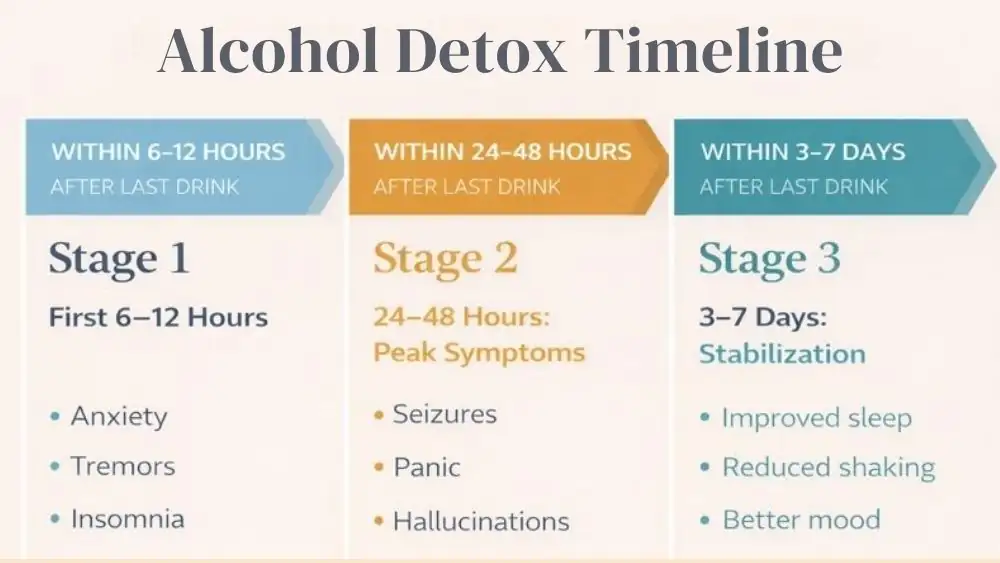
Understanding timing reduces fear and helps you act early. Symptoms follow patterns, but everybody reacts differently. Alcohol detox at home requires close attention during the first days.
First 6–12 Hours After Last Drink
Early symptoms often begin within six hours. Anxiety rises as calming brain chemicals drop. You may sweat, feel shaky, or feel restless. Headache and nausea often appear. Sleep becomes light and broken. These early symptoms of alcohol detox signal that your nervous system is adjusting.
24–48 Hours: Peak Withdrawal Symptoms
This period carries the highest risk. Tremors may worsen and affect arms or legs. Heart rate and blood pressure often rise. Some people feel extreme anxiety or panic.
Hallucinations may occur, meaning you see or hear things that are not real. Seizures often appear during this window. Alcohol detox at home becomes unsafe if symptoms intensify here.
3–7 Days: Stabilization Phase
After two or three days, many symptoms slowly ease. Shaking reduces, and appetite improves. Sleep may still feel poor, but rest becomes easier. Fatigue and mood swings can last several days. Brain chemistry continues to rebalance during this phase. Alcohol detox at home still needs monitoring, even when symptoms seem calmer.
When Symptoms Can Become Life-Threatening
Life-threatening withdrawal includes seizures, high fever, severe confusion, and delirium tremens. Delirium tremens means sudden confusion, agitation, fever, and hallucinations. Untreated delirium tremens can be fatal. These signs mean alcohol detox at home must stop immediately in favor of emergency care.
Signs You Need Medical Help During Alcohol Detox
Knowing warning signs helps you decide when home care is no longer safe.
Seizures, Hallucinations, Confusion
A seizure involves a sudden loss of control and muscle shaking. Hallucinations include hearing voices or seeing objects that are not present. Confusion may involve not knowing the date or location. These signs show severe brain stress. Alcohol detox at home should never continue when these appear.
Severe Vomiting Or Dehydration
Repeated vomiting prevents fluid intake and worsens electrolyte loss. Dehydration raises heart strain and seizure risk. Dark urine and dizziness signal fluid loss. Dehydration worsens withdrawal outcomes.
Uncontrolled Tremors Or High Fever
Tremors that spread to the whole body suggest severe nervous system overactivity. A fever above 101°F shows possible delirium tremens or infection. These symptoms require urgent medical treatment and monitoring.
Natural Ways To Detox From Alcohol At Home
If your screening says you are low risk, you can support your body with natural ways to detox from alcohol while you watch for symptoms closely. These steps do not “treat” withdrawal. They help you stay stable during alcohol detox at home .
Hydration And Electrolyte Balance
Alcohol can lower fluids and minerals, especially if you sweat or vomit. You need steady fluids to protect your heart rhythm and nerves. A simple way is water plus an oral rehydration solution when your stomach allows it. Oral rehydration solutions that contain glucose plus electrolytes, designed to replace losses safely.
Sip slowly if nausea hits, and keep urine pale yellow when possible. If you cannot hold fluids down for hours, treat that as a danger sign. Severe dehydration can push withdrawal into a worse zone.
Sleep And Nervous System Recovery
During alcohol detox at home , your brain loses alcohol’s calming effect. That can cause weird feelings at night. Use basic sleep supports that do not add risk. Keep the room dark, cool, and quiet. Avoid late-day caffeine, since it can raise anxiety and heart rate.
If you wake in panic, sit up and slow your breathing. Tell yourself the feeling will pass. It is your nervous system settling down.
Light Movement And Rest
Your body may feel stiff, shaky, and weak. Short walks and gentle stretching can reduce restlessness. Stop if you feel dizzy or your heart races. Rest still matters more than exercise right now. These natural ways to detox from alcohol work best when you keep the effort light.
Foods To Eat During Alcohol Detox
Withdrawal often comes with low appetite and unstable blood sugar. The right foods to eat during alcohol detox can reduce shakes, mood swings, and nausea. Aim for small meals every few hours.
High-Protein Foods For Brain Recovery
Alcohol use can drain nutrients your brain needs to work well. Protein gives your body building blocks for repair. Choose eggs, yogurt, lentils, beans, chicken, or fish. If chewing feels hard, try soups with shredded protein.
This matters because your brain is rebuilding balance during alcohol detox at home . Protein also helps you feel steady between meals.
Complex Carbohydrates To Stabilize Blood Sugar
Blood sugar swings can mimic anxiety. You may feel sweaty, shaky, and irritable. Choose oats, brown rice, whole wheat toast, sweet potatoes, or bananas. These release energy slowly and reduce crashes.
Pair carbs with protein when you can. That mix helps your body stay calm during alcohol detox at home .
Vitamin- And Mineral-Rich Foods
Heavy drinking is often linked with low thiamine (vitamin B1). Thiamine deficiency can contribute to Wernicke encephalopathy, a serious brain condition. Heavy carbohydrate or glucose loading without thiamine can raise the risk in deficient people.
You should not self-treat with high-dose vitamins. Still, you can eat thiamine-friendly foods like fortified cereals, beans, peas, nuts, and pork. Add leafy greens, citrus, and berries for broader nutrients. These are practical foods to eat during alcohol detox that support recovery.
Alcohol Detox Drink At Home:
Fluids do more than prevent thirst. They help your body manage sweating, vomiting, and faster breathing. Choose each alcohol detox drink at home with your symptoms in mind.
Water And Oral Rehydration Solutions
Water works when symptoms stay mild. If you sweat a lot or vomit, oral rehydration solutions can replace electrolytes more effectively than plain water.
Sip small amounts often, especially if nausea hits. If you have heart or kidney disease, ask a clinician about electrolyte drinks, since extra salt may not be suitable for you.
Herbal Teas And Safe Fluids
Warm liquids can settle the stomach. Ginger tea may help with nausea for some people. Chamomile tea may help you relax at night. Broths also help because they add salt and fluid together. Keep sugar moderate. Big sugar spikes can worsen jitters during alcohol detox at home .
Drinks To Avoid During Detox
Avoid alcohol, even small amounts, during alcohol detox at home . It can restart the cycle and delay safe recovery. Avoid energy drinks and strong coffee if you feel anxious. Avoid “detox” drinks that promise quick cleansing. Your liver already does the clearing work.
Home Remedies For Alcohol Detox:
During withdrawal, shortcuts can be risky. Use home remedies for alcohol detox only as comfort supports, not as treatment.
Supplements Commonly Suggested
People often mention B vitamins, magnesium, and electrolyte powders. These can sound harmless, but they can still clash with medicines or health conditions. Doctors usually decide what fits based on your labs and symptoms. If you want supplements during alcohol detox at home , ask a clinician first.
What Lacks Scientific Support
Charcoal cleanses, extreme fasting, and “liver flush” products lack strong proof for withdrawal support. Some approaches may worsen dehydration or nausea. If a method makes you poop or sweat more, it can increase fluid loss.
Risks Of Unproven Remedies
Unproven methods can delay real care while symptoms worsen. That delay matters because severe withdrawal can escalate fast. Withdrawal is unpredictable and sometimes dangerous.
If a remedy pushes you to ignore warning signs, drop it. Safe home remedies for alcohol detox should never replace medical help.
Managing Cravings And Anxiety During Detox
Cravings can hit like a wave. Anxiety can feel loud and physical. Both are common during alcohol detox at home .
Coping Strategies For Urges
Use the “delay and do” method. Delay the urge for ten minutes, then do one action. Drink water, eat a snack, take a shower, or step outside. Urges often peak and fade if you ride them out.
Breathing And Grounding Techniques
Try breathing in for four counts and out for six counts. Longer exhales cue your body to slow down. For grounding, name five things you see, four you feel, and three you hear. This pulls your mind out of panic.
Avoiding Relapse Triggers At Home
Remove alcohol from the house before alcohol detox at home starts. Avoid people who pressure you to drink. Keep evenings structured, since boredom can trigger urges. Plan simple distractions like cooking, cleaning, or calling a safe friend.
What Happens After Alcohol Detox At Home
Getting through withdrawal is a big step, but it is not the full fix. Alcohol detox at home clears alcohol from your body. It does not remove the reasons you drank.
Why Detox Alone Is Not Treatment
Addiction changes habits and reward pathways in the brain. If you stop at detox, old triggers can pull you back fast. Treatment builds skills, support, and structure.
Risk Of Relapse Without Follow-Up Care
Relapse risk stays high in the weeks after withdrawal. Sleep issues, stress, and cravings can return suddenly. This is why follow-up matters after alcohol detox at home .
Importance Of Counseling Or Rehab
Counseling helps you handle stress without drinking. Rehab offers routines and medical support if you need it. Many people also use support groups for ongoing accountability. Pick the level of care that matches your risk and your home situation.
FAQs
Is Alcohol Detox At Home Safe For Everyone?
No, alcohol detox at home is not safe for everyone, even if you feel strong. Safety depends on your history, health conditions, and past withdrawals. A clinician can help you judge risk before you start.
Who Should Never Attempt Alcohol Detox At Home?
You should avoid alcohol detox at home if you have had seizures, delirium tremens, or hallucinations before. You should also avoid it if you are pregnant or have serious heart disease or severe liver disease. These risks can turn urgent quickly.
How Can I Tell If My Withdrawal Symptoms Are Mild Or Severe?
Mild signs include sweating, anxiety, mild shaking, and poor sleep. Severe signs include confusion, hallucinations, and seizures. If your symptoms of alcohol detox keep rising after a day, treat that as high risk.
What Are The Early Signs Of Dangerous Alcohol Withdrawal?
Early danger signs include confusion, seeing things that are not there, and shaking that spreads through your body. A fast heartbeat with chest pain also matters. If these start during alcohol detox at home , you need urgent evaluation.
How Long Does Alcohol Withdrawal Last When Detoxing At Home?
Many people feel the worst symptoms for two to three days. Some symptoms fade over three to seven days, especially sleep and mood problems. Your timeline can vary based on drinking history and health.
When Do Alcohol Withdrawal Symptoms Usually Peak?
Symptoms often peak around 24 to 48 hours after the last drink. This is when seizures can occur for higher-risk people. If symptoms spike in this window, alcohol detox at home may not be safe.
Can Alcohol Detox At Home Cause Seizures Or Hallucinations?
Yes, seizures and hallucinations can happen, especially after long-term heavy drinking. These are medical emergencies, not “normal detox pain.” If they appear, stop alcohol detox at home and get emergency help.
What Are Delirium Tremens (DTs), and When Do They Occur?
Delirium tremens means severe confusion, agitation, fever, and hallucinations. It often occurs a couple of days after stopping, but timing can vary. DTs can be fatal without treatment, so urgent care is essential.
Is It Better To Taper Alcohol or Stop Drinking Suddenly?
For heavy daily drinking, doctors often use supervised plans to reduce complications. Sudden stopping can raise seizure risk in some people. A clinician can tell you whether tapering or monitored stopping fits you.
Can Dehydration Make Alcohol Withdrawal Worse?
Yes, dehydration can worsen weakness, dizziness, and heart strain. It can also make nausea and cramps feel stronger. Use alcohol detox drink at-home options like water and ORS when needed, and eat foods to eat during alcohol detox that support steady recovery.
About The Author

Medically reviewed by Dr. Nivedita Pandey, MD, DM (Gastroenterology)
Dr. Nivedita Pandey is a U.S.-trained gastroenterologist and hepatologist with extensive experience in diagnosing and treating liver diseases and gastrointestinal disorders. She specializes in liver enzyme abnormalities, fatty liver disease, hepatitis, cirrhosis, and digestive health.
All content is reviewed for medical accuracy and aligned with current clinical guidelines.