Acid reflux happens when stomach contents move upward into the food pipe because the lower esophageal sphincter, the muscle gate between the stomach and throat, does not stay tightly closed.
The worst foods for acid reflux affect this muscle gate and stomach pressure. High-fat foods relax the valve and slow digestion, so food stays longer in the stomach and pushes acid upward. Fried meals, fatty meats, and full-fat dairy are common examples.
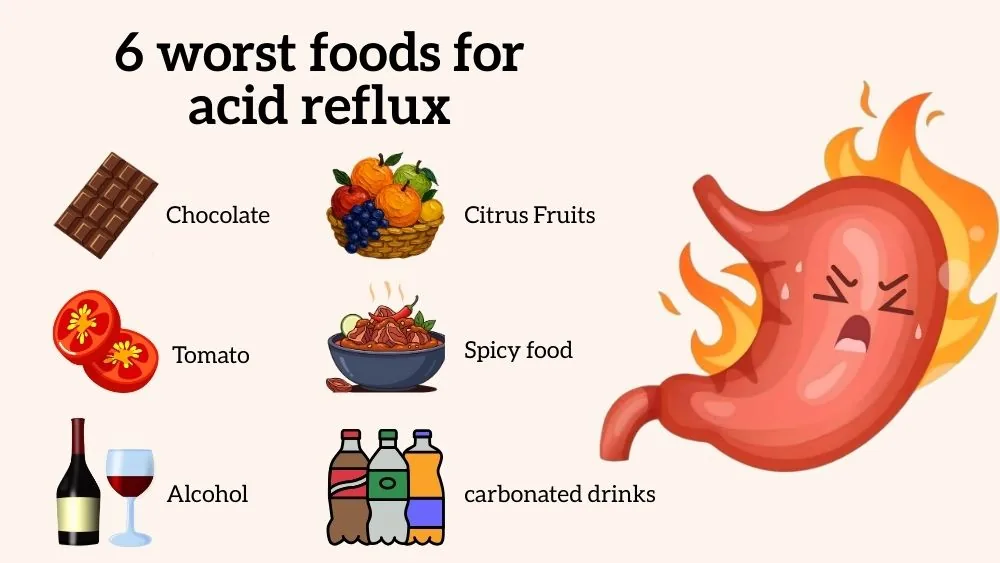
Acidic foods like tomatoes and citrus do not always cause reflux on their own, but they can irritate the esophagus when reflux occurs, making symptoms feel sharper. Chocolate and peppermint weaken the valve, while caffeine and alcohol further increase backflow risk by loosening the muscle and irritating the stomach lining. Large portions and late meals turn even mild foods into reflux triggers because a stretched stomach creates pressure.
Foods That Trigger Acid Reflux
Many of the worst foods for acid reflux act in two ways. They weaken the LES and slow stomach emptying (how fast food leaves your stomach). A fuller stomach raises pressure, and pressure makes reflux easier.
Why Certain Foods Relax The Lower Esophageal Sphincter
The LES is a muscle ring at the bottom of your food pipe. It should close after you swallow. When it relaxes too much, acid can flow up.
Fatty foods can relax the LES. Chocolate and peppermint can also relax it. Alcohol can do the same. That is why these items often rank as the worst foods for acid reflux .
Some details matter. “Mint” does not mean every herb. Peppermint is a common problem. If a “mint” gum uses peppermint oil, you may notice burning soon after. If you use spearmint, you might react differently, so track it.
How Meal Size And Food Timing Worsen Reflux
A big meal stretches your stomach and this raises pressure. Pressure can push acid upward.
Timing can be a bigger issue than the food. Eating meals at least 3 hours before you lie down or go to bed may improve night symptoms. So even a “safe” dinner can act like the worst foods for acid reflux if you eat it late.
Also watch “stacking.” You might eat a large dinner, then add dessert. Dessert often brings fat, chocolate, or mint. This can turn one meal into a full reflux trigger set.
Individual Food Sensitivity Vs Universal Triggers
Some triggers show up in many people. Fatty meals, alcohol, and late eating are common. Still, your triggers can be different.
ACG notes that some foods trigger reflux, while others mainly irritate an already sore esophagus (food pipe). For example, fats and caffeinated drinks can trigger reflux. Citrus juice and tomato juice may irritate the damaged lining. This explains why you might feel burning from orange juice even when reflux is mild
This is also why a strict “never eat this again” list can fail. The AGA recommends tailoring food changes to your own situation. You can test foods in small amounts, earlier in the day, and with smaller portions.
Acid Reflux Causing Foods
Many worst foods for acid reflux either raise stomach pressure, irritate the throat, or loosen the LES. Sometimes they do all three.
Acidic Foods And Increased Stomach Acid Production
Acidic foods can sting when reflux happens. Citrus fruits and tomato products are common examples. Acidic foods like citrus and tomatoes are commonly linked with GERD symptoms .
Acidic foods do not always “create more acid” in your stomach. Your stomach already makes strong acid. The bigger issue is that acidic foods can irritate the lining when reflux happens. This is why they can feel worse during flare-ups.
Citrus and tomato juice may irritate the damaged lining. So, during a bad week, citrus and tomato can become acid reflux-causing foods even if you once handled them.
Carbonated Drinks And Gastric Pressure
Carbonated drinks often cause burping and bloating. That can raise pressure in your stomach. Pressure can push reflux upward.
A 2010 systematic review found no direct evidence that carbonated beverages promote or worsen GERD, based on available studies. That means the research is limited. It does not mean bubbles never bother you. It means studies did not prove a clear cause.
Other papers note weak links in surveys and possible short-term changes in LES pressure. So if soda triggers your symptoms, trust your body. But it is fair to say the evidence is not strong.
Caffeine And Reflux Symptom Worsening
Coffee and other caffeine sources show up in GERD advice lists. Caffeine may relax the LES in some people. Coffee can also irritate the stomach in some people. But not everyone reacts the same way.
If you only get symptoms with coffee on an empty stomach, that is a useful clue. Pairing coffee with food and reducing its strength can sometimes help. If caffeine consistently leads to a burning or a sour taste, treat it as one of your worst foods for acid reflux and adjust.
Heartburn Trigger Foods
Heartburn is the burning feeling from reflux irritation. Many of the worst foods for acid reflux also act as foods that trigger heartburn because they weaken the LES or irritate the lining.
Chocolate And Peppermint Effects On Reflux
Chocolate can relax the LES. It also contains fat. Fat slows stomach emptying. That mix raises reflux risk. Peppermint can also relax the LES. This can surprise you because mint feels “soothing.” It can soothe nausea for some people, yet worsen reflux in others.
If you crave sweets, chocolate after a large dinner is more likely to cause symptoms. Small amounts earlier in the day may be easier.
Citrus Fruits And Tomato-Based Products
Citrus and tomato-based foods are common troublemakers. Acidic foods such as citrus and tomatoes are commonly linked with symptoms.
Tomato triggers are often stronger when the tomato comes with fat. And if you have pizza, creamy pasta sauce, or cheesy lasagna, now you have acid plus fat. This combination often lands high on the worst foods for acid reflux list.
Onions And Garlic As Common Heartburn Triggers
Onions and garlic are common complaints, especially when raw. They can increase gas in some people. Gas raises pressure. Pressure can push reflux upward.
Your reaction may depend on portion size, raw vs cooked, and what else you ate. If you notice reflux after raw onion in salads but not after cooked onion in soup, that pattern is useful.
Treat onions and garlic as possible acid reflux-causing foods for you, not guaranteed triggers for everyone.
Fatty Foods And Acid Reflux
Fat is a major driver of reflux for many people. Fatty or greasy foods are common triggers. For many people, fatty meals are the worst foods for acid reflux .
Fried Foods And Delayed Stomach Emptying
Fried foods are high in fat. Fat slows stomach emptying. A slower stomach keeps food inside longer. This raises pressure and makes reflux easier.
Fried foods also encourage overeating. It is easy to eat a big portion of fries. That portion size adds more pressure. So, fried meals can create reflux through two routes.
High-Fat Meats And Full-Fat Dairy
High-fat meats like sausage, bacon, and fatty beef can trigger symptoms. Full-fat dairy can also be an issue for some people. It is not only “dairy.” It is the fat load.
If you want to test this, compare two meals. Try a lean protein meal one day. Try a fatty meat meal another day. Keep the portion similar. If symptoms rise with the fatty meal, fat is likely your key trigger. That helps you cut the worst foods for acid reflux without guessing.
How Fatty Foods Increase Nighttime Reflux
Night reflux feels worse because you lie flat. Late-night eating is a factor that can aggravate reflux. Eating at least 3 hours before bed can improve night symptoms.
Fatty foods make nighttime worse because they stay in your stomach longer. A heavy, fatty dinner can still be “sitting there” when you lie down. That is why fatty dinners often become the worst foods for acid reflux at night.
If your reflux wakes you up, cut fried or high-fat dinners, and move dinner earlier. Those two steps often beat small ingredient changes.
Spicy Foods Acid Reflux
Spicy food can feel like a quick spark in your chest. For some people, it also brings a slow burn that lasts. During sensitive weeks, spicy meals can turn into the worst foods for acid reflux because they irritate the esophagus and make symptoms feel louder.
Capsaicin And Esophageal Irritation
Capsaicin is the chemical that makes chili peppers hot. Your food pipe has nerves that react to it. In a study where researchers exposed the esophagus to capsaicin, people with GERD reported a stronger heartburn sensation, and the body triggered extra clearing waves to push material down. That finding helps you understand why spicy meals can sting even when the meal is not “acidic.”
Still, spicy food does not harm everyone. Research on spicy foods and reflux shows mixed results, and some studies call for better long-term studies. So if you tolerate spice well, you do not need to fear it. If spice reliably triggers symptoms, it belongs with your worst foods for acid reflux .
Spicy Sauces And Chili-Based Dishes
Spicy sauces often cause more trouble than whole peppers. Many sauces mix heat with tomato, vinegar, garlic, and oil. Now you stack multiple triggers in one bite. That stack can make reflux feel intense and fast.
Chili-based dishes also tend to be heavy. They often include fatty meat, onions, and large portions. When you eat a big bowl, stomach pressure rises. That pressure helps reflux happen. Over time, you may notice these are not only spicy foods. They become the worst foods for acid reflux because of how many triggers they combine.
Why Spicy Foods Affect People Differently
Your symptoms depend on your nerves, your meal size, and your current irritation level. If your food pipe already feels sore, spice can sting more. If you eat spicy food late, you lose gravity’s help. So you do best when you test spice in small amounts and watch patterns.
Worst Foods To Eat At Night For Acid Reflux
Nighttime reflux feels worse because you lie flat. Acid can sit longer in your food pipe. This is why the timing of the worst foods for acid reflux matters as much as the food itself.
Late-Night Eating And Reflux Risk
Late meals raise your risk because your stomach stays full when you lie down. Eat meals at least about three hours before you lie down or go to bed to help relieve symptoms. That single habit change can reduce nighttime burning more than you expect.
Late-night snacks also matter. A small snack may seem harmless, but if it includes fat, chocolate, mint, or spice, it can act like the worst foods for acid reflux right before sleep.
Alcohol And Bedtime Heartburn
Alcohol can relax the LES, so acid moves up more easily. Alcohol also often comes with other triggers, like fried bar foods or citrus mixers.
If you drink close to bedtime, a looser LES and lying down soon after. For many people, alcohol becomes one of the worst foods for acid reflux at night, even if daytime drinking causes fewer symptoms.
Heavy Dinners And Lying Down Too Soon
A heavy dinner increases stomach pressure. If the meal also has fat, it stays in your stomach longer. If you often wake with burning, reduce dinner size first. Then move dinner earlier. These changes often beat minor ingredient swaps.
What To Eat Instead Of Acid Reflux Trigger Foods
Avoiding the worst foods for acid reflux should not leave you stuck with bland meals. You can build meals that feel normal and still calm your symptoms.
Low-Acid Fruits And Vegetables
If citrus hurts, choose fruit that tends to feel gentler, like bananas, melons, and pears. Many people tolerate these better than oranges. If tomatoes trigger you, try sauces that skip tomato, such as a light olive oil base, or a mild yogurt-based sauce if you tolerate dairy.
Cooked vegetables often feel easier than raw ones when your throat feels sore. Roasted carrots, steamed green beans, and cooked spinach can feel calming. When you reduce irritation, you also reduce how often foods feel like the worst foods for acid reflux .
Lean Proteins And Reflux-Friendly Carbs
Lean proteins usually sit lighter. Choose grilled chicken, turkey, fish, eggs, tofu, or beans in smaller portions. If beans cause gas for you, test smaller servings, since gas pressure can worsen reflux.
For carbs, oatmeal, rice, potatoes, and plain bread often work well. These foods can make you feel full without heavy fat. That helps you avoid the “too full” pressure that turns normal meals into acid reflux-causing foods for your body.
Cooking Methods That Reduce Reflux Symptoms
Cooking method changes can matter as much as ingredient changes. Baking, grilling, steaming, and boiling keep meals lighter than frying. They also reduce greasy leftovers in your stomach.
Sauces matter too. A creamy sauce adds fat. A spicy sauce adds heat. A tomato sauce adds acid. If you keep sauces simple, you lower your trigger load. This approach helps you avoid the classic foods that trigger acid reflux without feeling like you’re eating “diet food.”
FAQs
Are Bananas Good Or Bad For Acid Reflux?
Bananas often feel helpful because they are low-acid. Many people use them during flare-ups. If you tolerate them, bananas can replace citrus, which often ranks among the worst foods for acid reflux .
Is Coffee Worse Than Tea For Reflux?
Coffee triggers symptoms for many people, but tea can also trigger symptoms if it contains caffeine. You can test smaller amounts and drink it with food. If caffeine worsens symptoms, it fits the foods that trigger the heartburn pattern found in many GERD guides.
Can Spicy Food Permanently Damage The Esophagus?
Spicy food usually does not cause lasting damage by itself. The bigger risk comes from repeated acid exposure. If reflux happens often, your food pipe can become inflamed and sensitive. If you have trouble swallowing or frequent chest burning, talk with a clinician. Spicy meals may still act like the worst foods for acid reflux during inflammation.
Are Fatty Foods Worse Than Acidic Foods?
Fatty foods often trigger reflux by slowing stomach emptying and relaxing the LES. Acidic foods often sting more when reflux happens. Many people find that fat causes more episodes, while acid makes episodes feel sharper. Your best move is to track which items act as your worst foods for acid reflux .
What Is The Safest Diet For Chronic Acid Reflux?
The safest pattern usually means smaller meals, earlier dinners, lower-fat cooking, and fewer known triggers. Common trigger categories such as high-fat foods, mint, chocolate, caffeine, alcohol, spicy foods, tomatoes, and citrus. You then adjust based on your own response and diary notes.
Can Changing Diet Alone Control GERD?
Diet changes help many people, especially meal timing and fat reduction. Lifestyle steps like trigger avoidance and head-of-bed elevation for nighttime symptoms, but it also notes that trigger evidence is limited and personal. Some people still need medicine or testing. So diet can control symptoms, but it does not replace medical care for everyone.
What Foods Should I Avoid During Acid Reflux Flare-Ups?
During flare-ups, you usually avoid the main worst foods for acid reflux : fried and fatty meals, chocolate, mint, alcohol, spicy foods, tomatoes, citrus, and caffeinated drinks. You also avoid large late meals, since timing can turn mild foods into foods that trigger acid reflux .
About The Author

Medically reviewed by Dr. Nivedita Pandey, MD, DM (Gastroenterology)
Dr. Nivedita Pandey is a U.S.-trained gastroenterologist and hepatologist with extensive experience in diagnosing and treating liver diseases and gastrointestinal disorders. She specializes in liver enzyme abnormalities, fatty liver disease, hepatitis, cirrhosis, and digestive health.
All content is reviewed for medical accuracy and aligned with current clinical guidelines.