Cortisol is a hormone your body makes when it needs quick energy. It helps you wake up in the morning, raise blood sugar when you need fuel, and respond to danger. Cortisol also helps control inflammation and support short bursts of focus and strength.
When cortisol works normally, it keeps you alert and able to handle stress. When cortisol stays high for long periods, you may feel anxious, sleep poorly, gain belly weight, and have low energy. Only a clinician can test if your cortisol is abnormally high.
The cortisol detox diet is a food and habit plan that helps you keep cortisol in a healthy range. It focuses on steady meals that pair protein, fiber, and healthy fat. It adds calming foods such as leafy greens, berries, fermented foods, and green tea.
Evidence supports lifestyle combinations more than any single food, so treat diet as one important part of a broader plan.
What Is the Cortisol Detox Diet?
The cortisol detox diet is a practical eating pattern that focuses on whole foods, balanced meals, and avoiding items that spike blood sugar and inflammation. You choose lean protein, whole grains, healthy fats, vegetables, and fermented foods. You also limit added sugars, processed snacks, and excess stimulants. The goal is steady energy and fewer cortisol spikes across the day.
How cortisol works in the body
Cortisol is a hormone your adrenal glands release when the brain senses stress. It raises blood sugar, supports quick energy, and alters mood and immune signals. Short bursts help you react to danger.
Long, repeated elevation harms sleep, weight control, immunity, and mood. Medical sources show cortisol’s central role in stress and metabolism. If cortisol stays very high, conditions such as Cushing’s syndrome can develop and need medical care.
Signs of high cortisol levels
You should ask a clinician if you notice persistent signs: belly weight gain, trouble sleeping, feeling wired and tired at once, frequent sugar cravings, low exercise recovery, or changes in skin and mood. These signs can be vague. Only a doctor can confirm abnormal cortisol with tests and rule out medical causes, so do not self-diagnose.
How diet influences cortisol regulation
Food affects blood sugar, inflammation, and gut health. That in turn influences how often your body releases cortisol. Meals with protein, fiber, and healthy fats slow sugar rises and reduce stress triggers. Early research links anti-inflammatory eating and omega-3 fats to better stress markers, but evidence can be limited and varies by study. Use diet as one part of a broader plan.
Foods That Reduce Cortisol
Use these foods that reduce cortisol often. They support calm, steady energy and better recovery.
Dark chocolate (polyphenols for stress reduction)
Small amounts of dark chocolate (high cocoa, low sugar) provide polyphenols and magnesium that can lower stress responses after an acute challenge. Keep portions small and avoid added sugar.
Fermented foods (gut-brain axis benefits)
Yogurt, kefir, kimchi, and sauerkraut feed beneficial gut bacteria. A healthier gut can help mood and stress responses through the gut-brain axis. Add one serving daily if tolerated.
Avocados & healthy fats
Avocado, nuts, and olive oil give healthy fats that slow digestion and support brain function. These fats help you avoid sharp sugar spikes that can provoke cortisol.
Bananas & potassium support
Bananas provide potassium and B vitamins that support nerve and muscle function. A banana with a protein snack is a quick, steady choice.
Leafy greens (magnesium-rich foods)
Spinach, kale, and Swiss chard supply magnesium, which supports muscle relaxation and nervous system balance. Regular leafy greens help lower daily stress load.
Berries (antioxidant-rich)
Blueberries, strawberries, and raspberries are rich in antioxidants that reduce inflammation and aid recovery after stress.
Green tea (L-theanine for calmness)
Green tea contains L-theanine, which promotes calm focus and has been shown to reduce salivary cortisol in short studies. Swap one coffee for green tea occasionally.
Turkey, chicken & lean proteins
Foods such as turkey, chicken, fish, and eggs supply amino acids needed to make neurotransmitters that calm the brain. A protein-rich breakfast can blunt morning cortisol spikes.
Eggs & high-protein cortisol regulators
Eggs are a simple, high-quality protein source that helps stabilize morning blood sugar and reduce early cortisol surges for many people.
Foods that stabilize blood sugar (oats, quinoa, legumes)
Oats, quinoa, beans, and lentils give fiber and slow-release energy. Including these foods that reduce cortisol prevents sugar crashes that raise stress hormones.
Natural Ways to Reduce Cortisol
Food helps, but you must pair it with habits. These natural ways to reduce cortisol produce consistent results over time.
Sleep optimization and circadian rhythm balance
Aim for regular sleep times and good sleep hygiene. Consistent sleep is one of the clearest ways to lower baseline cortisol and support recovery. Clinical guidance emphasizes sleep as central to hormone balance.
Stress-management breathing techniques
Two to five minutes of slow, deep breathing lowers heart rate and cortisol quickly. Use this tool when you feel overwhelmed and as a daily practice.
Exercise: moderate movement vs. high-intensity stress
Do moderate exercise most days. Intense sessions increase cortisol short term but may help long-term if you recover well. Balance intense workouts with walking, yoga, or gentle cycling.
Diet To Lower Cortisol
A cortisol detox diet focuses on whole foods that lower inflammation and steady blood sugar. You eat lean protein, healthy fats, fiber, and fermented foods. You avoid added sugar, processed snacks, and excess alcohol. These choices reduce repeated cortisol spikes and support sleep. Trials and clinical reviews link Mediterranean-style eating and omega-3 intake to improved stress markers.
Anti-Inflammatory Eating Pattern
Choose vegetables, fruits, legumes, nuts, fish, and olive oil. These foods lower inflammation. Lower inflammation eases stress on the body. Make plant foods the base of most meals. Clinical guidance highlights anti-inflammatory diets for mental health support.
High-Fiber Meal Structure For Hormone Balance
Fiber from oats, beans, and whole grains slows sugar entry to the blood. This reduces cortisol triggers after meals. Pair fiber with protein and healthy fats at each meal for steady energy.
Low-Glycemic Foods To Stabilize Cortisol Rhythms
Low-glycemic carbs keep blood sugar steady. Sweet potato, quinoa, and legumes fit well. These foods help flatten cortisol spikes after eating.
Blood-Sugar-Balanced Meals (Protein + Fat + Complex Carbs)
Every meal should include a protein, a healthy fat, and a complex carb. For example, grilled fish, brown rice, and steamed greens. This pattern supports a steady cortisol rhythm across the day.
Foods To Avoid: Alcohol, Refined Sugar, Processed Foods
Alcohol and sugary snacks harm sleep and raise inflammation. Processed foods often contain hidden sugars. Reducing them helps your cortisol detox diet work.
Sample Anti-Stress Meal Plan (Breakfast, Lunch, Dinner)
- Breakfast: Oatmeal, berries, and a boiled egg.
- Lunch: Spinach salad with quinoa and grilled chicken.
- Dinner: Baked salmon, broccoli, and sweet potato.
- Snacks: Yogurt with walnuts; banana and nut butter. These ideas fit a diet to lower cortisol and support recovery.
Anti-Stress Diet For Cortisol
An anti-stress diet for cortisol combines comforting meals with nutrient density. Warm soups, porridges, and stews help digestion and calm you. Add fermented foods for gut support.
Avoid emotional eating by planning snacks that pair protein with fiber. Meal timing matters; eat breakfast soon after waking and avoid heavy late dinners to align with your cortisol curve. Combine food with sleep and stress tools for the best results.
Adaptogenic Herbs In Food Form
Some herbs, like ashwagandha and rhodiola, show promise in trials for lowering stress markers. Evidence is limited and mixed. Discuss adaptogens with your clinician before use. Do not assume they suit everyone.
Warm, Grounding Meals That Reduce The Stress Response
Warm, easy-to-digest meals calm the nervous system. Try vegetable soup with lentils and a side of fermented yogurt. This supports digestion and rest.
Comfort Foods Vs “Calming Foods” — Key Differences
Comfort foods give fast pleasure but cause a crash later. Calming foods give steady energy and better mood regulation. Choose the latter for long-term stress control.
Emotional Eating Triggers During Cortisol Spikes
Cortisol can prompt sugar cravings. Prepare protein-rich snacks to avoid impulsive choices. Planning lowers stress-driven overeating.
Meal Timing For Optimal Cortisol Curve
Eat a balanced breakfast, a steady lunch, and a moderate dinner. Avoid late-night heavy meals. This pattern helps normalize cortisol rhythms.
Anti-Stress Snacks Backed By Research
Good options include Greek yogurt with berries, apple slices with almond butter, and hummus with carrot sticks. Pair carbs with protein.
Supplements To Reduce Cortisol
Supplements can help when paired with diet and sleep. They do not replace core habits. Talk with a clinician before starting any supplement.
Ashwagandha (Scientific Evidence, Dosage, Safety)
Ashwagandha shows cortisol-lowering effects in randomized trials. Effects vary by formulation and study. Dosage varies by age and condition. Pregnant people and those on certain medicines should avoid it or consult a clinician.
Magnesium Glycinate (Impact On Nervous System)
Magnesium supports sleep and a calm nervous system. Glycinate is often well tolerated. Evidence links magnesium status to sleep quality and stress resilience. Do not self-prescribe high doses.
Omega-3 Fatty Acids (EPA/DHA Benefits)
Omega-3s reduce inflammation and support stress response. Trials suggest improved cortisol profiles with supplementation over months. Include fatty fish or consider a supplement after a clinician’s advice.
L-Theanine (Calming Amino Acid)
L-theanine in green tea promotes relaxation and lowers salivary cortisol in short studies. Green tea is a safe food source. Supplements offer higher, studied doses.
Rhodiola (Adaptogen For Stress Resilience)
Rhodiola may help with fatigue and stress tolerance. Evidence is mixed. Use caution with prescriptions and medical conditions.
Vitamin C & B Vitamins For Adrenal Support
Vitamin C and B vitamins support energy and recovery. They help when diet lacks these nutrients. Prefer food sources where possible.
Safety Considerations & Who Should Avoid Supplements
Pregnant or breastfeeding people and those with autoimmune disease or thyroid issues, or on multiple medications, should consult a clinician. Supplements can interact with drugs and cause side effects.
Cortisol Detox Diet Meal Ideas
Breakfasts for Lowering Morning Cortisol
Start with protein to blunt morning cortisol spikes. A boiled egg or Greek yogurt keeps blood sugar steady. Add whole grains like oats for slow energy. Include berries or spinach for antioxidants and magnesium.
Stress-Reducing Lunch Bowls
Build bowls with leafy greens, a lean protein, and a fiber grain. Add fermented food such as yogurt or kimchi for gut support. Use olive oil or avocado for healthy fats. A vinegar-based dressing can help slow glucose absorption.
Dinner Meals That Promote Relaxation
Choose warm, easy-to-digest foods in the evening. Try baked fish, steamed vegetables, and sweet potato. Avoid heavy, fried meals that disrupt sleep. Finish eating two to three hours before bed.
Snacks to Regulate Cortisol Throughout the Day
Pair carbs with protein to avoid sugar crashes. Examples are apple slices with peanut butter and hummus with carrot sticks. Include a small handful of nuts for magnesium. Keep portions controlled to prevent late-day energy surges.
Best Beverages for Cortisol Balance
Drink water first to support basic cell function. Swap one coffee for green tea to gain L-theanine’s calming effect. Herbal teas such as chamomile help with evening relaxation. Avoid sugary drinks and limit alcohol.
Benefits of a Cortisol Detox Diet
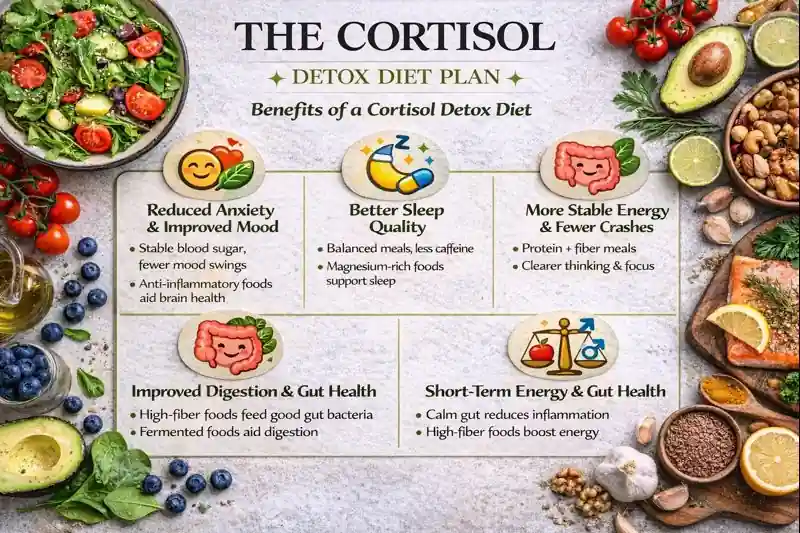
Reduced Anxiety and Improved Mood
A steady blood sugar pattern lowers mood swings and panic triggers. Anti-inflammatory foods reduce brain inflammation linked to anxiety. Fermented foods and omega-3s support neurotransmitter balance. Combined habits make your daily mood more stable.
Better Sleep Quality
Balanced evening meals and less caffeine help you fall asleep faster. Foods with magnesium and tryptophan support relaxation. Regular meal timing helps your circadian rhythm. Better sleep reduces overnight cortisol production.
More Stable Energy and Fewer Crashes
Meals that combine protein, fat, and fiber release energy slowly. This prevents midday slumps and late-night cravings. You get clearer thinking and steadier work output. Consistent eating times amplify this effect.
Improved Digestion and Gut Health
High-fiber foods feed beneficial gut bacteria. Fermented foods add live cultures that support digestion. A healthy gut reduces systemic inflammation tied to stress. Better digestion supports nutrient absorption and mood.
Hormone Balance & Improved Metabolic Health
Stable blood sugar reduces insulin swings that affect hormones. Healthy fats and fiber help maintain a healthy weight. Lower inflammation supports normal hormone signaling. Over time, metabolic markers often improve.
Risks & Drawbacks
Over-Restriction Leading to Fatigue
Cutting too many calories lowers energy and raises stress. You may feel tired and irritable. Make changes slowly and keep adequate calories. If you feel weak, seek professional advice.
Possible Nutrient Deficiencies
Removing entire food groups risks missing vitamins and minerals. For example, strict avoidance of dairy can reduce calcium intake. Use a varied plate to cover essential nutrients. Consider testing or dietitian guidance if needed.
When the Cortisol Detox Diet Is Not Recommended
If you have an eating disorder, this diet may harm recovery. People with endocrine disorders need tailored medical care. Children and frail older adults require special plans. Always talk to your clinician before major changes.
People at Higher Risk: Pregnant, with Chronic Illness, and Athletes
Pregnant people need more calories and different nutrient targets. Chronic illness may alter how you process food and stress. Athletes need extra calories and tailored timing for performance. Get personalized advice in these cases.
FAQ
How Long Does It Take for a Cortisol Detox Diet to Work?
You may notice small changes in days and clearer shifts in weeks. Consistent sleep and stress tools speed results. For measurable hormone changes, expect weeks to months. Individual results vary based on health and habits.
What Foods Instantly Reduce Cortisol?
Green tea, a small portion of dark chocolate, and a protein snack can lower acute stress. These items act quickly by calming the nervous system. Effects are temporary and best used alongside habits. Do not expect a cure from one snack.
Can I Lower Cortisol Without Supplements?
Yes. Sleep, balanced meals, breathing exercises, and regular movement lower cortisol effectively. Supplements can help but are not required. Focus on a consistent lifestyle change first.
Does Caffeine Increase Cortisol?
Caffeine can raise cortisol, especially in people who are sensitive. Regular users may develop partial tolerance. If you feel anxious, reduce intake. Try green tea instead for gentler stimulation.
Does Fasting Raise or Lower Cortisol?
Fasting may raise cortisol in some people due to perceived stress. Others adapt and show no adverse effect. Monitor how you feel and adjust. If fasting increases anxiety or sleep problems, stop.
Is the Cortisol Detox Diet Safe Long-Term?
A balanced, whole-food approach is safe for most people long-term. Avoid extreme restriction and ensure varied nutrients. Check with a clinician for chronic conditions. Tailor the plan to your life and needs.
What Is the Best Time of Day to Eat for Cortisol Balance?
Eat breakfast within one to two hours of waking. Have a balanced lunch mid-day and a lighter dinner earlier in the evening. Regular timing supports your circadian rhythm. Avoid late heavy meals.
Can Exercise Spike Cortisol Temporarily?
Yes. Intense exercise raises cortisol in the short term. Moderate, regular activity lowers baseline stress over time. Balance intensity with recovery and rest days. Choose what fits your fitness and stress levels.
About The Author

Medically reviewed by Dr. Nivedita Pandey, MD, DM (Gastroenterology)
Dr. Nivedita Pandey is a U.S.-trained gastroenterologist and hepatologist with extensive experience in diagnosing and treating liver diseases and gastrointestinal disorders. She specializes in liver enzyme abnormalities, fatty liver disease, hepatitis, cirrhosis, and digestive health.
All content is reviewed for medical accuracy and aligned with current clinical guidelines.