Role of pancreas in digestion is central to how your body turns food into usable energy. The pancreas releases digestive enzymes and alkaline fluid that break fats, proteins, and carbohydrates into absorbable units inside the small intestine. It also neutralizes strong stomach acid, which protects the gut lining and allows enzymes to work properly.
When this process runs smoothly, nutrients enter the bloodstream efficiently and support growth, repair, and energy. If pancreatic function drops, digestion weakens first, long before other symptoms appear.
Function of Pancreas in Digestion
The role of pancreas in digestion depends on its ability to release enzymes only when food enters the small intestine. This timing prevents damage to body tissues and ensures food breaks down into absorbable nutrients instead of passing unused.
Exocrine Function of the Pancreas
The pancreas has two roles. One controls blood sugar. The other supports digestion. The digestive role is called the exocrine function. In this role, the pancreas releases enzymes through a small duct into the duodenum, which is the first part of the small intestine. This step defines the role of pancreas in digestion at a basic level.
If enzyme release slows, food breakdown becomes incomplete. You may feel full, bloated, or weak after meals.
Digestive Enzymes Produced by the Pancreas
The pancreas makes three main enzyme groups.
- Amylase breaks starch into simple sugars
- Lipase breaks fat into fatty acids
- Proteases break protein into amino acids
Each enzyme works at a specific pH level. That balance explains the function of pancreas in digestion in real terms. Enzymes must arrive at the right time and in the right amount.
Role of Pancreatic Juice in Digestion
Pancreatic juice carries enzymes and bicarbonate. Bicarbonate reduces stomach acid. This step prevents damage to the intestine lining. It also helps enzymes work well. The role of pancreas in digestion includes acid control, not just enzyme release.
Too much acid can block enzyme action. That can cause burning pain or loose stools.
How The Pancreas Helps Digest Fats, Proteins, And Carbohydrates
Fats need lipase to break down. Proteins need proteases. Carbohydrates need amylase. Without these enzymes, food stays large and unusable. The role of pancreas in digestion ensures nutrients become small enough to enter your bloodstream.
Where Is The Pancreas Located
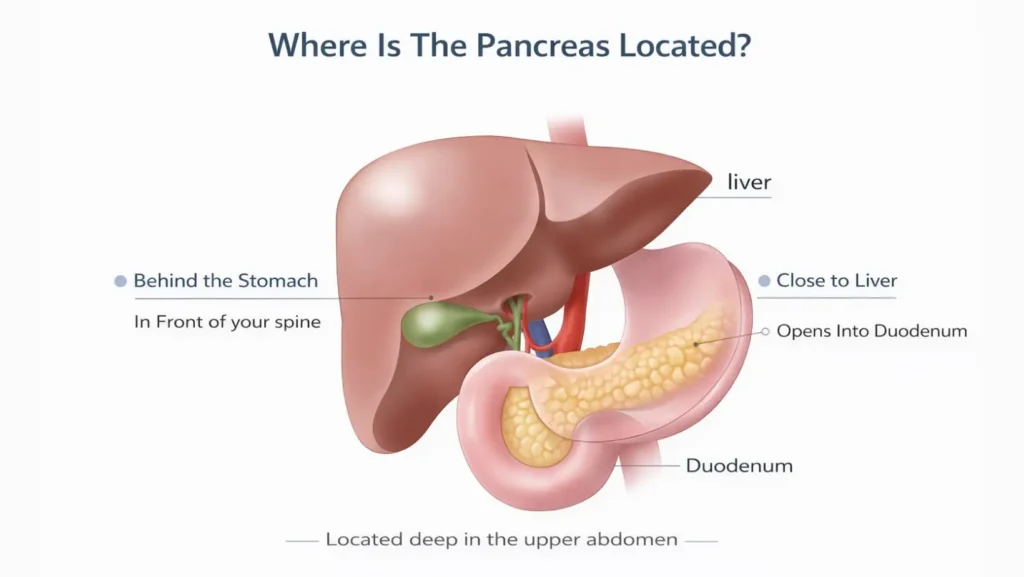
The pancreas is located deep in the upper abdomen, behind the stomach and close to the small intestine. This position allows digestive enzymes and bicarbonate to mix with food quickly after it leaves the stomach, improving digestion efficiency.
Anatomical Location of the Pancreas
The pancreas is located deep in your upper abdomen. It sits behind your stomach and in front of your spine. It stretches from the right side of your body to the left.
Relationship With Stomach, Liver, And Small Intestine
The pancreas is located close to the stomach and liver. Its main duct opens into the duodenum. The liver sends bile to the same area. This setup allows bile and enzymes to mix with food at the right time. The role of pancreas in digestion depends on this close placement.
Why Pancreas Location Matters In Digestion
The pancreas is located where food arrives right after leaving the stomach. This short distance prevents delays. Enzymes act fast, which protects nutrient absorption. Any blockage in this area can disturb the function of pancreas in digestion .
Pancreas Function Tests
Pancreas function tests help identify whether digestion problems come from enzyme loss, inflammation, or duct blockage. These tests focus on enzyme activity, fat absorption, and pancreas structure rather than symptoms alone.
Blood Tests For Pancreatic Function
Blood tests check enzyme levels such as amylase and lipase. Very high or low values can signal inflammation or enzyme loss. These pancreas function tests help rule out other gut problems.
Stool Tests For Pancreatic Enzymes
Stool tests measure fat content and enzyme activity. High fat levels suggest poor enzyme release. This result points to a weakened role of pancreas in digestion .
Imaging Tests Used To Assess Pancreas Health
Imaging shows structure, not enzymes. Ultrasound and CT scans reveal swelling, stones, or duct blockage. Doctors use imaging as part of pancreas function tests when symptoms persist.
When Pancreas Function Tests Are Recommended
Doctors suggest pancreas function tests if you have long-term diarrhea, oily stools, or unexplained weight loss. These signs suggest digestion failure rather than simple food intolerance.
Signs Of Pancreas Problems
Signs of pancreas problems often appear as digestion issues before pain starts. Poor enzyme output leads to bloating, oily stools, fatigue, and weight loss because food does not fully break down or absorb.
Digestive Symptoms Linked To Pancreas Dysfunction
Common signs of pancreas problems include bloating, gas, and loose stools after meals. These symptoms often worsen after fatty foods.
Signs Of Enzyme Deficiency
Low enzyme levels cause food to pass without full digestion. You may feel tired even after eating. These signs of pancreas problems often appear slowly.
Symptoms Of Poor Fat Digestion
Poor fat digestion leads to pale, greasy stools that float. Weight loss may follow. These are clear signs of pancreas problems linked to enzyme loss.
Warning Signs That Need Medical Attention
Severe upper abdominal pain, yellow skin, or sudden weight loss need urgent care. These signs of pancreas problems may signal serious disease.
Diseases Of The Pancreas
Diseases of the pancreas interfere with digestion by reducing enzyme flow or blocking ducts. Over time, this causes malabsorption, vitamin loss, and energy decline, even when food intake stays normal.
Pancreatitis (Acute And Chronic)
Pancreatitis means pancreas inflammation. Acute cases cause sudden pain. Chronic cases cause long-term enzyme loss. Both reduce the role of pancreas in digestion . Alcohol use and gallstones are common triggers, but not the only ones.
Pancreatic Enzyme Insufficiency
This condition means the pancreas cannot release enough enzymes. Food digestion stays incomplete. This issue sits at the center of many diseases of the pancreas that affect nutrition.
Diabetes And Pancreas Dysfunction
Diabetes damages insulin cells. Over time, it can also affect digestive cells. This overlap explains why some people with diabetes develop digestion issues tied to the function of pancreas in digestion .
Pancreatic Cancer And Digestion Issues
Pancreatic cancer often blocks enzyme flow early. Weight loss and appetite changes appear before pain. Among diseases of the pancreas , this one disrupts digestion fast.
How Pancreatic Enzymes Work in Digestion
The role of pancreas in digestion relies on enzymes activating only in the small intestine. Bicarbonate neutralizes stomach acid first, allowing enzymes to work at full strength without harming intestinal tissue.
Amylase And Carbohydrate Digestion
Amylase breaks starch into simple sugars like glucose. These sugars provide quick energy for your brain and muscles. Without enough amylase, carbs stay partly digested. You may feel tired after meals. This shows how the role of pancreas in digestion affects daily energy.
Low amylase activity can also cause bloating because gut bacteria ferment unused carbs. This leads to gas and discomfort.
Lipase And Fat Digestion
Lipase breaks fat into fatty acids and glycerol. These small units help absorb vitamins A, D, E, and K. Without lipase, fat passes through stool unused. This weakens the role of the pancreas in digestion and leads to vitamin loss.
Poor fat digestion also causes greasy stools and weight loss. These signs often appear before pain.
Proteases And Protein Digestion
Proteases split proteins into amino acids. Amino acids repair tissue and support immunity. Without proper protease action, muscle loss and weakness may develop. This shows how the function of pancreas in digestion links directly to strength and recovery.
Incomplete protein digestion can also cause gut irritation over time.
Impact Of Pancreas Disorders On Nutrient Absorption
When pancreatic disorders reduce enzyme output, nutrients cannot fully absorb. This weakens muscles, bones, and immunity over time, showing how closely the function of pancreas in digestion links to whole-body health.
Malabsorption And Weight Loss
Malabsorption means nutrients pass through without absorption. You may eat enough but still lose weight. This happens because the role of pancreas in digestion fails to complete food breakdown. Weight loss from malabsorption is often gradual. Muscle loss may appear before fat loss.
Vitamin Deficiencies Linked To Pancreas Disease
Fat-soluble vitamins need lipase for absorption. When lipase drops, vitamin levels fall. This may cause weak bones, vision trouble, and dry skin. These problems reflect reduced function of pancreas in digestion rather than poor diet. Vitamin deficiencies may appear even before digestive pain.
Long-Term Digestive Complications
Long-term enzyme loss strains the gut lining. Chronic diarrhea, fatigue, and immune weakness may follow. These complications show how deeply the role of pancreas in digestion affects overall health. Early care helps prevent permanent damage.
Supporting Pancreas Health For Better Digestion
Protecting pancreatic cells helps maintain steady enzyme release. Balanced meals, limited alcohol, and avoiding smoking reduce stress on the pancreas and support the long-term role of pancreas in digestion .
Dietary Habits That Support Pancreatic Function
Eating smaller meals helps match enzyme supply. Very large meals overload digestion. Balanced meals support the function of pancreas in digestion without strain. Spacing meals evenly also improves enzyme timing.
Foods That Reduce Pancreatic Stress
Lean proteins digest easier than heavy fats. Cooked vegetables reduce gut workload. Limiting alcohol protects the role of pancreas in digestion , especially in people with past history of inflammation. Highly processed foods increase enzyme demand.
Lifestyle Factors Affecting Pancreas Health
Smoking damages pancreatic tissue. Poor sleep disrupts hormone signals. These factors slowly weaken the role of pancreas in digestion even without symptoms. Regular activity supports blood flow to digestive organs.
FAQs
What Is The Role Of The Pancreas In Digestion?
The role of pancreas in digestion includes enzyme release and acid control. These actions break food into nutrients your body can absorb and use for energy and repair.
What Enzymes Does The Pancreas Release For Digestion?
The pancreas releases amylase for carbs, lipase for fats, and proteases for proteins. Together, these enzymes support the full function of pancreas in digestion .
Where Is The Pancreas Located In The Body?
The pancreas is located behind the stomach in the upper abdomen. It sits close to the small intestine to release enzymes at the right time.
What Are Common Signs Of Pancreas Problems?
Common signs of pancreas problems include bloating, oily stools, weight loss, and fatigue after meals. These signs often worsen after eating fatty foods.
Which Tests Check Pancreas Function?
Blood, stool, and imaging exams act as pancreas function tests . They help identify enzyme loss, inflammation, or structural damage affecting digestion.
Can Pancreas Problems Affect Digestion?
Yes. When the role of pancreas in digestion weakens, food breakdown becomes incomplete. This leads to malabsorption, vitamin loss, and gut discomfort.
What Diseases Commonly Affect The Pancreas?
Pancreatitis, enzyme insufficiency, diabetes-related damage, and cancer are major diseases of the pancreas that interfere with digestion and nutrient absorption.
How Does Pancreatic Enzyme Deficiency Affect The Body?
Enzyme deficiency prevents full digestion. Calories and vitamins pass unused. This disrupts the function of pancreas in digestion and causes weakness over time.
Can Pancreas Disorders Cause Weight Loss?
Yes. When the role of pancreas in digestion fails, nutrients do not absorb well. Weight loss may occur even if appetite stays normal.
When Should I See A Doctor For Pancreas-Related Symptoms?
You should seek care if signs of pancreas problems include severe pain, ongoing diarrhea, oily stools, or unexplained weight loss lasting several weeks.
About The Author

Medically reviewed by Dr. Nivedita Pandey, MD, DM (Gastroenterology)
Dr. Nivedita Pandey is a U.S.-trained gastroenterologist and hepatologist with extensive experience in diagnosing and treating liver diseases and gastrointestinal disorders. She specializes in liver enzyme abnormalities, fatty liver disease, hepatitis, cirrhosis, and digestive health.
All content is reviewed for medical accuracy and aligned with current clinical guidelines.