Stages of rectal cancer describe how deeply a tumor grows into the rectum and whether it spreads to lymph nodes or distant organs. Doctors rely on staging to decide surgery type, radiation need, and chemotherapy timing. Early-stage disease often stays limited to the rectal wall and has high cure rates. As stages advance, cancer spreads beyond the rectum, making treatment more complex and long-term control harder.
Types of Colorectal Cancer
Different rectal tumors behave in different ways. Some grow slowly and stay local, while others spread early or resist standard therapy. Knowing the exact tumor type helps doctors predict spread risk and choose the safest treatment path.
Adenocarcinoma
Adenocarcinoma starts in gland cells. These cells make mucus for stool movement. Over 90 percent of rectal cancers fall into this group. These tumors often grow slowly at first. Early detection matters because spread risk rises once the tumor crosses the bowel wall.
Mucinous and Signet Ring Cell Carcinoma
These tumors produce thick mucus. The mucus helps cancer cells move through tissue. Signet ring cells look swollen under a microscope. These cancers often spread earlier than adenocarcinoma. They may respond less to standard treatment.
Neuroendocrine Tumors
These tumors grow from hormone-releasing cells. Some grow slowly. Others spread fast. Size and cell grade decide risk. Small tumors may only need surgery.
Gastrointestinal Stromal Tumors (GISTs)
GISTs form from nerve-related cells in the gut wall. They are rare in the rectum. These tumors respond better to targeted drugs than chemotherapy.
Lymphoma of the Colon or Rectum
This cancer starts in immune cells. It behaves differently from bowel cancers. Doctors often treat it with systemic therapy instead of surgery.
Causes of Colorectal Cancer
Rectal cancer develops after years of repeated cell damage. Genetic errors, chronic inflammation, and long exposure to bowel toxins raise cancer risk. Most patients have multiple risk factors working together rather than a single cause.
Genetic and Hereditary Factors
Some gene changes pass through families. Lynch syndrome is one example. These gene changes impair DNA repair. That allows errors to build up faster. People with these genes often develop cancer at younger ages.
Inflammatory Bowel Disease
Long-term bowel inflammation damages tissue. Ulcerative colitis raises rectal cancer risk more than Crohn’s disease. Risk increases after eight to ten years of active disease.
Diet and Lifestyle Risk Factors
Low fiber diets slow stool movement. That increases bowel contact with toxins. High red meat intake increases cancer-linked compounds during digestion. Lack of movement also slows bowel activity.
Age and Family History
Risk rises after age 45. A parent or sibling with colorectal cancer increases your risk. Screening often starts earlier for these groups.
Smoking and Alcohol Use
Tobacco damages blood vessels and DNA. Alcohol irritates bowel lining. Heavy use raises rectal cancer risk over time.
Colorectal Cancer Early Symptoms
Early signs often appear mild and easy to ignore. Many symptoms overlap with common bowel problems, which delays testing. Persistent or worsening changes matter more than short-term discomfort.
Rectal Bleeding
Blood may appear bright red. It may coat stool or drip after bowel movement. Bleeding that lasts weeks needs evaluation.
Changes in Bowel Habits
Constipation may appear without diet change. Diarrhea may last longer than usual. Stool may become thin or ribbon-shaped.
Persistent Abdominal Discomfort
You may feel pressure or cramping. The pain may ease after bowel movement. Ongoing discomfort needs attention.
Unexplained Weight Loss
Cancer uses energy fast. You may lose weight without diet or exercise changes.
Fatigue and Anemia
Slow bleeding lowers iron levels. Low iron reduces oxygen delivery. This causes weakness and shortness of breath. These signs often appear during the early stages of colorectal cancer , when treatment works best.
Rectal Cancer Stages Explained
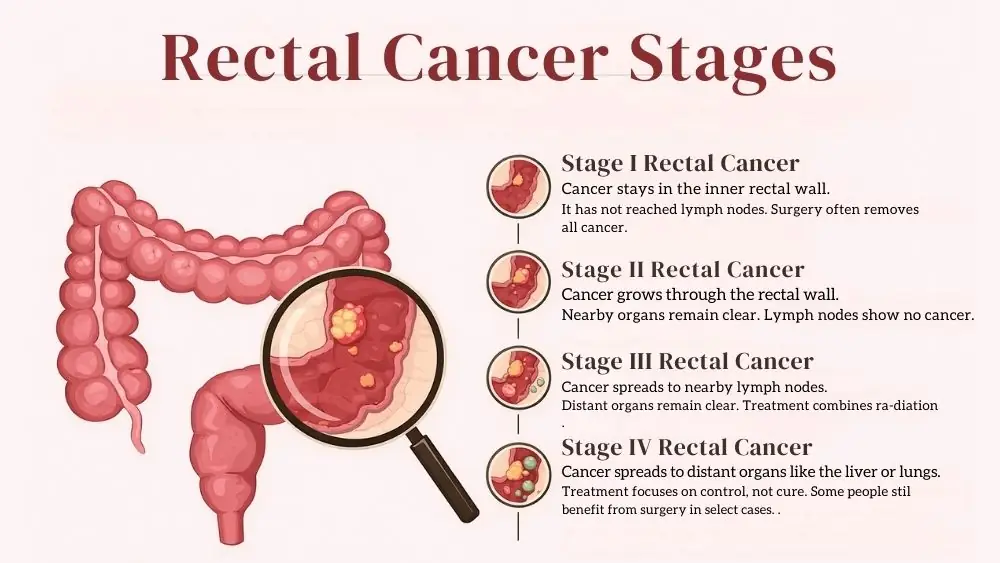
Cancer staging shows how deep the tumor grows and where it spreads. Staging determines surgery type, need for radiation, and chemotherapy timing. Accurate staging prevents under- or over-treatment.
Stage I Rectal Cancer
Cancer stays in the inner rectal wall. It has not reached lymph nodes. Surgery often removes all cancer. Cure rates remain high.
Stage II Rectal Cancer
Cancer grows through the rectal wall. Nearby organs remain clear. Lymph nodes show no cancer. Surgery remains key. Some people need radiation before surgery.
Stage III Rectal Cancer
Cancer spreads to nearby lymph nodes. Distant organs remain clear. Treatment combines radiation, chemotherapy, and surgery. These stages of rectal cancer need coordinated care.
Stage IV Rectal Cancer
Cancer spreads to distant organs like the liver or lungs. Treatment focuses on control, not cure. Some people still benefit from surgery in select cases. Advanced stages of rectal cancer vary widely between patients.
TNM Staging System
Doctors use three factors.
- T shows tumor depth.
- N shows lymph node spread.
- M shows distant spread.
This system defines stages of rectal cancer in precise detail. It helps compare outcomes across patients.
How Rectal Cancer Is Diagnosed
Diagnosis relies on combining visual exams, tissue testing, and imaging. Each test answers a different question about depth, spread, and tumor behavior. Missing one step can lead to incorrect staging.
Colonoscopy and Biopsy
A colonoscopy lets doctors view the rectum directly. A small camera checks for abnormal tissue. If a tumor appears, a biopsy removes a small sample. Lab testing confirms cancer and cell type. This step also helps rule out non-cancer causes like severe inflammation.
Imaging Tests (CT, MRI, PET Scan)
Imaging shows how far cancer has grown. MRI gives the clearest view of rectal wall layers and nearby lymph nodes. CT scans check the chest and abdomen for spread. PET scans help when other scans give unclear results.
Endorectal Ultrasound
This test places a small probe inside the rectum. It shows how deep the tumor reaches into the rectal wall. Doctors often use it in the early stages of colorectal cancer to decide if surgery alone is enough.
Blood Tests and Tumor Markers
Blood tests check organ function before treatment. CEA is a tumor marker that may rise with rectal cancer. It does not diagnose cancer alone. Doctors use it to track response and recurrence.
Rectal Cancer Treatment
Care plans depend on tumor stage, location, and your overall health. Modern treatment for rectal cancer focuses on removing cancer while protecting bowel function when possible.
Surgery for Rectal Cancer
Surgery removes the tumor and nearby tissue. Surgeons aim to preserve the anal muscles. Some people need a temporary or permanent stool bag. Surgical success depends heavily on stages of rectal cancer at diagnosis.
Chemotherapy
Chemotherapy targets fast-growing cancer cells. Doctors often give it before surgery to shrink tumors. Others receive it after surgery to reduce recurrence risk. Side effects vary by drug and dose.
Radiation Therapy
Radiation damages cancer cell DNA. It works best on rectal tumors due to fixed location. Doctors often combine radiation with chemotherapy to improve results.
Targeted Therapy
Targeted drugs block signals cancer cells use to grow. These drugs work only in certain tumor types. Testing tumor genes helps doctors choose this option.
Immunotherapy
Immunotherapy helps your immune system attack cancer cells. It works best in tumors with specific DNA repair defects. Not all patients qualify.
Treatment by Cancer Stage
Early disease often needs surgery alone. Mid-stage disease needs combined therapy. Advanced stages of rectal cancer focus on control and symptom relief. Treatment choices adjust over time.
Prognosis and Survival by Stage
Survival depends on spread, response to therapy, and overall health. Earlier-stage disease has fewer treatment side effects and better long-term bowel control. Late-stage disease varies widely between individuals.
Survival Rates by Rectal Cancer Stage
Stage I disease has the highest survival rates. Stage II outcomes vary by tumor depth. Stage III survival improves with combined therapy. Stage IV survival varies widely due to organ involvement. Catching cancer in the early stages of colorectal cancer improves outcomes significantly.
Factors Affecting Prognosis
Tumor type matters. Lymph node involvement lowers survival. Response to chemotherapy also plays a role. Your age and other medical conditions affect recovery.
Role of Early Diagnosis
Early diagnosis limits spread. It reduces the need for aggressive therapy. Across all stages of rectal cancer , earlier detection leads to better quality of life.
Living With Rectal Cancer
Living with rectal cancer involves ongoing adjustments. Nutrition, bowel habits, and energy levels often change. Long-term support improves both recovery and emotional well-being.
Managing Treatment Side Effects
You may feel tired or lose appetite. Bowel changes are common. Diet adjustments and medication help control symptoms. Doctors adjust treatment if side effects become severe.
Follow-Up and Monitoring
After treatment, regular visits matter. Imaging and blood tests detect recurrence early. Monitoring schedules depend on your stages of rectal cancer and treatment history.
Emotional and Psychological Support
Cancer affects mental health. Anxiety and fear are common. Counseling and support groups help reduce stress. Emotional care improves treatment adherence.
FAQs
What Is The Most Common Stage Of Rectal Cancer At Diagnosis?
Most people receive a diagnosis at stage II or III. Symptoms often appear late. Screening increases detection during early stages of colorectal cancer , when treatment works better.
Can Rectal Cancer Be Cured In Early Stages?
Yes, many people achieve long-term survival with surgery alone. Cure rates remain high when cancer stays within the rectal wall during early stages of rectal cancer .
How Fast Does Rectal Cancer Progress?
Growth speed varies by tumor type and genetics. Some cancers grow slowly for years. Others spread faster, which makes early testing important.
Is Rectal Cancer Treatment Different From Colon Cancer?
Yes, location changes care. Rectal tumors often need radiation. Colon tumors rarely do. Treatment plans reflect anatomical differences and spread risk.
When Should Screening For Colorectal Cancer Begin?
Most adults start screening at age 45. People with family history or bowel disease often start earlier. Screening helps detect early symptoms of colorectal cancer before spread.
Who Is At Highest Risk For Developing Rectal Cancer?
Risk rises with age, family history, smoking, heavy alcohol use, and inflammatory bowel disease. These factors increase exposure to known causes of colorectal cancer .
What Are The Earliest Symptoms Of Rectal Cancer?
Early signs include bleeding, bowel habit changes, fatigue, and anemia. These early symptoms of colorectal cancer often seem mild but should not be ignored.
Can Rectal Cancer Cause Changes In Bowel Habits?
Yes, tumors can narrow the rectum. This leads to constipation, thin stools, or frequent urges. Persistent changes need medical review.
Is Rectal Bleeding Always A Sign Of Rectal Cancer?
No, many conditions cause bleeding. Hemorrhoids are common. Bleeding that lasts weeks still needs testing to rule out types of colorectal cancer .
How Is Rectal Cancer Diagnosed?
Doctors use colonoscopy, imaging, biopsy, and staging tests. Accurate diagnosis defines stages of rectal cancer and guides treatment for rectal cancer decisions.
About The Author

Medically reviewed by Dr. Nivedita Pandey, MD, DM (Gastroenterology)
Dr. Nivedita Pandey is a U.S.-trained gastroenterologist and hepatologist with extensive experience in diagnosing and treating liver diseases and gastrointestinal disorders. She specializes in liver enzyme abnormalities, fatty liver disease, hepatitis, cirrhosis, and digestive health.
All content is reviewed for medical accuracy and aligned with current clinical guidelines.