The most effective ways to stop acid reflux at night are sleeping on your left side, eating dinner at least 3 hours before bed, and elevating your head by 6 to 8 inches. These three changes alone reduce nighttime symptoms in most people within 1 to 2 weeks.
Nighttime reflux is more damaging than daytime reflux. When you lie flat, stomach acid sits in contact with your esophagus lining for longer. During the day, you swallow frequently, which clears acid back down. At night, swallowing drops by over 50%, so acid lingers and causes more irritation.
Why Acid Reflux Is Worse at Night
Gravity stops working for you the moment you lie down. During the day, gravity keeps stomach contents from rising into the esophagus. At night, that advantage disappears.
Three things make nighttime reflux worse:
- Gravity loss: Lying flat allows acid to reach the esophagus easily.
- Slower digestion: Digestion slows significantly during sleep. Food and acid stay in the stomach longer.
- Reduced saliva: Saliva neutralizes acid. Saliva production drops by about 90% during sleep, so the natural buffer against acid is almost gone.
This combination explains why people who feel fine during the day still wake up with burning in their chest or throat at 2 AM.
Ways to Prevent Nighttime Acid Reflux
The ways to prevent nighttime acid reflux that actually work are behavioral, not just medication-based.
- Eat dinner at least 3 hours before lying down.
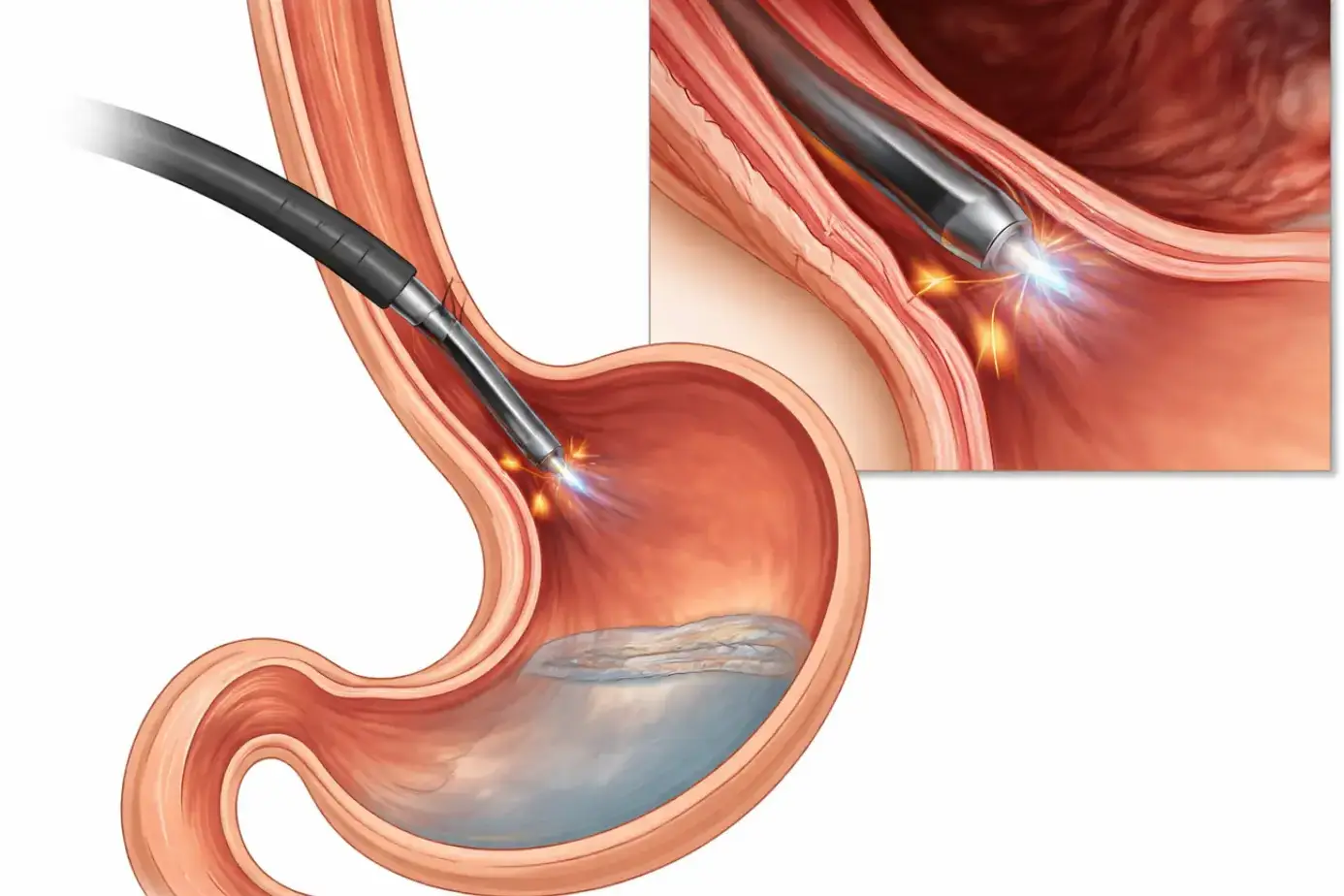
- Keep dinner portions smaller. A full stomach puts pressure on the lower esophageal sphincter (LES), the valve that keeps acid down.
- Stay upright for 2 to 3 hours after eating. Sitting or walking works. Slouching on the sofa after a large meal doesn’t count.
- Avoid tight waistbands or clothing at night. Abdominal compression increases stomach pressure.
- Lose weight if your BMI is above 28. A 2013 study in Obesity found that losing just 10% of body weight significantly reduced GERD symptoms in overweight patients.
Meal composition matters as much as meal timing. High-fat dinners delay stomach emptying by up to 2 hours compared to low-fat meals, which means more acid exposure during sleep.
Best Sleeping Position for Acid Reflux
The best sleeping position for acid reflux is on your left side with your head raised. Your stomach sits to the left side of your body. When you sleep on your left, the gastric junction (where acid comes up) sits above the stomach contents. Acid has to travel upward against gravity to reach the esophagus.
When you sleep on your right side, the gastric junction sits below the stomach contents. Acid flows toward the esophagus with minimal resistance.
A study published in the Journal of Clinical Gastroenterology confirmed that right-side sleeping increases acid exposure time in the esophagus by 71% compared to left-side sleeping.
How to elevate your head correctly:
- Use bed risers under the headboard legs, not extra pillows. Extra pillows tilt the neck, not the torso, and don’t reduce acid exposure.
- Target a 6 to 8-inch elevation.
- Wedge pillows designed for reflux (sold under brands like MedSlant and Medcline) provide both left-side positioning and proper elevation.
Flat sleeping is the worst option. It gives acid a level runway straight into the esophagus.
Avoid Meals Before Bedtime Reflux
Avoid meals before bedtime, because when you eat, your stomach produces acid to digest food. That acid production peaks 1 to 2 hours after eating and stays elevated for up to 4 hours. If you eat at 10 PM and sleep at 11 PM, you’re sleeping directly through the peak acid period.
The ideal dinner window is 6 to 7 PM for people who sleep around 10 to 11 PM.
If you get hungry late at night, opt for:
- A small banana (buffers stomach acid)
- A few crackers (absorbs excess acid temporarily)
- Half a glass of low-fat milk
Avoid late-night snacks that are high in fat, spicy, or acidic. Cheese, fried food, tomatoes, and citrus fruits all trigger acid production and relax the LES.
Alcohol-Triggering Acid Reflux at Night
Alcohol-triggering acid reflux at night is one of the most underreported causes of sleep disruption.
Alcohol relaxes the LES, the valve separating the stomach from the esophagus, and it directly stimulates stomach acid production. Even moderate drinking, one to two drinks, raises acid output measurably.
Wine and beer are the worst offenders. Both are acidic and fermented, which increases their acid-stimulating effect beyond the alcohol content alone.
Symptoms are typically worse 2 to 3 hours after drinking, which aligns exactly with when most people fall asleep. This is why someone who drinks wine at dinner wakes up with burning chest pain at 1 or 2 AM.
Cutting alcohol entirely for 4 weeks is the most reliable test for whether it’s causing your nighttime reflux. Many people see a significant reduction in symptoms within 7 to 10 days of stopping.
Acid Reflux Causing Night Cough Remedy
Acid reflux-causing night cough remedies are one of the least talked-about aspects of GERD, and one of the most misdiagnosed.
When acid reaches the throat and voice box (larynx), it triggers a reflexive cough. This is called laryngopharyngeal reflux (LPR). Many people with LPR never feel the classic heartburn. They just cough. It happens mostly at night because lying flat makes it easier for acid to reach the throat.
Remedies that work:
- Head elevation: 6 to 8-inch bed elevation reduces throat acid exposure significantly.
- Stopping late meals: Eating late is the primary driver of nighttime LPR coughing.
- Small sips of water: If you wake coughing, 3 to 4 small sips of water wash acid back down the esophagus.
- Avoiding mint before bed: Peppermint relaxes the LES and worsens acid travel toward the throat.
If the cough has lasted more than 8 weeks and reflux treatment doesn’t help, see a doctor. A chronic cough can sometimes indicate asthma or post-nasal drip, not just reflux.
What to Do Immediately If You Wake Up With Acid Reflux
- Sit upright immediately. Don’t stay lying down. Gravity helps move acid back into the stomach.
- Take 3 to 4 small sips of water. This physically rinses acid off the esophagus lining.
- Chew a piece of sugar-free gum if available. Chewing increases saliva, which neutralizes acid.
- Take an antacid (like Gaviscon or Tums) if symptoms are strong. Gaviscon forms a physical barrier on top of stomach contents, which is more effective for nighttime reflux than Tums alone.
- Wait at least 15 to 20 minutes before lying back down, and return to your left side when you do.
Don’t drink milk as an immediate remedy. Milk buffers acid for about 20 minutes, then stimulates more acid production, making symptoms worse after the initial relief.
Foods and Drinks to Avoid at Night
These foods directly worsen reflux at night:
- Spicy food: Capsaicin slows stomach emptying and irritates the esophagus lining.
- Fatty meals: Fat delays gastric emptying and relaxes the LES.
- Coffee and caffeine: Caffeine relaxes the LES and increases acid output.
- Chocolate: Contains both caffeine and a compound called theobromine, both of which relax the LES.
- Tomato-based sauces: Highly acidic and worsen esophageal irritation.
- Carbonated drinks: The gas expands the stomach and increases pressure on the LES.
- Citrus fruits: Direct acid content worsens an already irritated esophagus.
The single most impactful dietary change for nighttime reflux is cutting fatty foods at dinner. Fat is the biggest driver of delayed gastric emptying, and it’s the hardest to attribute to reflux because the connection isn’t obvious.
Night Routine to Prevent Acid Reflux
A consistent routine is more effective than any single fix.
- 6 to 7 PM: Eat a light, low-fat dinner.
- After dinner: Stay upright. A 15 to 20-minute walk after dinner speeds gastric emptying by about 30%.
- 9 PM: Stop eating entirely.
- Before bed: Set up your sleeping position: left side, head elevated 6 to 8 inches.
- Avoid: Eating while watching TV or screens. Distracted eating leads to faster, larger bites, which increases stomach volume.
- Optional: Take a prescribed PPI (like omeprazole) 30 to 60 minutes before your evening meal, not at bedtime. Most people take PPIs incorrectly. They work by blocking active acid pumps, and those pumps are most active during meals.
When Nighttime Acid Reflux Is a Warning Sign
Occasional nighttime reflux is common. Frequent nighttime reflux signals GERD (gastroesophageal reflux disease) and warrants medical attention.
See a doctor if you experience:
- Reflux symptoms 2 or more nights per week for more than 4 weeks
- A chronic cough lasting over 8 weeks without a cold or allergy cause
- Difficulty swallowing or food getting stuck in the throat
- Waking up choking or with a sensation of liquid in the throat
- Unexplained weight loss alongside reflux symptoms
Choking episodes during sleep can indicate severe GERD or even aspiration, where stomach acid enters the airway. This carries a risk of lung damage if untreated.
Nighttime reflux that doesn’t improve with lifestyle changes after 4 to 6 weeks warrants an evaluation for Barrett’s esophagus, where repeated acid damage changes the esophagus cells over time.
FAQs: How to Stop Acid Reflux at Night
What is the fastest way to stop acid reflux at night?
Sit upright immediately, take 3 to 4 small sips of water, and chew sugar-free gum. Gaviscon works faster than Tums for nighttime episodes because it forms a physical barrier on stomach contents. Relief typically comes within 10 to 15 minutes.
What is the best sleeping position for acid reflux?
Left-side sleeping with your head elevated 6 to 8 inches using bed risers. This reduces esophageal acid exposure by 71% compared to right-side sleeping, based on published gastroenterology research.
How long before bed should I stop eating?
Stop eating 3 hours before bed at minimum. Stomach acid production peaks 1 to 2 hours after eating. Eating at 10 PM for an 11 PM bedtime puts you directly in peak acid output during sleep.
Can alcohol cause nighttime reflux?
Yes. Alcohol-triggering acid reflux at night is a direct result of two simultaneous effects: alcohol relaxes the LES valve and stimulates stomach-acid production. Symptoms typically peak 2 to 3 hours after drinking, right when most people fall asleep.
Why is reflux worse at night?
Lying flat removes gravity protection, saliva production drops by 90% during sleep, and swallowing frequency drops by over 50%. All three changes allow acid to sit in the esophagus longer without being cleared, causing more damage than daytime reflux.
Can reflux cause coughing at night?
Yes. The acid reflux-causing night cough remedy involves head elevation, stopping late meals, and small sips of water when waking. The cough happens when acid reaches the throat and triggers a reflexive response called laryngopharyngeal reflux (LPR).
Should I drink water for reflux at night?
Yes, small sips only. Three to four sips physically rinse acid off the esophagus lining. Don’t drink a full glass; excess water increases stomach volume and can worsen pressure on the LES.
When should I see a doctor?
See a doctor if nighttime reflux happens 2 or more times per week for over 4 weeks, or if you experience choking episodes, difficulty swallowing, or unexplained weight loss. These symptoms need investigation beyond standard ways to prevent nighttime acid reflux.
About The Author

Medically reviewed by Dr. Nivedita Pandey, MD, DM (Gastroenterology)
Dr. Nivedita Pandey is a U.S.-trained gastroenterologist and hepatologist with extensive experience in diagnosing and treating liver diseases and gastrointestinal disorders. She specializes in liver enzyme abnormalities, fatty liver disease, hepatitis, cirrhosis, and digestive health.
All content is reviewed for medical accuracy and aligned with current clinical guidelines.