Sigmoidoscopy and colonoscopy are medical tests that let doctors look inside your colon. Both tests help find causes of bleeding, pain, bowel changes, and cancer. Sigmoidoscopy checks only the lower part of the colon. Colonoscopy checks the entire colon from start to end. Because of this, colonoscopy finds more problems, but sigmoidoscopy stays faster and easier in certain cases.
Difference Between Colonoscopy vs Sigmoidoscopy
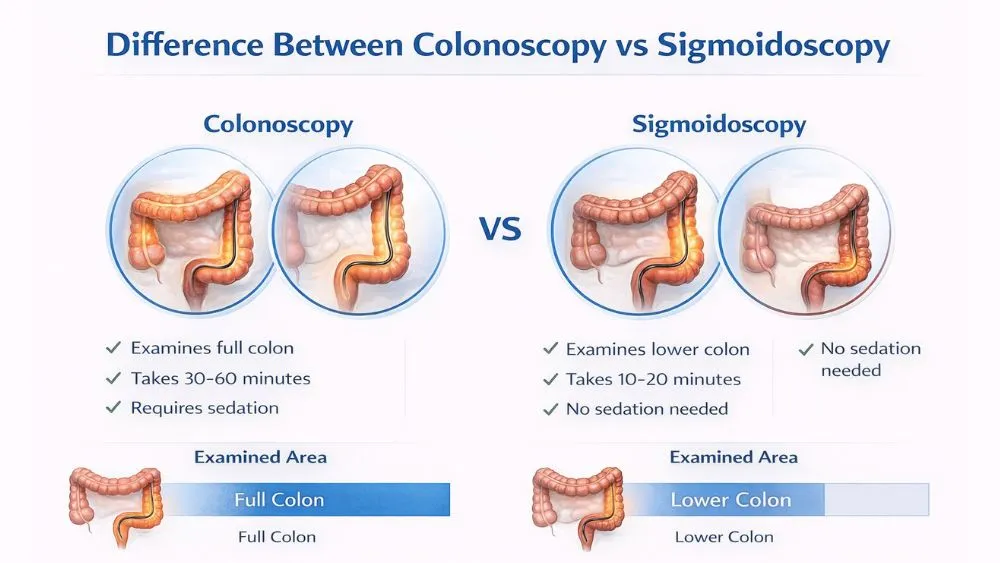
The difference between colonoscopy and sigmoidoscopy directly affects how much disease can be detected. A colonoscopy examines the full colon, while sigmoidoscopy stops at the lower section. This choice impacts cancer detection, follow-up testing, and long-term prevention.
Definition of Colonoscopy
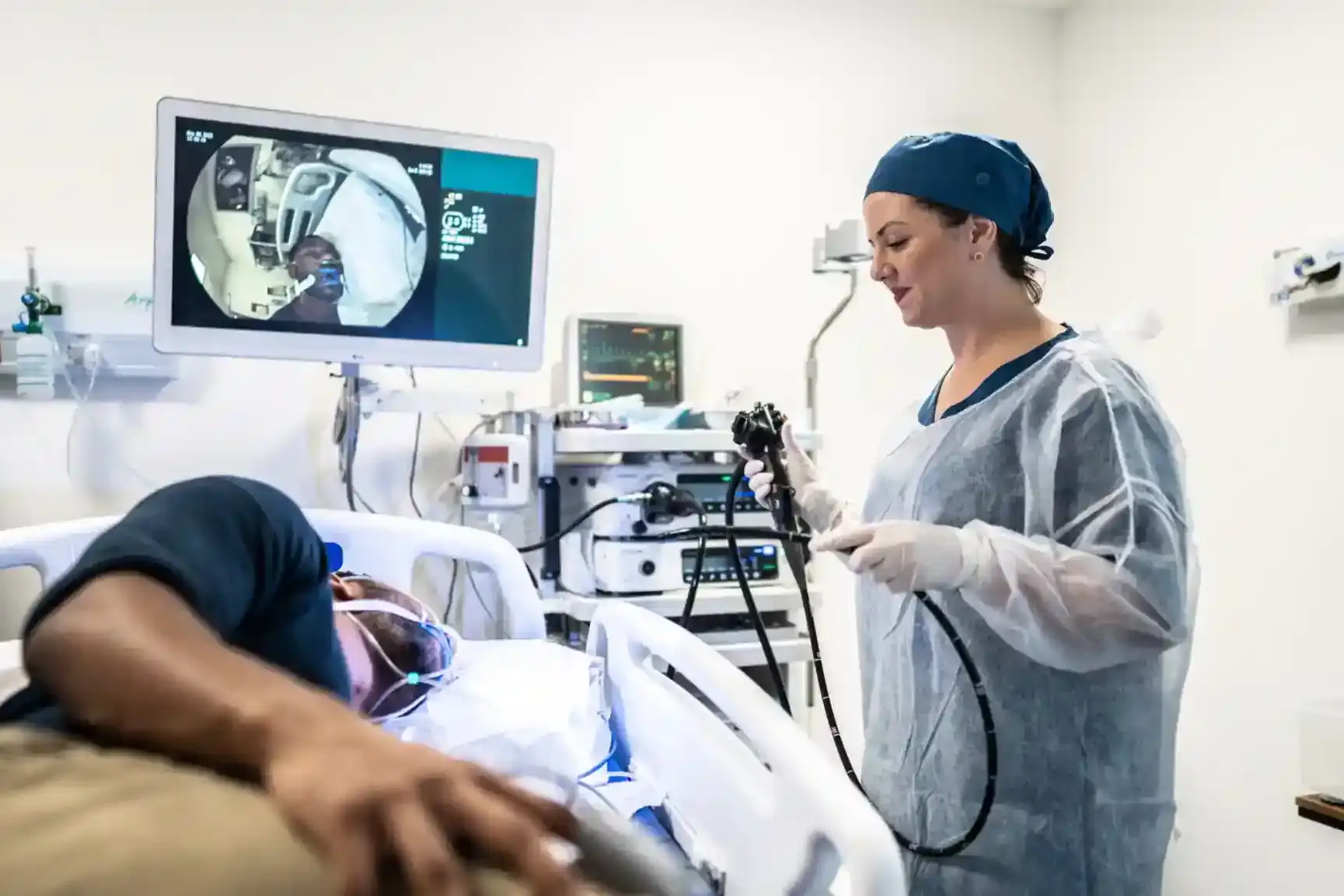
A colonoscopy is a procedure where a doctor inserts a long, flexible tube through the rectum. A small camera sits at the tip. The tube travels through the entire colon. The doctor watches the colon lining on a screen.
This test checks for polyps (small growths), inflammation (swelling), bleeding, and cancer. During a colonoscopy , doctors can remove polyps or take tissue samples. This makes it both a diagnostic test (finds problems) and a treatment tool (fixes problems).
Definition of Sigmoidoscopy
A sigmoidoscopy uses a shorter tube with a camera. It only reaches the rectum and sigmoid colon. The sigmoid colon is the last curved section of the large intestine.
Doctors often use sigmoidoscopy to check rectal bleeding, chronic diarrhea, or pain limited to the lower abdomen. The test does not examine the upper colon.
Area of the Colon Examined
- Colonoscopy examines the rectum, sigmoid colon, descending colon, transverse colon, and ascending colon.
- Sigmoidoscopy examines only the rectum and sigmoid colon.
Medical data shows that a large number of colon cancers grow beyond the sigmoid colon. That fact gives colonoscopy a clear advantage for full screening.
Procedure Duration and Preparation
Sigmoidoscopy usually takes 10 to 20 minutes. Preparation is limited. Doctors often ask you to use one or two enemas to clear the lower bowel. You usually eat normally before the test.
Colonoscopy takes 30 to 60 minutes. Preparation is strict. You stop solid food the day before. You drink a bowel-cleansing liquid that causes frequent bowel movements. A clean colon improves detection rates and lowers the risk of missed lesions.
Sedation Requirements
Most sigmoidoscopy exams do not need sedation. You stay awake and alert. Some people feel pressure or cramping, but pain stays mild.
Colonoscopy usually requires sedation. You sleep through the exam. Because of sedation, you cannot drive afterward and need supervision for the rest of the day. Sedation improves comfort but adds small medical risks.
Accuracy and Diagnostic Scope
Accuracy is where colonoscopy clearly leads.
- Colonoscopy detects more polyps.
- Colonoscopy finds cancers in all colon sections.
- Colonoscopy allows immediate treatment.
Sigmoidoscopy can miss disease in the upper colon. This limitation explains why doctors often follow abnormal sigmoidoscopy results with a full colonoscopy .
Sigmoidoscopy vs Colonoscopy: Pros and Cons
Sigmoidoscopy offers speed and lower burden, but it trades off diagnostic reach. Colonoscopy demands more preparation yet provides complete visualization and immediate treatment options. The right choice balances risk tolerance, access, and likelihood of missed disease.
Pros: Advantages of Sigmoidoscopy
The benefits of sigmoidoscopy make it useful in focused situations.
- Short procedure time
- No full bowel prep
- No routine sedation
- Lower overall cost
- Faster return to daily activities
Because of these points, sigmoidoscopy works well in outpatient clinics and limited-resource settings.
Cons: Limitations of Sigmoidoscopy
The difference between colonoscopy and sigmoidoscopy becomes clear with limitations.
- Does not check the entire colon
- Misses right-sided colon cancer
- Limited ability to remove polyps
- Often requires follow-up colonoscopy
Many patients feel frustrated when a second test becomes necessary.
Pros: Advantages of Colonoscopy
The benefits of colonoscopy explain why it remains the preferred screening tool.
- Full colon evaluation
- Higher cancer detection rates
- Polyp removal during the same test
- Long screening interval if results stay normal
A single colonoscopy can prevent cancer by stopping it before it starts.
Cons: Limitations of Colonoscopy
Honest discussion matters.
- Requires full bowel preparation
- Uses sedation
- Higher upfront cost
- Small risk of bleeding or bowel injury
Despite these limits, the long-term benefits of colonoscopy usually outweigh the risks.
Benefits of Sigmoidoscopy
The benefits of sigmoidoscopy lie in its simplicity and accessibility. It allows quick evaluation of lower bowel symptoms without sedation, making it useful for focused diagnosis and population-level screening where resources are limited.
Less Invasive Procedure
Sigmoidoscopy uses a shorter scope. This reduces stretching of the bowel. Many patients tolerate the test well without medication.
Minimal Bowel Preparation
You do not drink large prep solutions. This improves patient compliance. Poor prep is a common reason people avoid screening.
Faster Recovery Time
Most people return to work the same day. There is no sedation hangover. This makes sigmoidoscopy practical for busy schedules.
Lower Cost Screening Option
Costs stay lower compared to colonoscopy . This matters for uninsured patients or public health programs.
Suitable for Targeted Lower Colon Evaluation
Doctors often choose sigmoidoscopy when symptoms point to the lower colon, such as rectal bleeding or pain near the pelvis.
Benefits of Colonoscopy
The benefits of colonoscopy center on prevention rather than detection alone. By identifying and removing precancerous polyps anywhere in the colon, it actively reduces future cancer risk rather than only identifying existing disease.
Complete Colon Examination
Only colonoscopy examines the entire colon. This removes blind spots that allow cancer to grow unnoticed.
Early Detection of Colorectal Cancer
Colon cancer often develops without symptoms. Colonoscopy detects early-stage disease when treatment works best.
Polyp Detection and Removal
Polyps can slowly turn into cancer. During a colonoscopy , doctors remove them immediately. This step directly lowers cancer risk.
Sigmoidoscopy vs Colonoscopy Screening
Sigmoidoscopy vs. colonoscopy screening differs in protection depth. Colonoscopy provides long-term reassurance with fewer repeat tests, while sigmoidoscopy relies on strict adherence to follow-up strategies to maintain effectiveness.
Screening Recommendations by Age
Most experts advise starting routine screening around midlife. Cancer risk rises with age because colon cells divide many times over decades. Errors in cell growth increase over time.
For younger adults with symptoms or genetic risk, screening may start earlier. Age alone never decides between sigmoidoscopy and colonoscopy . Risk level matters more.
Screening for Average-Risk Individuals
If you have no symptoms and no family history, doctors often recommend colonoscopy every ten years. This schedule balances benefit and safety.
Some programs use sigmoidoscopy every five years with stool tests in between. This approach lowers cost but increases dependence on follow-up. If you miss later tests, protection drops sharply.
Screening for High-Risk Individuals
High risk includes close relatives with colon cancer, long-term bowel inflammation, or inherited conditions. These factors raise cancer risk well above average. In these cases, colonoscopy is strongly preferred. Sigmoidoscopy alone does not offer enough coverage. Skipping full exams can delay diagnosis by years.
Follow-Up After Abnormal Results
An abnormal sigmoidoscopy result almost always leads to a colonoscopy . Blood, polyps, or tissue changes require a full colon check. Delaying follow-up increases risk. Many cancers grow quietly during this gap. Prompt action protects outcomes.
Who Should Get Colonoscopy?
Colonoscopy is most appropriate when risk exceeds baseline. Family history, persistent symptoms, or abnormal screening results justify full colon evaluation to avoid delayed diagnosis of serious disease.
Family History of Colorectal Cancer
If a parent or sibling had colon cancer, your risk increases. Age at diagnosis also matters. Early family cases raise concern. Doctors usually advise colonoscopy at younger ages and shorter intervals. This approach finds changes before cancer forms.
Persistent Gastrointestinal Symptoms
Symptoms lasting weeks need attention. These include bleeding, ongoing pain, unexplained diarrhea, or narrow stools.
Colonoscopy allows doctors to see the entire colon and take samples if needed. Sigmoidoscopy may miss the true cause.
Positive Stool Test Results
Stool tests detect hidden blood or abnormal DNA. A positive result does not diagnose cancer. It signals the need for a colonoscopy . No other test confirms or rules out disease with certainty.
Preparation and Recovery
Preparation quality determines diagnostic accuracy. Colonoscopy requires full bowel cleansing for reliable results, while sigmoidoscopy preparation remains limited. Recovery time also differs, mainly due to sedation use with colonoscopy.
Bowel Preparation Differences
Sigmoidoscopy prep focuses on the lower colon. Doctors usually recommend enemas or mild laxatives. You often eat normally.
Colonoscopy prep clears the entire colon. You switch to clear liquids and drink a cleansing solution. This step is critical. Incomplete prep hides polyps and lowers detection rates.
Post-Procedure Recovery Expectations
After sigmoidoscopy , most people resume normal activity right away. Mild gas or cramps may occur but pass quickly.
After a colonoscopy, sedation causes drowsiness. You rest for the day and avoid important decisions. Mild bloating or spotting may occur. Serious issues remain rare but require prompt care.
When to See a Doctor
Certain bowel changes should never be observed passively. Early medical evaluation allows timely testing, prevents progression, and often avoids emergency care later when disease becomes advanced.
Warning Signs Requiring Urgent Evaluation
Certain signs demand quick attention. These include black or bloody stools, sudden weight loss, severe belly pain, or ongoing anemia. Doctors often choose colonoscopy when these signs appear. Full visibility helps rule out serious causes and guides treatment.
FAQs
Is Sigmoidoscopy as Effective as Colonoscopy?
Sigmoidoscopy is not as effective as colonoscopy for full screening. It only checks the lower colon. Many cancers form higher up, where sigmoidoscopy cannot reach.
Can Sigmoidoscopy Miss Colon Cancer?
Yes. Sigmoidoscopy can miss cancer in the upper colon. This risk explains why abnormal findings usually lead to a colonoscopy for complete evaluation.
Which Test Is Safer?
Both tests are generally safe. Sigmoidoscopy avoids sedation, which lowers some risks. Colonoscopy has slightly higher complication rates but provides greater protection overall.
How Often Should Colonoscopy Be Done?
For average-risk adults, doctors often recommend colonoscopy every ten years if results stay normal. Shorter intervals apply when risk factors or findings exist.
Can Sigmoidoscopy Replace Colonoscopy?
No. Sigmoidoscopy cannot replace colonoscopy for full screening. It plays a limited role and depends on strict follow-up to remain effective.
What Are the Risks Associated With Colonoscopy?
Risks include bleeding, bowel injury, and sedation reactions. These events are uncommon. Proper prep and skilled providers lower risk further.
Can Polyps Be Removed During Sigmoidoscopy?
Small polyps in the lower colon can be removed during sigmoidoscopy . Polyps beyond reach still require colonoscopy for complete removal.
Can Polyps Be Removed During Colonoscopy?
Yes. Colonoscopy allows removal of polyps throughout the colon. This step directly reduces future cancer risk.
Which Procedure Has a Faster Recovery Time?
Sigmoidoscopy has a faster recovery because sedation is usually not used. Most people return to normal activities the same day.
How Often Is Sigmoidoscopy Recommended for Screening?
Some guidelines suggest sigmoidoscopy every five years with additional stool tests. Many doctors still favor colonoscopy due to broader protection.
About The Author

Medically reviewed by Dr. Nivedita Pandey, MD, DM (Gastroenterology)
Dr. Nivedita Pandey is a U.S.-trained gastroenterologist and hepatologist with extensive experience in diagnosing and treating liver diseases and gastrointestinal disorders. She specializes in liver enzyme abnormalities, fatty liver disease, hepatitis, cirrhosis, and digestive health.
All content is reviewed for medical accuracy and aligned with current clinical guidelines.